





Space & Astronomy
September 23, 2026


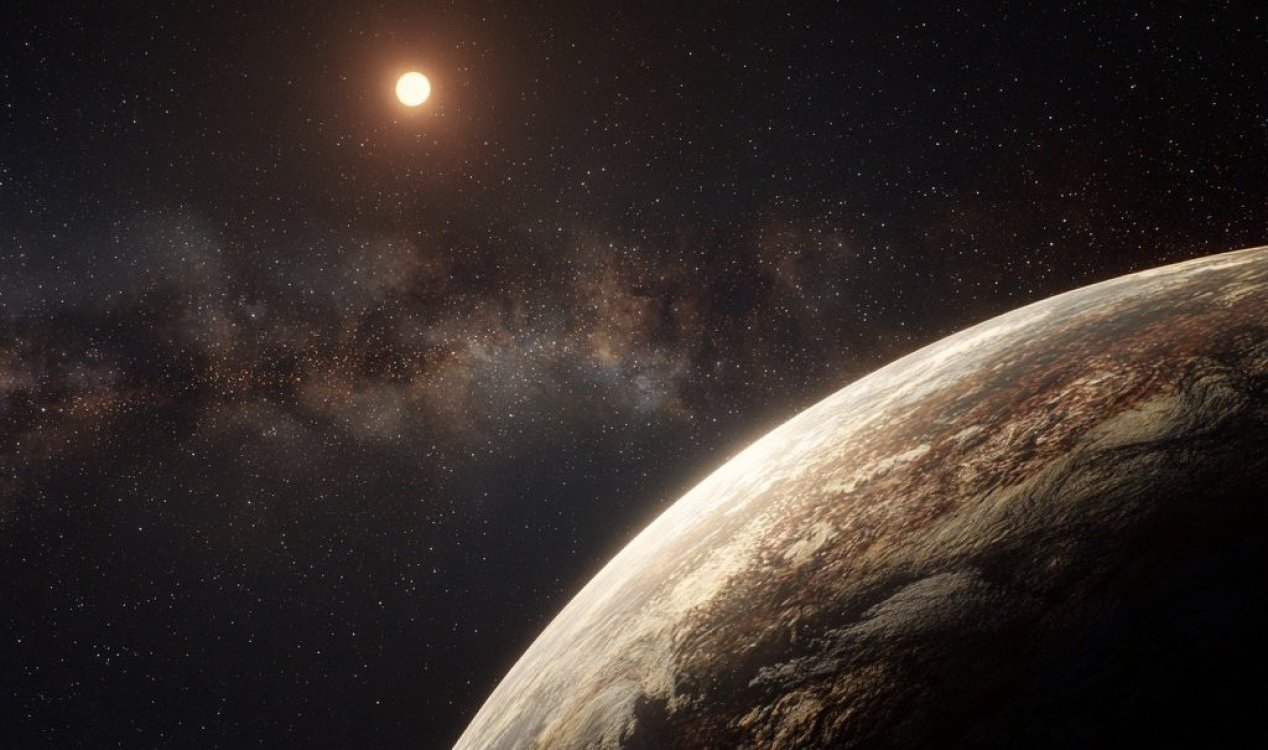
Image: AI-generated (Midjourney)
In actual fact, however, the signal in this particular case is not from an intelligent source, but the discovery could give astronomers a new way to identify and study magnetic fields on distant worlds, potentially helping them assess which planets might be habitable in the future.
The find, which was made by an international team of astronomers using South Africa's MeerKAT radio telescope array, consists of variable radio bursts originating from Beta Pictoris b - a gas giant exoplanet situated around a star 63 light years away from the Earth.
This planet is particularly massive - around 12 times the mass of Jupiter.
The physics behind the radio signals is related to the same magnetospheric processes that produce aurorae in our solar system, with the signals generated through a process known as electron cyclotron maser emission.
The detection was made possible in part because Beta Pictoris, the star around which the planet orbits, is magnetically quiet, making it easier to distinguish the planet's radio emission.
The discovery is particularly interesting because planetary magnetic fields can help protect atmospheres from being stripped away by stellar winds, meaning this research could eventually give astronomers another way to assess the potential habitability of distant worlds.
Perhaps one day, we may even find an extrasolar world that is already inhabited.
Source: Sky at Night Magazine
Radio signals detected from extrasolar planet for the first time
By T.K. RandallSeptember 23, 2026
Image: AI-generated (Midjourney)
This significant discovery could pave the way toward finding habitable worlds orbiting distant stars.
When it comes to the discovery of radio signals coming from a planet in a distant solar system, you'd be forgiven for thinking that this could be the first direct evidence of an advanced extraterrestrial civilization.In actual fact, however, the signal in this particular case is not from an intelligent source, but the discovery could give astronomers a new way to identify and study magnetic fields on distant worlds, potentially helping them assess which planets might be habitable in the future.
The find, which was made by an international team of astronomers using South Africa's MeerKAT radio telescope array, consists of variable radio bursts originating from Beta Pictoris b - a gas giant exoplanet situated around a star 63 light years away from the Earth.
This planet is particularly massive - around 12 times the mass of Jupiter.
The detection was made possible in part because Beta Pictoris, the star around which the planet orbits, is magnetically quiet, making it easier to distinguish the planet's radio emission.
The discovery is particularly interesting because planetary magnetic fields can help protect atmospheres from being stripped away by stellar winds, meaning this research could eventually give astronomers another way to assess the potential habitability of distant worlds.
Perhaps one day, we may even find an extrasolar world that is already inhabited.
Source: Sky at Night Magazine
Similar stories based on this topic:



The Unexplained Mysteries
Book of Weird News
AVAILABLE NOW
Take a walk on the weird side with this compilation of some of the weirdest stories ever to grace the pages of a newspaper.
Click here to learn more

Support us on Patreon
BONUS CONTENTFor less than the cost of a cup of coffee, you can gain access to a wide range of exclusive perks including our popular 'Lost Ghost Stories' series.
Click here to learn more

1 week
2 weeks
3 weeks
1 month


This week
This month
All time
 |
1. | Pareidolia |
 |
2. | Loch Ness Monster |
|
3. | Area 51 |
| - | 4. | Orb |
|
5. | Bigfoot |
|
6. | Spirit Photography (Classic) |
|
7. | Unidentified Flying Object |
|
8. | Electronic Voice Phenomenon |
|
9. | Roswell Incident |
|
10. | Paranormal |


Top | Home | Forum
News | Columns | Encyclopedia


UM 11.3 Unexplained-Mysteries.com (c) 2001-2026
Terms | Privacy Policy | Cookies | Contact
News | Columns | Encyclopedia
UM 11.3 Unexplained-Mysteries.com (c) 2001-2026
Terms | Privacy Policy | Cookies | Contact