





Space & Astronomy
December 25, 2021


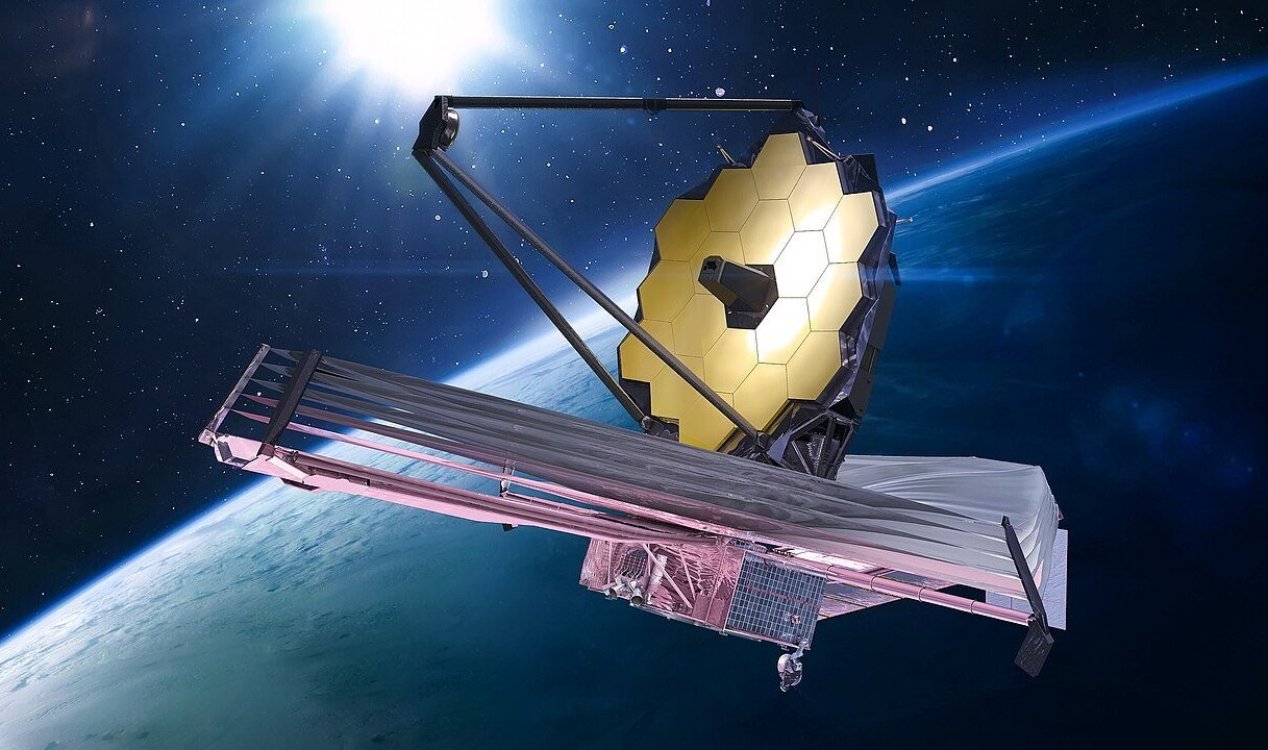
Image: James Webb Space Telescope
Credit: NASA/dima_zel/NOIRLab / CC BY 4.0 (adapted)
The result of a long-running international collaboration between NASA, ESA and the Canadian Space Agency, the next-generation observatory will provide scientists with an unprecedented view of the cosmos thanks to a resolution and sensitivity that is unrivalled by anything that has come before.
Its primary goals will be to image some of the first stars and galaxies to have formed after the Big Bang, to study the formation and evolution of galaxies, to better understand the formation of stars and planets and to study the origins of life in the universe.
It should even be able to provide clearer direct imaging of planets in orbit around distant stars.
To make all this possible, the telescope will be positioned much further away from the Earth than the Hubble Space Telescope at a distance of 930,000 miles, which is beyond the orbit of the Moon.
What it finds over the next few years could revolutionize our understanding of the cosmos.
"Webb is an exemplary mission that signifies the epitome of perseverance," said program director Gregory L. Robinson.
"I am inspired by our dedicated team and our global partnerships that have made this incredible endeavour possible."
James Webb Space Telescope has launched successfully
By T.K. RandallDecember 25, 2021
Image: James Webb Space Telescope
Credit: NASA/dima_zel/NOIRLab / CC BY 4.0 (adapted)
After 25 years of development, the next-generation space telescope has finally made it into orbit.
Just in time for Christmas and after more than a decade of delays and setbacks, the James Webb Space Telescope soared into the heavens atop an Arianne 5 rocket this morning.The result of a long-running international collaboration between NASA, ESA and the Canadian Space Agency, the next-generation observatory will provide scientists with an unprecedented view of the cosmos thanks to a resolution and sensitivity that is unrivalled by anything that has come before.
Its primary goals will be to image some of the first stars and galaxies to have formed after the Big Bang, to study the formation and evolution of galaxies, to better understand the formation of stars and planets and to study the origins of life in the universe.
It should even be able to provide clearer direct imaging of planets in orbit around distant stars.
What it finds over the next few years could revolutionize our understanding of the cosmos.
"Webb is an exemplary mission that signifies the epitome of perseverance," said program director Gregory L. Robinson.
"I am inspired by our dedicated team and our global partnerships that have made this incredible endeavour possible."
Similar stories based on this topic:



The Unexplained Mysteries
Book of Weird News
AVAILABLE NOW
Take a walk on the weird side with this compilation of some of the weirdest stories ever to grace the pages of a newspaper.
Click here to learn more

Support us on Patreon
BONUS CONTENTFor less than the cost of a cup of coffee, you can gain access to a wide range of exclusive perks including our popular 'Lost Ghost Stories' series.
Click here to learn more

1 week
2 weeks
3 weeks
1 month


This week
This month
All time
| - | 1. | Pareidolia |
 |
2. | Loch Ness Monster |
|
3. | Ghost |
 |
4. | Electronic Voice Phenomenon |
|
5. | Yeti |
|
6. | Area 51 |
|
7. | Paranormal |
| - | 8. | Spirit Photography (Classic) |
|
9. | Orb |
| - | 10. | Storm Area 51 |


Top | Home | Forum
News | Columns | Encyclopedia


UM 11.3 Unexplained-Mysteries.com (c) 2001-2026
Terms | Privacy Policy | Cookies | Contact
News | Columns | Encyclopedia
UM 11.3 Unexplained-Mysteries.com (c) 2001-2026
Terms | Privacy Policy | Cookies | Contact