





Science & Technology
June 19, 2026


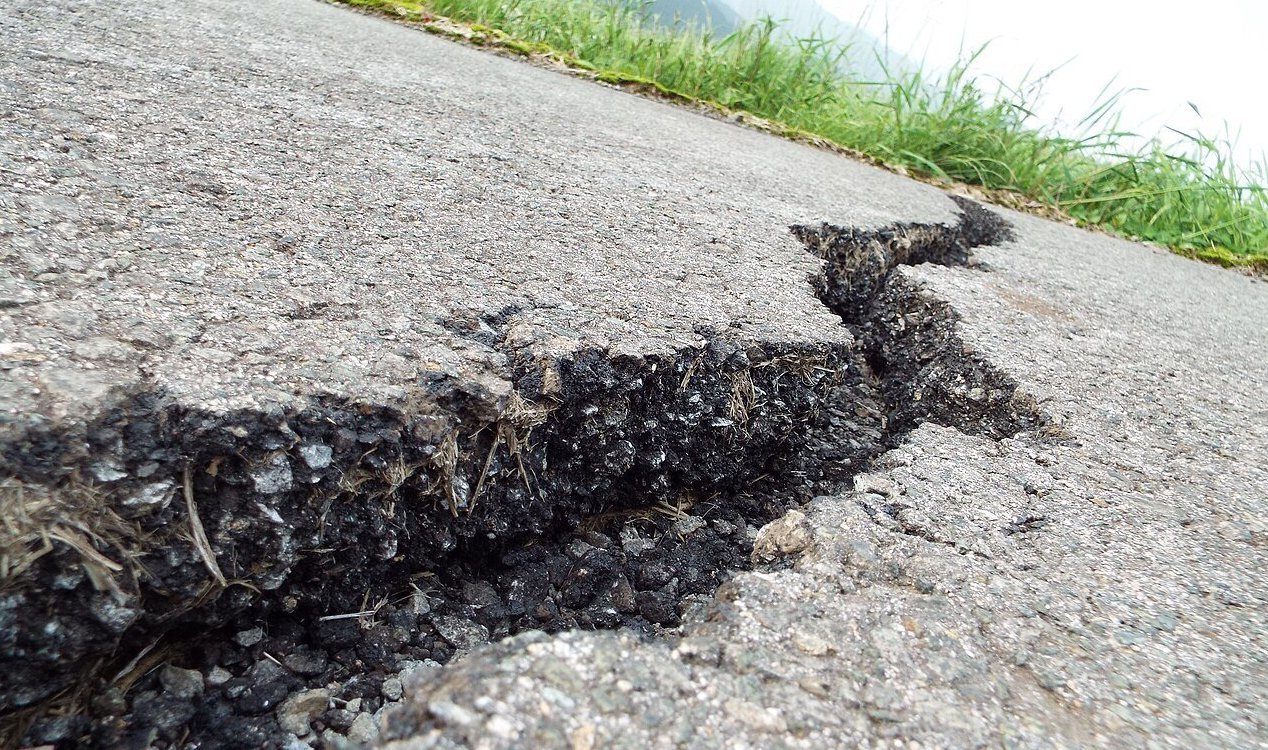
Image: Earthquake Crack in the Road
Credit: hanonimas / CC BY-SA 3.0 (adapted)
The earthquake - and in particular the ensuing tsunami - caused widespread damage and killed around 20,000 people while leaving hundreds of thousands more homeless.
It was also responsible for the Fukushima Daiichi nuclear disaster.
Now, a new analysis of data from the earthquake has revealed that some of the seismic waves it produced actually bounced off the Earth's core and caused parts of Japan to move.
GPS observations indicate that some parts of the country shifted by 5 - 6 mm.
One of the seismic waves was found to have traveled 2,900 kilometers to the border between the planet's mantle and liquid outer core before bouncing back.
The fact that these waves were actually able to physically nudge Japan itself is a phenomenon that scientists had never identified before.
"The observation underscores the importance of accounting for this previously unrecognized source of seismic hazard from potential (re)activation of the mainshock area and surrounding region, even tens of minutes after the mainshock," the study authors wrote.
Source: Science Alert
Seismic waves from big earthquake may have literally moved Japan
By T.K. RandallJune 19, 2026
Image: Earthquake Crack in the Road
Credit: hanonimas / CC BY-SA 3.0 (adapted)
You know an earthquake is the real deal when the seismic waves it produces are enough to shift an entire country.
Back in 2011, a magnitude 9.0 earthquake struck off the coast of Japan - the most powerful ever recorded in the country and the fourth most powerful recorded anywhere in the world.The earthquake - and in particular the ensuing tsunami - caused widespread damage and killed around 20,000 people while leaving hundreds of thousands more homeless.
It was also responsible for the Fukushima Daiichi nuclear disaster.
Now, a new analysis of data from the earthquake has revealed that some of the seismic waves it produced actually bounced off the Earth's core and caused parts of Japan to move.
One of the seismic waves was found to have traveled 2,900 kilometers to the border between the planet's mantle and liquid outer core before bouncing back.
The fact that these waves were actually able to physically nudge Japan itself is a phenomenon that scientists had never identified before.
"The observation underscores the importance of accounting for this previously unrecognized source of seismic hazard from potential (re)activation of the mainshock area and surrounding region, even tens of minutes after the mainshock," the study authors wrote.
Source: Science Alert
Similar stories based on this topic:



The Unexplained Mysteries
Book of Weird News
AVAILABLE NOW
Take a walk on the weird side with this compilation of some of the weirdest stories ever to grace the pages of a newspaper.
Click here to learn more

Support us on Patreon
BONUS CONTENTFor less than the cost of a cup of coffee, you can gain access to a wide range of exclusive perks including our popular 'Lost Ghost Stories' series.
Click here to learn more

1 week
2 weeks
3 weeks
1 month


This week
This month
All time
 |
1. | Pareidolia |
|
2. | Bigfoot |
|
3. | Orb |
 |
4. | Loch Ness Monster |
| - | 5. | Area 51 |
|
6. | Spirit Photography (Classic) |
|
7. | Unidentified Flying Object |
|
8. | Roswell Incident |
|
9. | Paranormal |
|
10. | Electronic Voice Phenomenon |


Top | Home | Forum
News | Columns | Encyclopedia


UM 11.3 Unexplained-Mysteries.com (c) 2001-2026
Terms | Privacy Policy | Cookies | Contact
News | Columns | Encyclopedia
UM 11.3 Unexplained-Mysteries.com (c) 2001-2026
Terms | Privacy Policy | Cookies | Contact