
Monday, May 20, 2013   |   5,784 users online
Contact us    |    Advertise    |   Help   RSS icon Twitter icon Facebook icon
    Home  ·  News  ·  Forum  ·  Image Gallery  ·  Columns  ·  Encyclopedia  ·  Videos  ·  Chat  ·  Blogs
Find: in

Is there a hidden planet in our solar system?


Posted on Wednesday, 16 May, 2012 | Comment icon 66 comments | News tip by: MaKaElectric


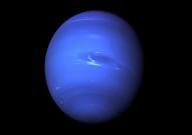
Image credit: NASA

 
An undiscovered planet four times larger than the Earth could be lurking in the outer solar system.

Astronomer Rodney Gomes of the National Observatory of Brazil in Rio de Janeiro has claimed that several Kuiper belt objects including the dwarf planet Sedna are in strange orbits and that a new undiscovered planet could be to blame. He presented his findings at a meeting of the American Astronomical Society on Tuesday.

Other astronomers have been intrigued by Gomes' claims however most agree that more evidence is needed to confirm them. "Obviously, finding another planet in the solar system is a big deal," said astronomer Rory Barnes. "What he showed in his probability arguments is that it's slightly more likely. He doesn't have a smoking gun yet."

For the new work, Gomes analyzed the orbits of 92 Kuiper belt objects, then compared his results to computer models of how the bodies should be distributed, with and without an additional planet.

  View: Full article |  Source: National Geographic

  Discuss: View comments (66)


Recent comments on this story
Comment icon #57 Posted by cormac mac airt on 21 May, 2012, 18:10
Not really as the evidence suggests that the impactors didn't hit at the same time. Unless you see a period covering approximately 190,000 years (Boltysh to Chicxulub) as 'at the same time'. Further evidence also shows that the dinosaurs were already in decline prior to the Chicxulub impactor and there were still representatives living as much as 300,000 years after the event. Not exactly an 'at the same time, mass extinction' now is it? cormac
Comment icon #58 Posted by Erudite Celt on 21 May, 2012, 18:54
@ cormac In reality the four sites you cite have date ranges that demonstrably overlap one-another so it would be quite pointless and indeed impossible to pin down the year,month,day and hour. I simply believe [ though not without good reason ] they hit em-mass, most of course would have ended up in Jupiter's belly while others lingered and became trapped in the asteroid belts, others became companions of the planets such as Phobos and Deimos. If it had of been a genuine mass extinction event 65 million years ago,then you and I Sir would not be exchanging these words here!
Comment icon #59 Posted by cormac mac airt on 21 May, 2012, 19:10
If it wasn't a genuine mass extinction then there really is no reason to bring it up as such. That was, after all, your theory. Right? cormac
Comment icon #60 Posted by Erudite Celt on 21 May, 2012, 19:42
All but a small few percent of reptiles disappeared from the face of the earth. Only the smallest of the mammals survived. The terrestrial earth that previous to the event was 80% forested became 5-15% forested. Mass extinction as you well know can mean many things. But if another Chicxulub were to hit earth tomorrow I think most people would [those that had survived] say that the world had ended, that the world had just undergone a mass extinction event. But in a literal sense mass extinction would mean that not even single nanobacteria would survive. But no...my main point was to float t... [More]
Comment icon #61 Posted by shaddow134 on 21 May, 2012, 20:20
Only 35% of animal species have to die to call it a mass extinction. The five largest mass extinctions in Earth's history occurred during: The late Ordovician period (about 438 million years ago) - 100 families extinct - more than half of the bryozoan and brachiopod species extinct. The late Devonian (about 360 mya) - 30% of animal families extinct. At the end of the Permian period (about 245 mya) - Trilobites go extinct. 50% of all animal families, 95% of all marine species, and many trees die out. The late Triassic (208 mya) - 35% of all animal families die out. Most early dinosaur... [More]
Comment icon #62 Posted by cormac mac airt on 21 May, 2012, 20:38
So we have around 48 million, 115 million, 37 million and 143 million years between each. Yep, definitely not 200 - 250 million years. cormac
Comment icon #63 Posted by Lightingbird on 23 May, 2012, 14:08
I have had this discussion with a few people and despite all of the possibly, I just don't see a planet hurling through our solar system on a collision with earth. Then on top of that, no one has seen it? Didn't this whole theory come from a book or something?
Comment icon #64 Posted by Kratology on 24 May, 2012, 1:46
It's a space station
Comment icon #65 Posted by DBunker on 24 May, 2012, 16:14
Dont you just love it when the some Planet X slingers start talking about Remote Viewing when we ask for evidence of their claims.
Comment icon #66 Posted by Archimedes on 24 May, 2012, 18:55
Where are you getting your information from? 1) If there is a 50 million uncertainty (200-250 million years) in the cycles you are proposing, then that's a 20% margin of error. You have a very odd idea of how accurate Swiss watches are if they can be fast or slow by 20%, imagine a watch that when you wound it, could be 5 hours off 24 hours later. Swiss precision? I don't think so. 2) Can you list the events that you are talking about that have happened with the precision of a Swiss watch?
Please Login or Register to post a comment.
Other news in this category
Large asteroid due to sail past Earth
Posted 5-19-2013 | 12 comments
A chunk of rock nine times the size of the QE2 ocean liner will pass within 3.6 million miles this month....
 
Kepler telescope breaks down
Posted 5-18-2013 | 10 comments
NASA's highly successful planet hunting orbital telescope has suffered a serious equipment failure....
 
Mars rover passes 40-year-old record
Posted 5-17-2013 | 12 comments
Opportunity has broken the record for the furthest distance driven by a NASA vehicle on another world....
 
Chris Hadfield bids farewall to ISS
Posted 5-14-2013 | 10 comments
With 800,000 Twitter followers astronaut Chris Hadfield managed to capture the world's imagination....
 
78,000 people apply for trip to Mars
Posted 5-9-2013 | 46 comments
Despite there being no way get home again, thousands have rushed to sign themselves up to Mars One....
 
Satellite collision narrowly missed
Posted 5-2-2013 | 4 comments
NASA's Fermi Gamma-ray Space Telescope narrowly avoids destruction in an orbital near-miss....
 
NASA reveals images of giant storm on Saturn
Posted 4-30-2013 | 25 comments
A huge storm at Saturn's north pole is 20 times larger and 4 times as powerful as storms on Earth....
 
Virgin Galactic craft to go supersonic ?
Posted 4-28-2013 | 24 comments
SpaceShipTwo will be conducting its first rocket-powered test flight tomorrow says Richard Branson....
 
Meteor explodes over Argentina
Posted 4-24-2013 | 20 comments
Thousands of Argentinians reported witnessing the dazzling light display as the meteor exploded overhead....
 
Threat of space debris collisions on the rise
Posted 4-23-2013 | 27 comments
Top experts from across the globe are meeting to discuss ways to curb the amount of debris in orbit....
 
Russia sends animals in to space
Posted 4-20-2013 | 7 comments
A variety of live animals have been launched in to space by Russia as part of a new one-month mission....
 
New 'habitable zone' planets discovered
Posted 4-19-2013 | 10 comments
NASA's Kepler mission has found several new potentially habitable planets orbiting distant stars....
 
Applicants wanted for one-way Mars trip
Posted 4-17-2013 | 166 comments
Mars One has announced the imminent availability of placements on its ambitious one-way mission to Mars....
 
NASA announces asteroid plans
Posted 4-11-2013 | 15 comments
NASA has confirmed its long-expected asteroid retrieval mission as a precursor to a manned trip....
 

 View: More news in this category
 
Top   |  Home   |   Forum   |   News   |   Image Gallery   |  Columns   |   Encyclopedia   |   Videos   |   Polls

UM-X 10.5 Unexplained-Mysteries.com © 2001-2013
Privacy Policy and Disclaimer   |   Cookies   |   Advertise   |   Contact   |   Help/FAQ