





Space & Astronomy
July 21, 2014


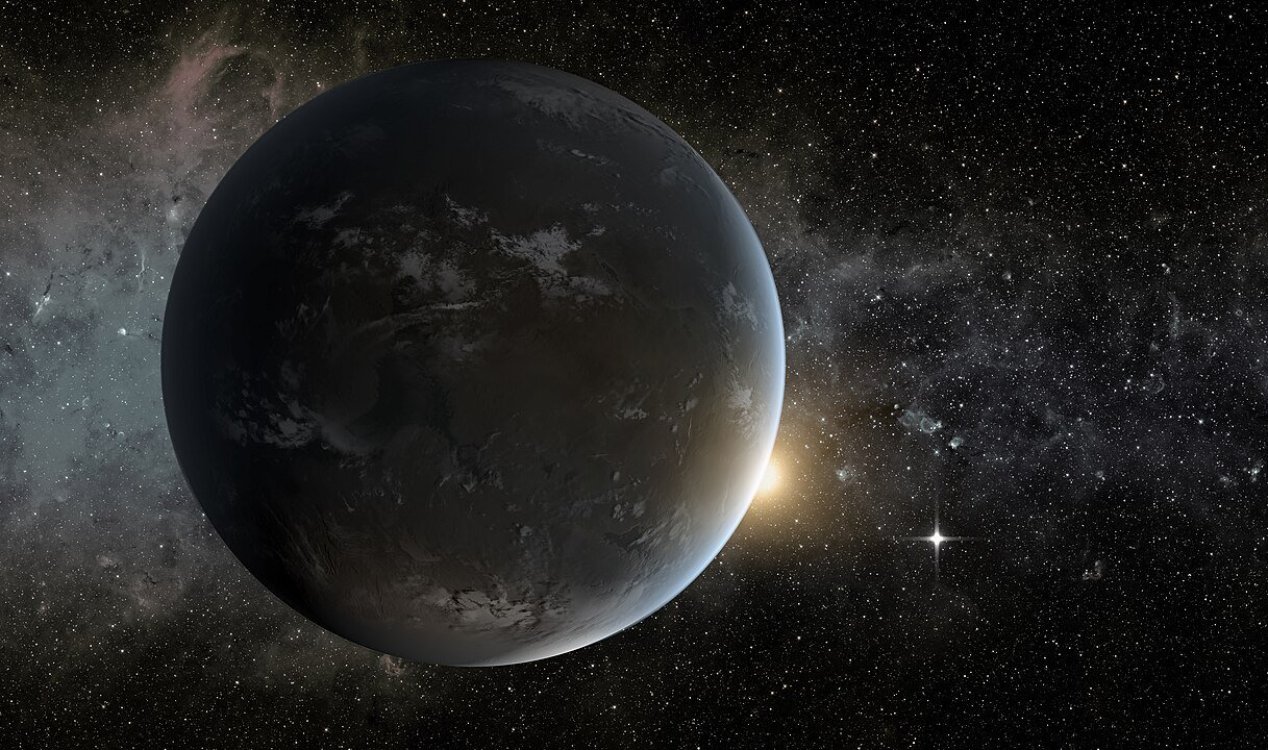
Image: Extrasolar Planet
Credit: (PD) NASA Ames/JPL-Caltech
"We know that many planets are completely uninhabitable because they are either too close or too far from their sun," said David Stevens of the University of East Anglia.
"A planet's habitable zone is based on its distance from the sun and temperatures at which it is possible for the planet to have liquid water."
In a recent study Stevens and his team determined that the presence of an ocean not only provides the correct temperatures and environment for life to develop but can also help to regulate a planet's climate for long term stability as well.
"Oceans have an immense capacity to control climate," said Stevens. "They are beneficial because they cause the surface temperature to respond very slowly to seasonal changes in solar heating. And they help ensure that temperature swings across a planet are kept to tolerable levels."
Source: Discovery News
Are oceans mandatory for life to develop ?
By T.K. RandallJuly 21, 2014
Image: Extrasolar Planet
Credit: (PD) NASA Ames/JPL-Caltech
A new study has concluded that an exoplanet requires a liquid water ocean in order to sustain life.
While Earth's oceans have long been recognized as a vital ingredient in the development of life on our own planet, scientists have long pondered over whether or not a liquid ocean is a necessity in order to sustain life elsewhere in the universe."We know that many planets are completely uninhabitable because they are either too close or too far from their sun," said David Stevens of the University of East Anglia.
In a recent study Stevens and his team determined that the presence of an ocean not only provides the correct temperatures and environment for life to develop but can also help to regulate a planet's climate for long term stability as well.
"Oceans have an immense capacity to control climate," said Stevens. "They are beneficial because they cause the surface temperature to respond very slowly to seasonal changes in solar heating. And they help ensure that temperature swings across a planet are kept to tolerable levels."
Source: Discovery News
Similar stories based on this topic:



The Unexplained Mysteries
Book of Weird News
AVAILABLE NOW
Take a walk on the weird side with this compilation of some of the weirdest stories ever to grace the pages of a newspaper.
Click here to learn more

Support us on Patreon
BONUS CONTENTFor less than the cost of a cup of coffee, you can gain access to a wide range of exclusive perks including our popular 'Lost Ghost Stories' series.
Click here to learn more

1 week
2 weeks
3 weeks
1 month


This week
This month
All time
 |
1. | Loch Ness Monster |
 |
2. | Electronic Voice Phenomenon |
|
3. | Bigfoot |
| - | 4. | Area 51 |
|
5. | Pareidolia |
| - | 6. | Orb |
|
7. | Phoenix Lights |
|
8. | Ghost |
|
9. | Stanton Friedman |
|
10. | Storm Area 51 |


Top | Home | Forum
News | Columns | Encyclopedia


UM 11.3 Unexplained-Mysteries.com (c) 2001-2026
Terms | Privacy Policy | Cookies | Contact
News | Columns | Encyclopedia
UM 11.3 Unexplained-Mysteries.com (c) 2001-2026
Terms | Privacy Policy | Cookies | Contact