





Space & Astronomy
January 30, 2016


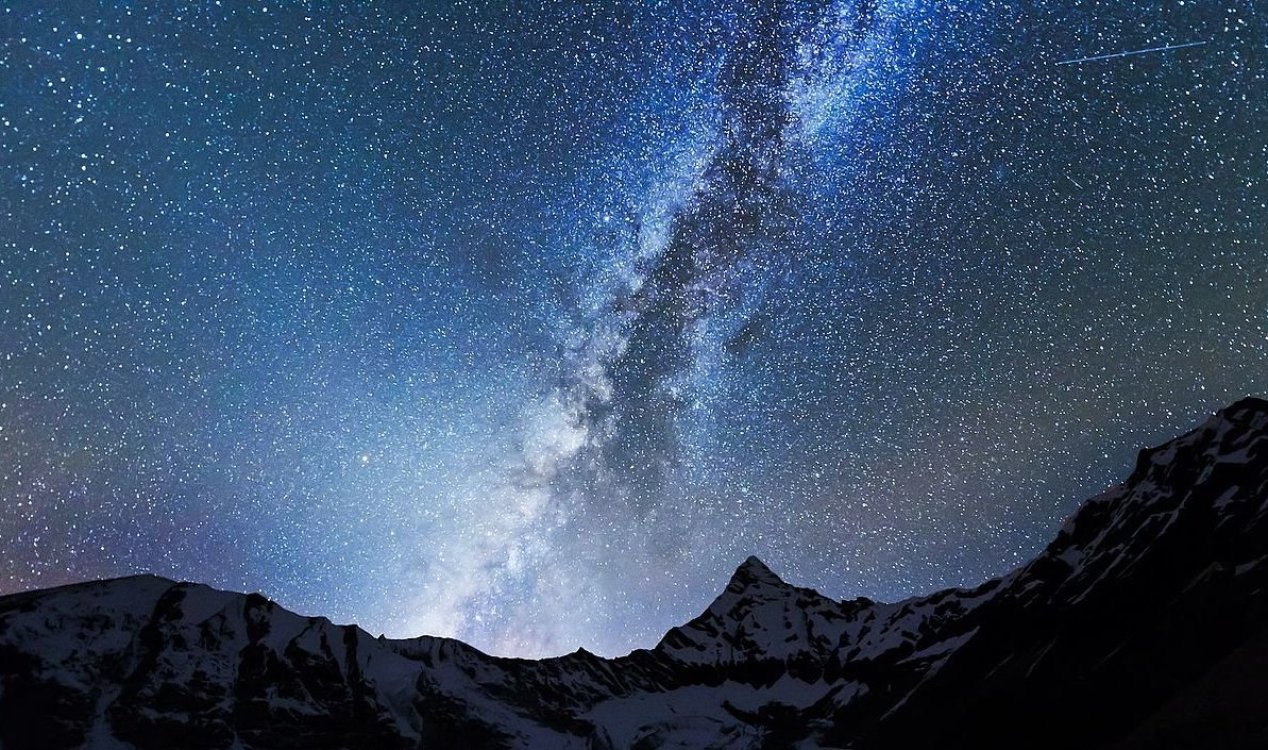
Image: Milky Way Galaxy Seen From Amphu Laptsa Base Camp
Credit: Pravin Mishra / CC BY-SA 4.0 (adapted)
Astrophysicists have been studying its properties for years, but while much is already known about its size and trajectory, its origins have long remained a bit of a mystery.
One theory is that it was a galaxy that never fully formed, but now having measured its chemical composition for the first time using the Hubble Space Telescope's Cosmic Origins Spectrograph, astronomers have determined that the cloud was actually expelled from our own galaxy millions of years ago and has been slowly making its way back here ever since.
"The cloud is an example of how the galaxy is changing with time," said study leader Andrew Fox.
"It's telling us that the Milky Way is a bubbling, very active place where gas can be thrown out of one part of the disk and then return back down into another."
Source: CBC.ca
Giant gas cloud is heading towards our galaxy
By T.K. RandallJanuary 30, 2016
Image: Milky Way Galaxy Seen From Amphu Laptsa Base Camp
Credit: Pravin Mishra / CC BY-SA 4.0 (adapted)
The cloud of gas will trigger an explosion of star formation but will take 30 million years to get here.
Known as the 'Smith Cloud' after doctoral student Gail Smith who discovered it back in the 1960s, the enormous gas cloud is 11,000 light years in length and 2,500 light years across.Astrophysicists have been studying its properties for years, but while much is already known about its size and trajectory, its origins have long remained a bit of a mystery.
"The cloud is an example of how the galaxy is changing with time," said study leader Andrew Fox.
"It's telling us that the Milky Way is a bubbling, very active place where gas can be thrown out of one part of the disk and then return back down into another."
Source: CBC.ca



The Unexplained Mysteries
Book of Weird News
AVAILABLE NOW
Take a walk on the weird side with this compilation of some of the weirdest stories ever to grace the pages of a newspaper.
Click here to learn more

Support us on Patreon
BONUS CONTENTFor less than the cost of a cup of coffee, you can gain access to a wide range of exclusive perks including our popular 'Lost Ghost Stories' series.
Click here to learn more

1 week
2 weeks
3 weeks
1 month


This week
This month
All time
| - | 1. | Pareidolia |
 |
2. | Loch Ness Monster |
|
3. | Ghost |
 |
4. | Electronic Voice Phenomenon |
|
5. | Yeti |
|
6. | Area 51 |
|
7. | Paranormal |
| - | 8. | Spirit Photography (Classic) |
|
9. | Orb |
| - | 10. | Storm Area 51 |


Top | Home | Forum
News | Columns | Encyclopedia


UM 11.3 Unexplained-Mysteries.com (c) 2001-2026
Terms | Privacy Policy | Cookies | Contact
News | Columns | Encyclopedia
UM 11.3 Unexplained-Mysteries.com (c) 2001-2026
Terms | Privacy Policy | Cookies | Contact