





Palaeontology
November 15, 2016


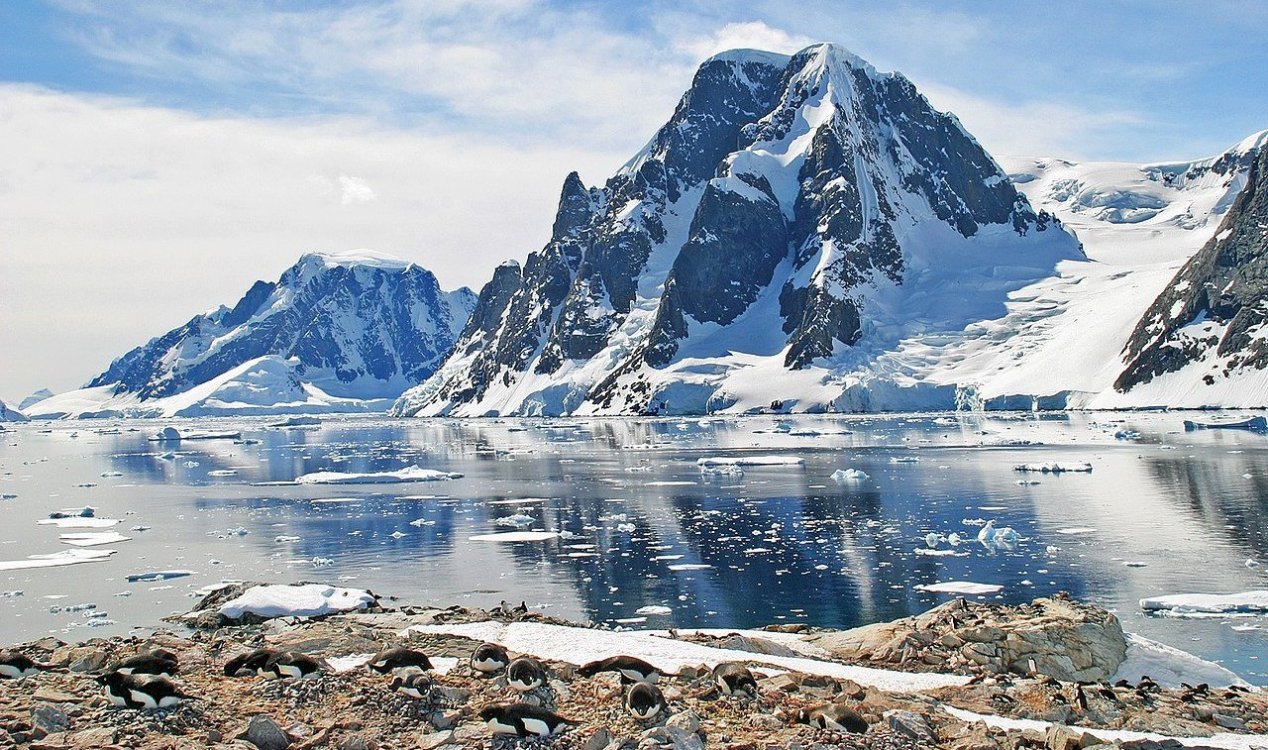
Image: Antarctica - Petermann Island
Credit: W. Bulach / CC BY-SA 4.0 (adapted)
The fossil skull of one such beast was recently discovered on Anatarctica's Seymour Island by scientists with the Chilean Palaeontological Expedition.
By measuring its physical attributes, the researchers were able to determine that the skull belonged to a creature measuring a whopping 33ft in length, making it the biggest ever found in the region.
It's name - Kaikaifilu hervei - references a sea monster legend from Chile's Mapuche culture.
"Prior to this research, the known mosasaur remains from Antarctica provided no evidence for the presence of very large predators like Kaikaifilu, in an environment where plesiosaurs were especially abundant," said palaeontologist Rodrigo Otero from the University of Chile.
"The new find complements one expected ecological element of the Antarctic ecosystem during the latest Cretaceous."
Source: Live Science
Huge 'sea monster' fossil found in Antarctica
By T.K. RandallNovember 15, 2016
Image: Antarctica - Petermann Island
Credit: W. Bulach / CC BY-SA 4.0 (adapted)
Palaeontologists have unearthed the fossil remains of a gigantic Cretaceous-era ocean predator.
Sea monsters might be the stuff of myths and legends today, but in the distant past the world's oceans were teeming with large carnivorous reptiles that could have swallowed a man whole.The fossil skull of one such beast was recently discovered on Anatarctica's Seymour Island by scientists with the Chilean Palaeontological Expedition.
By measuring its physical attributes, the researchers were able to determine that the skull belonged to a creature measuring a whopping 33ft in length, making it the biggest ever found in the region.
"Prior to this research, the known mosasaur remains from Antarctica provided no evidence for the presence of very large predators like Kaikaifilu, in an environment where plesiosaurs were especially abundant," said palaeontologist Rodrigo Otero from the University of Chile.
"The new find complements one expected ecological element of the Antarctic ecosystem during the latest Cretaceous."
Source: Live Science
Similar stories based on this topic:



The Unexplained Mysteries
Book of Weird News
AVAILABLE NOW
Take a walk on the weird side with this compilation of some of the weirdest stories ever to grace the pages of a newspaper.
Click here to learn more

Support us on Patreon
BONUS CONTENTFor less than the cost of a cup of coffee, you can gain access to a wide range of exclusive perks including our popular 'Lost Ghost Stories' series.
Click here to learn more

1 week
2 weeks
3 weeks
1 month


This week
This month
All time
| - | 1. | Pareidolia |
 |
2. | Loch Ness Monster |
|
3. | Ghost |
 |
4. | Electronic Voice Phenomenon |
|
5. | Yeti |
|
6. | Area 51 |
|
7. | Paranormal |
| - | 8. | Spirit Photography (Classic) |
|
9. | Orb |
| - | 10. | Storm Area 51 |


Top | Home | Forum
News | Columns | Encyclopedia


UM 11.3 Unexplained-Mysteries.com (c) 2001-2026
Terms | Privacy Policy | Cookies | Contact
News | Columns | Encyclopedia
UM 11.3 Unexplained-Mysteries.com (c) 2001-2026
Terms | Privacy Policy | Cookies | Contact