





Palaeontology
March 31, 2018


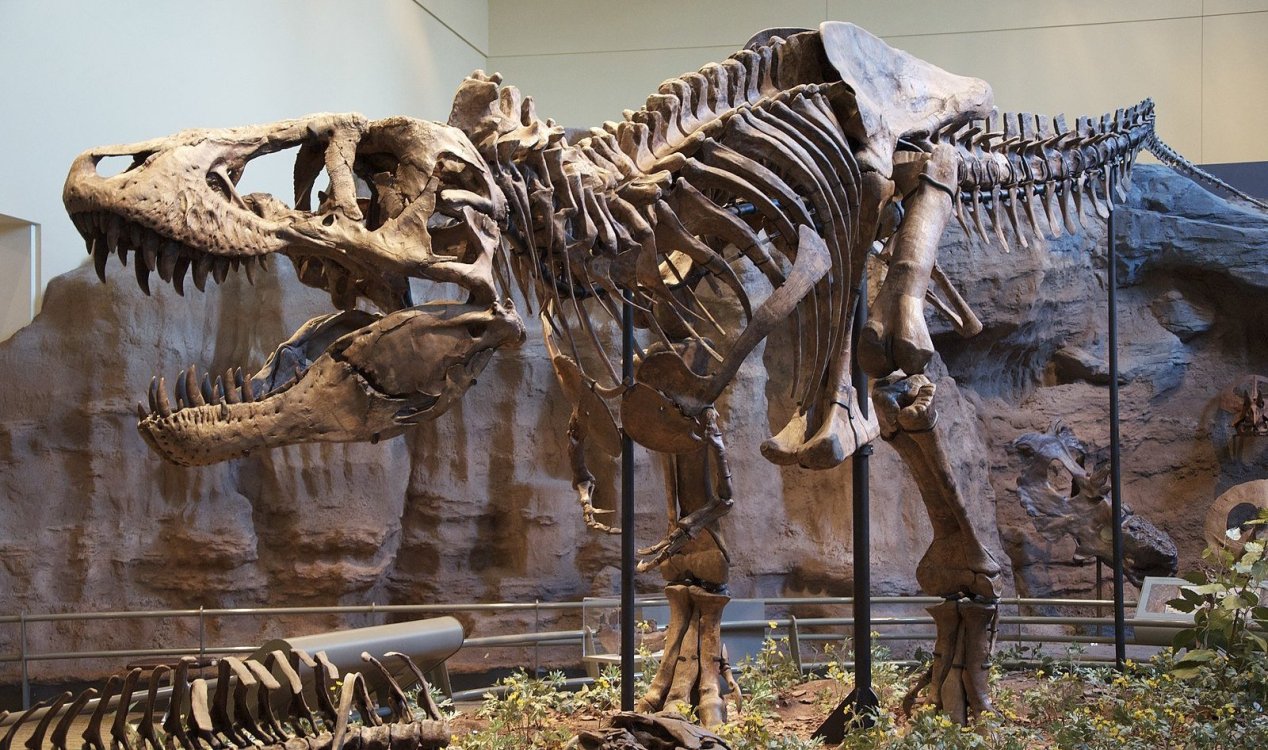
Image: Tyrannosaurus Rex Holotype
Credit: ScottRobertAnselmo / CC BY-SA 3.0 (adapted)
One particularly impressive trait of these young carnivores was how fast they grew up.
"We would suspect [this T.rex would have been] maybe 6 to 7 years old, possibly 8," said Kyle Atkins-Weltman of the Biodiversity Institute and Natural History Museum at Kansas University.
Incredibly, the juveniles would have gained up to 3lbs every day at the peak of their growth.
"By the time they were 4 years old, they were the size of some of the largest land predators that are around today," said Atkins-Weltman. "It's literally hard to fathom an animal growing this fast because there's really nothing quite like it in the modern world."
Tyrannosaurus rex lived from around 67 to 65 million years ago before being wiped out alongside the rest of the dinosaurs by the mass extinction event at the end of the Cretaceous.
Source: Live Science
Young T. rex is '1-in-100-million' discovery
By T.K. RandallMarch 31, 2018
Image: Tyrannosaurus Rex Holotype
Credit: ScottRobertAnselmo / CC BY-SA 3.0 (adapted)
Palaeontologists have unearthed the well-preserved remains of a juvenile Tyrannosaurus rex in Montana.
Found within the state's famous Hell Creek formation, the young dinosaur is one of only a small handful of 'decently complete' juvenile T. rex fossils discovered at the site over the last 100 years.One particularly impressive trait of these young carnivores was how fast they grew up.
"We would suspect [this T.rex would have been] maybe 6 to 7 years old, possibly 8," said Kyle Atkins-Weltman of the Biodiversity Institute and Natural History Museum at Kansas University.
"By the time they were 4 years old, they were the size of some of the largest land predators that are around today," said Atkins-Weltman. "It's literally hard to fathom an animal growing this fast because there's really nothing quite like it in the modern world."
Tyrannosaurus rex lived from around 67 to 65 million years ago before being wiped out alongside the rest of the dinosaurs by the mass extinction event at the end of the Cretaceous.
Scientists find fossils of what may be a baby Tyrannosaurus rex in Montana https://t.co/flWWJ1z8q6 pic.twitter.com/cjORNqMAQB
— Newsweek (@Newsweek) March 30, 2018
Source: Live Science
Similar stories based on this topic:



The Unexplained Mysteries
Book of Weird News
AVAILABLE NOW
Take a walk on the weird side with this compilation of some of the weirdest stories ever to grace the pages of a newspaper.
Click here to learn more

Support us on Patreon
BONUS CONTENTFor less than the cost of a cup of coffee, you can gain access to a wide range of exclusive perks including our popular 'Lost Ghost Stories' series.
Click here to learn more

1 week
2 weeks
3 weeks
1 month


This week
This month
All time
| - | 1. | Pareidolia |
 |
2. | Loch Ness Monster |
|
3. | Ghost |
 |
4. | Yeti |
|
5. | Electronic Voice Phenomenon |
|
6. | Area 51 |
|
7. | Paranormal |
| - | 8. | Spirit Photography (Classic) |
|
9. | Orb |
| - | 10. | Storm Area 51 |


Top | Home | Forum
News | Columns | Encyclopedia


UM 11.3 Unexplained-Mysteries.com (c) 2001-2026
Terms | Privacy Policy | Cookies | Contact
News | Columns | Encyclopedia
UM 11.3 Unexplained-Mysteries.com (c) 2001-2026
Terms | Privacy Policy | Cookies | Contact