





Palaeontology
August 9, 2020


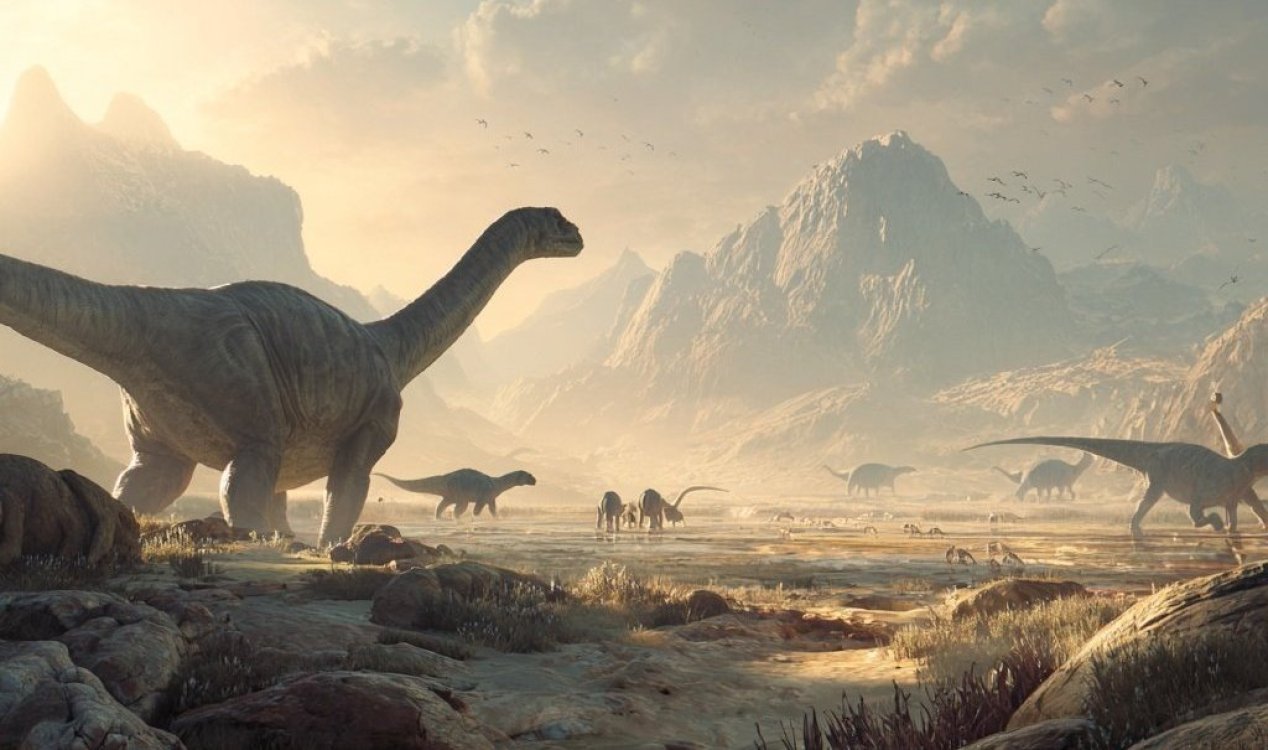
Image: AI-generated (Midjourney)
Since then, palaeontologists have speculated over whether the animal - which had a ridiculously long neck three times the length of its own body - lived predominantly on land or in water.
Now though, a new study by Dr Nick Fraser of National Museums Scotland, and colleagues, has finally shed some light on the mystery.
By using modern high-resolution micro-CT scans of the fossils to construct a detailed computer model of the creature's skull, the researchers were able to determine that Tanystropheus had nostrils on the top of its snout and teeth designed primarily for trapping fish, indicating that it most likely spent the majority of its life in the water.
This also helps to explain how it was able to support the weight of its huge neck.
That said, it is also likely that the species did spend some time out of the water as well.
"Our group feels that this animal was an aquatic animal most of the time," said Fraser.
Source: The Guardian
Reptile had a neck 3 times the length of its body
By T.K. RandallAugust 9, 2020
Image: AI-generated (Midjourney)
Scientists have been studying how a prehistoric creature named Tanystropheus supported its insanely long neck.
Fossils of this remarkable reptile, which roamed the planet's coastal regions some 242 million years ago, were first discovered in the mid 19th-Century.Since then, palaeontologists have speculated over whether the animal - which had a ridiculously long neck three times the length of its own body - lived predominantly on land or in water.
Now though, a new study by Dr Nick Fraser of National Museums Scotland, and colleagues, has finally shed some light on the mystery.
This also helps to explain how it was able to support the weight of its huge neck.
That said, it is also likely that the species did spend some time out of the water as well.
"Our group feels that this animal was an aquatic animal most of the time," said Fraser.
Source: The Guardian



The Unexplained Mysteries
Book of Weird News
AVAILABLE NOW
Take a walk on the weird side with this compilation of some of the weirdest stories ever to grace the pages of a newspaper.
Click here to learn more

Support us on Patreon
BONUS CONTENTFor less than the cost of a cup of coffee, you can gain access to a wide range of exclusive perks including our popular 'Lost Ghost Stories' series.
Click here to learn more

1 week
2 weeks
3 weeks
1 month


This week
This month
All time
| - | 1. | Pareidolia |
 |
2. | Loch Ness Monster |
|
3. | Ghost |
 |
4. | Yeti |
|
5. | Electronic Voice Phenomenon |
|
6. | Area 51 |
|
7. | Paranormal |
| - | 8. | Spirit Photography (Classic) |
|
9. | Orb |
| - | 10. | Storm Area 51 |


Top | Home | Forum
News | Columns | Encyclopedia


UM 11.3 Unexplained-Mysteries.com (c) 2001-2026
Terms | Privacy Policy | Cookies | Contact
News | Columns | Encyclopedia
UM 11.3 Unexplained-Mysteries.com (c) 2001-2026
Terms | Privacy Policy | Cookies | Contact