





Space & Astronomy
June 23, 2026


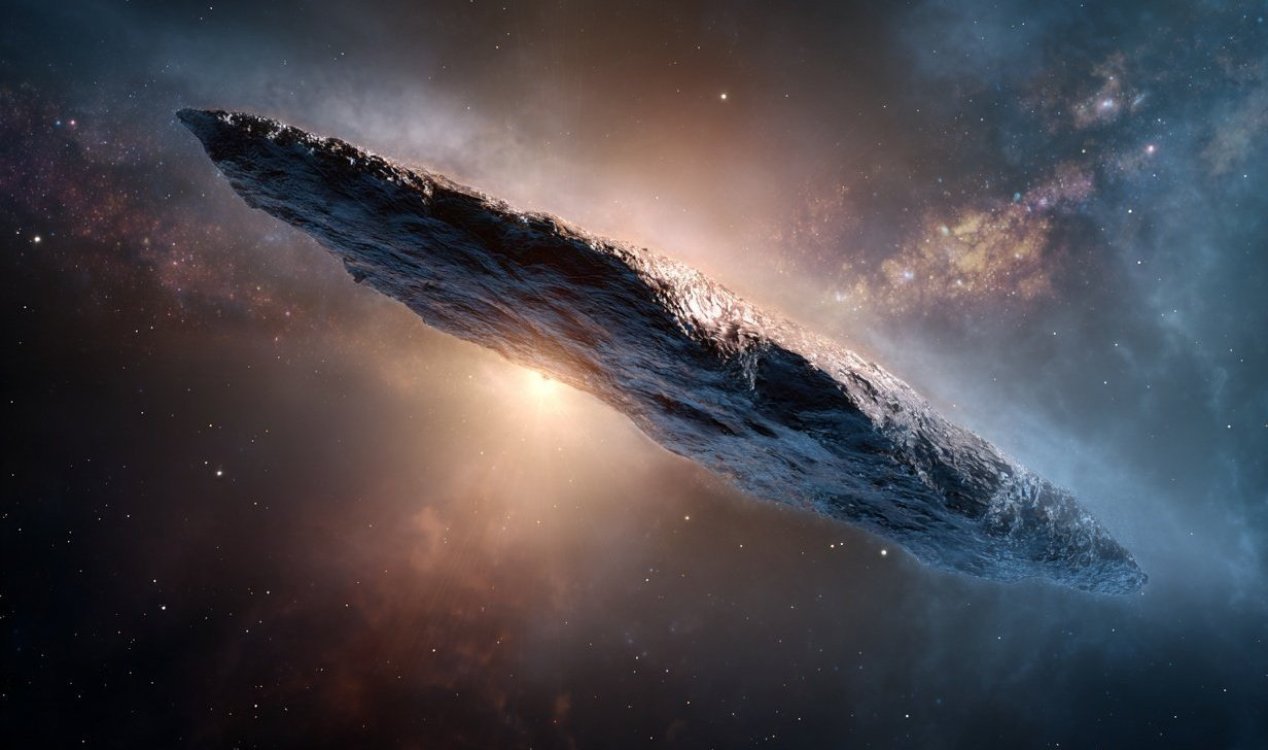
Image: AI-generated (Midjourney)
Most of the intrigue surrounding this object came courtesy of a vocal minority - including Harvard's Prof Avi Loeb - who believed that there was a reasonable chance that 3I/ATLAS could in fact be an artificially constructed object controlled by an advanced extraterrestrial civilization.
Evidence of this came in the form of various anomalies concerning the object's speed, composition and trajectory that Loeb in particular had interpreted as evidence of artificial construction.
When 3I/ATLAS reached its closest approach to the Earth and headed off back toward interstellar space, however, it quickly became apparent that there was nothing intelligent about it at all.
This doesn't mean that it is not significant, however, as evidenced by a new study that is based on more recent observations of the comet using the James Webb Space Telescope.
According to study lead author Martin Cordiner of NASA's Goddard Space Flight Center, 3I/ATLAS may in fact be 12 billion years old - that's three times the age of our own solar system - making it the oldest object humans have ever observed.
Speaking to Agence France-Presse, he stated that this enigmatic visitor may have been on "vast unimaginable trajectories around our galaxy."
While it is still possible that there are other explanations for its unusual composition, chances are that we have been looking at a relic from billions of years before our solar system even existed.
Source: The Guardian
Comet 3I/ATLAS may be three times older than our solar system
By T.K. RandallJune 23, 2026
Image: AI-generated (Midjourney)
The interstellar visitor is now thought to have been on a voyage across the stars lasting more than 12 billion years.
By now, just about everyone will have heard about 3I/ATLAS, an interstellar object - thought by most scientists to be a comet - that was discovered passing through our solar system last year.
Most of the intrigue surrounding this object came courtesy of a vocal minority - including Harvard's Prof Avi Loeb - who believed that there was a reasonable chance that 3I/ATLAS could in fact be an artificially constructed object controlled by an advanced extraterrestrial civilization.
Evidence of this came in the form of various anomalies concerning the object's speed, composition and trajectory that Loeb in particular had interpreted as evidence of artificial construction.
When 3I/ATLAS reached its closest approach to the Earth and headed off back toward interstellar space, however, it quickly became apparent that there was nothing intelligent about it at all.
According to study lead author Martin Cordiner of NASA's Goddard Space Flight Center, 3I/ATLAS may in fact be 12 billion years old - that's three times the age of our own solar system - making it the oldest object humans have ever observed.
Speaking to Agence France-Presse, he stated that this enigmatic visitor may have been on "vast unimaginable trajectories around our galaxy."
While it is still possible that there are other explanations for its unusual composition, chances are that we have been looking at a relic from billions of years before our solar system even existed.
Source: The Guardian
Similar stories based on this topic:



The Unexplained Mysteries
Book of Weird News
AVAILABLE NOW
Take a walk on the weird side with this compilation of some of the weirdest stories ever to grace the pages of a newspaper.
Click here to learn more

Support us on Patreon
BONUS CONTENTFor less than the cost of a cup of coffee, you can gain access to a wide range of exclusive perks including our popular 'Lost Ghost Stories' series.
Click here to learn more

1 week
2 weeks
3 weeks
1 month


This week
This month
All time
| - | 1. | Electronic Voice Phenomenon |
 |
2. | Pareidolia |
 |
3. | Area 51 |
|
4. | Loch Ness Monster |
|
5. | Spirit Photography (Classic) |
|
6. | Orb |
|
7. | Bigfoot |
|
8. | Paranormal |
|
9. | Phoenix Lights |
|
10. | Unidentified Flying Object |


Top | Home | Forum
News | Columns | Encyclopedia


UM 11.3 Unexplained-Mysteries.com (c) 2001-2026
Terms | Privacy Policy | Cookies | Contact
News | Columns | Encyclopedia
UM 11.3 Unexplained-Mysteries.com (c) 2001-2026
Terms | Privacy Policy | Cookies | Contact