





Space & Astronomy
June 2, 2026


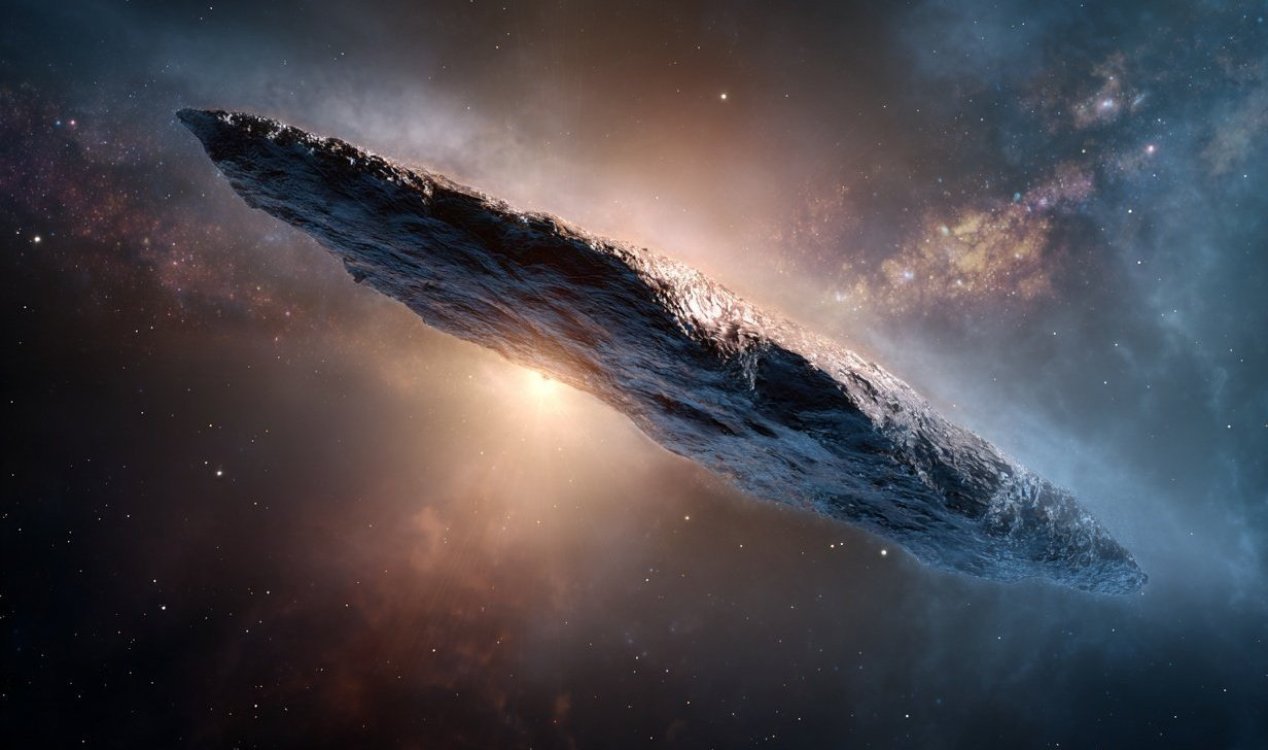
Image: AI-generated (Midjourney)
Most of the intrigue surrounding this object came courtesy of a vocal minority - including Harvard's Prof Avi Loeb - who believed that there was a reasonable chance that 3I/ATLAS could in fact be an artificially constructed object controlled by an advanced extraterrestrial civilization.
Evidence of this came in the form of various anomalies concerning the object's speed, composition and trajectory that Loeb in particular had interpreted as evidence of artificial construction.
When 3I/ATLAS reached its closest approach to the Earth and headed off back toward interstellar space, however, it quickly became apparent that there was nothing intelligent about it all.
That's not to say that this curious interstellar interloper doesn't have a few more surprises in store, however, as evidenced this week when NASA published the results of its latest observations of the object.
Using the James Webb Space Telescope's MIRI (Mid-Infrared Instrument), astronomers discovered methane gas - something that hadn't been detected during earlier observations.
This suggests that the methane was likely trapped beneath the object's surface and then exposed when the upper layers heated up during its closest approach to the Sun.
NASA also revealed that the amount of methane relative to water was surprisingly high and that 3I/ATLAS is also unusually rich in carbon dioxide.
These anomalies are testament to the fact that the comet formed in a much different environment than most of the comets that formed within our own solar system.
Source: NASA.gov
Space telescope detects methane on interstellar visitor 3I/ATLAS
By T.K. RandallJune 2, 2026
Image: AI-generated (Midjourney)
The object, which became the topic of intense study and debate last year, is still throwing up some surprises.
By now, just about everyone will have heard about 3I/ATLAS, an interstellar object - thought by most scientists to be a comet - that was discovered passing through our solar system last year.
Most of the intrigue surrounding this object came courtesy of a vocal minority - including Harvard's Prof Avi Loeb - who believed that there was a reasonable chance that 3I/ATLAS could in fact be an artificially constructed object controlled by an advanced extraterrestrial civilization.
Evidence of this came in the form of various anomalies concerning the object's speed, composition and trajectory that Loeb in particular had interpreted as evidence of artificial construction.
When 3I/ATLAS reached its closest approach to the Earth and headed off back toward interstellar space, however, it quickly became apparent that there was nothing intelligent about it all.
Using the James Webb Space Telescope's MIRI (Mid-Infrared Instrument), astronomers discovered methane gas - something that hadn't been detected during earlier observations.
This suggests that the methane was likely trapped beneath the object's surface and then exposed when the upper layers heated up during its closest approach to the Sun.
NASA also revealed that the amount of methane relative to water was surprisingly high and that 3I/ATLAS is also unusually rich in carbon dioxide.
These anomalies are testament to the fact that the comet formed in a much different environment than most of the comets that formed within our own solar system.
Source: NASA.gov
Similar stories based on this topic:



The Unexplained Mysteries
Book of Weird News
AVAILABLE NOW
Take a walk on the weird side with this compilation of some of the weirdest stories ever to grace the pages of a newspaper.
Click here to learn more

Support us on Patreon
BONUS CONTENTFor less than the cost of a cup of coffee, you can gain access to a wide range of exclusive perks including our popular 'Lost Ghost Stories' series.
Click here to learn more

1 week
2 weeks
3 weeks
1 month


This week
This month
All time
 |
1. | Pareidolia |
 |
2. | Loch Ness Monster |
|
3. | Orb |
|
4. | Area 51 |
|
5. | Bigfoot |
|
6. | Spirit Photography (Classic) |
|
7. | Unidentified Flying Object |
|
8. | Electronic Voice Phenomenon |
|
9. | Roswell Incident |
|
10. | Paranormal |


Top | Home | Forum
News | Columns | Encyclopedia


UM 11.3 Unexplained-Mysteries.com (c) 2001-2026
Terms | Privacy Policy | Cookies | Contact
News | Columns | Encyclopedia
UM 11.3 Unexplained-Mysteries.com (c) 2001-2026
Terms | Privacy Policy | Cookies | Contact