





Space & Astronomy
January 3, 2026


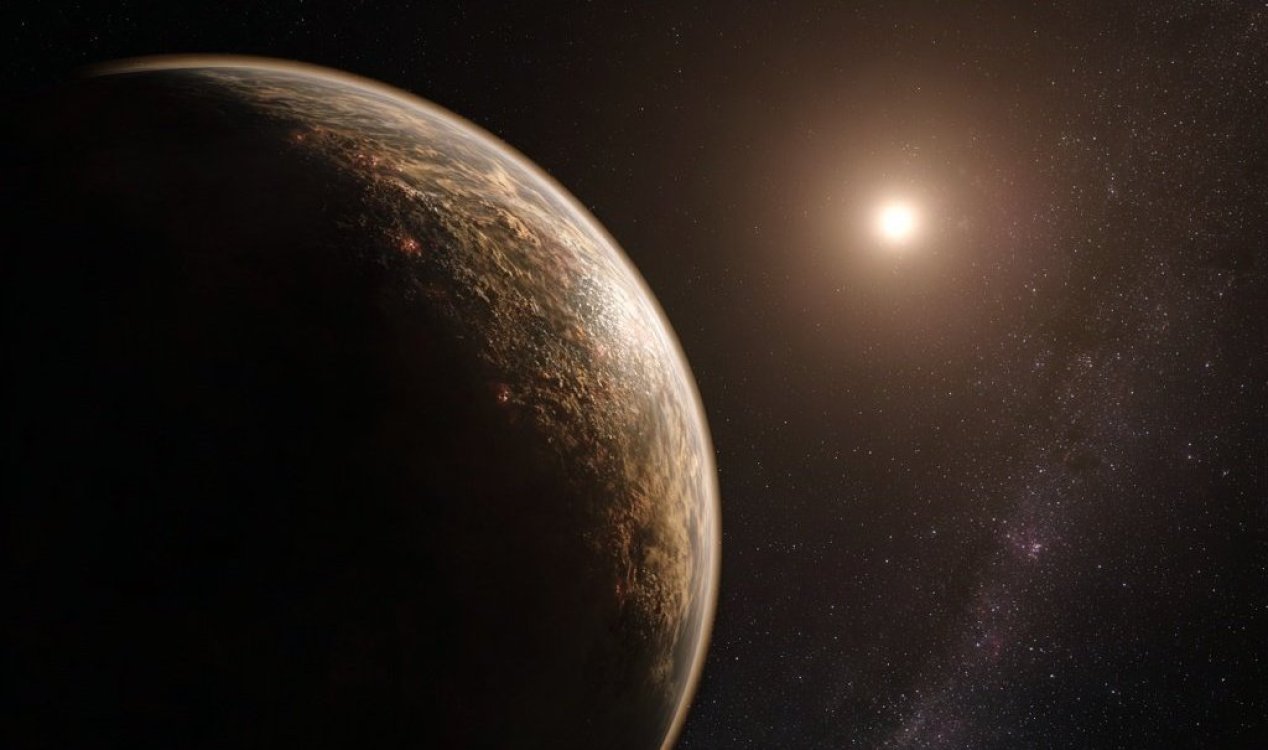
Image: AI-generated (Midjourney)
Now, the discovery of one particular rogue planet has indicated that these free-floating worlds may be a lot more commonplace than had previously been thought possible.
Situated 9,950 light-years away in the direction of the galactic core, this newfound planet - which has a mass 70 times larger than that of the Earth - was spotted thanks to observations from multiple observatories including the European Space Agency's now-retired Gaia space telescope.
While it is still not clear exactly how these planets end up so far from anywhere, the most likely scenario is that they originally formed around a star as usual but were then cast out into the void, possibly due to interactions between planets or due to the gravity of a passing star.
Some might even form independently in the same nebulae that give birth to stars.
"Our discovery offers further evidence that the galaxy may be teeming with rogue planets," said study co-author Subo Dong of China's Peking University.
Astronomers are hopeful that next-generation telescopes, such as NASA's Nancy Grace Roman Space Telescope, will make it possible to find many more examples of these free-floating worlds.
Who knows, there may even be one in close proximity to our own solar system.
Source: Space.com
Mysterious rogue planet discovered in the interstellar void
By T.K. RandallJanuary 3, 2026
Image: AI-generated (Midjourney)
Astronomers have detected an enigmatic free floating planet approximately 10,000 light-years from Earth.
Whereas it was once believed that all planets orbited stars, findings have since shown that it is actually possible for planets to be found in the interstellar void, far from any solar system.Now, the discovery of one particular rogue planet has indicated that these free-floating worlds may be a lot more commonplace than had previously been thought possible.
Situated 9,950 light-years away in the direction of the galactic core, this newfound planet - which has a mass 70 times larger than that of the Earth - was spotted thanks to observations from multiple observatories including the European Space Agency's now-retired Gaia space telescope.
While it is still not clear exactly how these planets end up so far from anywhere, the most likely scenario is that they originally formed around a star as usual but were then cast out into the void, possibly due to interactions between planets or due to the gravity of a passing star.
"Our discovery offers further evidence that the galaxy may be teeming with rogue planets," said study co-author Subo Dong of China's Peking University.
Astronomers are hopeful that next-generation telescopes, such as NASA's Nancy Grace Roman Space Telescope, will make it possible to find many more examples of these free-floating worlds.
Who knows, there may even be one in close proximity to our own solar system.
Source: Space.com



The Unexplained Mysteries
Book of Weird News
AVAILABLE NOW
Take a walk on the weird side with this compilation of some of the weirdest stories ever to grace the pages of a newspaper.
Click here to learn more

Support us on Patreon
BONUS CONTENTFor less than the cost of a cup of coffee, you can gain access to a wide range of exclusive perks including our popular 'Lost Ghost Stories' series.
Click here to learn more

1 week
2 weeks
3 weeks
1 month


This week
This month
All time
 |
1. | Loch Ness Monster |
 |
2. | Electronic Voice Phenomenon |
|
3. | Pareidolia |
| - | 4. | Area 51 |
| - | 5. | Phoenix Lights |
| - | 6. | Orb |
| - | 7. | Bigfoot |
| - | 8. | Stanton Friedman |
| - | 9. | Ghost |
|
10. | Storm Area 51 |


Top | Home | Forum
News | Columns | Encyclopedia


UM 11.3 Unexplained-Mysteries.com (c) 2001-2026
Terms | Privacy Policy | Cookies | Contact
News | Columns | Encyclopedia
UM 11.3 Unexplained-Mysteries.com (c) 2001-2026
Terms | Privacy Policy | Cookies | Contact