





Search results for: plane
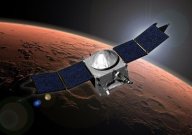
NASA's MAVEN spacecraft is officially dead due to mystery fault
Jun 4, 2026The iconic Mars spacecraft has ended its mission after more than 11 years in orbit around the Red Planet.

Watch live: asteroid set to pass close to the Earth later tonight
VIDEO May 18, 2026A space rock the size of a basketball court is due to make its closest approach of our planet later on this evening.
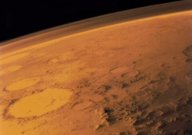
NASA plans to launch nuclear-powered Mars mission by end of 2028
May 14, 2026An ambitious new mission to the red Planet could demonstrate, for the first time, nuclear electric propulsion in action.
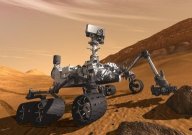
NASA's Curiosity rover discovers ancient 'organic matter' on Mars
VIDEO Apr 21, 2026The discovery points to the building blocks of life being preserved on the Red Planet for billions of years.

Asteroid Apophis set for 'very rare' close encounter with Earth in 2029
Apr 17, 2026A large asteroid is set to make history when it passes within 20,000 miles of our planet before the decade is out.

Dream Chaser: could the reusable space plane's dream be over?
Apr 16, 2026A space plane once hoped to be a successor to NASA's space shuttles may ultimately never make it to orbit.
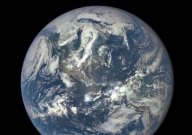
What would happen to us if the Sun suddenly disappeared?
Apr 2, 2026This unfathomable scenario would be, as you might expect, absolutely devastating for all life on our planet.

Bermuda Triangle hunt for lost plane yields unexpected discovery
Mar 20, 2026Divers accompanied by a TV crew had been scouring parts of the infamous region for a World War II plane wreckage.

Astronomers discover completely new category of extrasolar planet
Mar 16, 2026This distant world, known as L98-59d, offers a literal interpretation of the phrase 'the floor is lava'.

'Impossible' inside-out solar system discovered by astronomers
Feb 13, 2026The discovery of a distant solar system with its planets in a seemingly impossible order has been revealed this week.
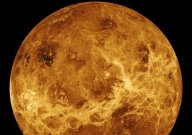
Subterranean caverns discovered beneath the surface of Venus
Feb 9, 2026Scientists have found evidence of a subterranean labyrinth of tunnels hidden beneath the planet's surface.
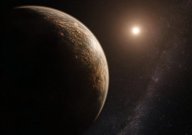
Mysterious rogue planet discovered in the interstellar void
Jan 3, 2026Astronomers have detected an enigmatic free floating planet approximately 10,000 light-years from Earth.
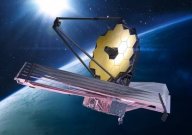
Astronomers have discovered a planet that is the shape of a lemon
Dec 18, 2025The mysterious extrasolar world was spotted with the help of NASA's James Webb Space Telescope.
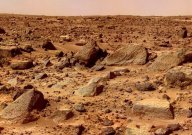
Scientists detect lightning in the atmosphere of Mars for the first time
Nov 29, 2025New evidence suggests that the Red Planet is capable of producing lightning - something never seen there before.

Amelia Earhart Nikumaroro expedition team shares update
Nov 1, 2025The mystery of what happened to Amelia Earhart could soon be solved... but it might have to wait a little while longer.
Expedition set to embark on new effort to solve Amelia Earhart mystery
Oct 3, 2025Later this month, researchers will be heading to Nikumaroro to look for direct physical evidence of Earhart's plane.

Surprising discovery finds evidence of activity on distant dwarf planet
Sep 29, 2025Scientists have discovered evidence of methane gas on Makemake - a tiny world situated beyond the orbit of Pluto.

Unusual 'leopard-spot' rocks on Mars hint at ancient life
Sep 10, 2025Scientists have identified mudstone rocks on the Martian surface that may be indicative of life in the planet's distant past.

Dark matter could turn giant planets into tiny black holes
Aug 31, 2025Dark matter accumulating in the cores of particular large planets could help us to finally confirm its existence.
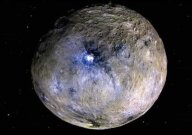
Nearby dwarf planet was once a prime candidate for life
Aug 22, 2025New research has highlighted the likelihood that Ceres would have once provided habitable conditions.



News | Columns | Encyclopedia


UM 11.3 Unexplained-Mysteries.com (c) 2001-2026
Terms | Privacy Policy | Cookies | Contact