





Space & Astronomy
August 31, 2025


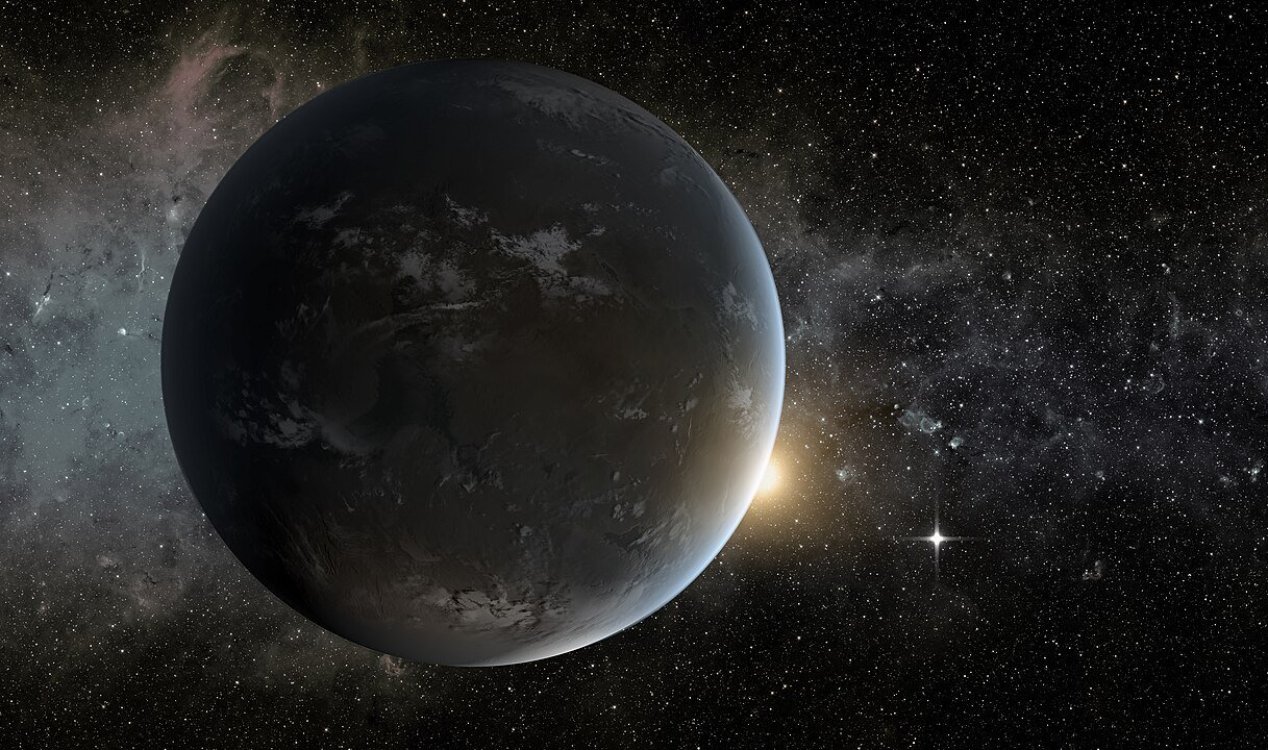
Image: Extrasolar Planet
Credit: (PD) NASA Ames/JPL-Caltech
Despite concerted efforts, astronomers have been unable to observe dark matter directly because it does not absorb, emit or reflect any electromagnetic radiation, thus making it impossible to see.
Now, scientists have highlighted a particularly disturbing (though potentially very helpful) consequence of dark matter - the complete collapse of a giant planet into a black hole.
According to one theoretical model, dark matter can potentially accumulate in the core of a large planet and cause it to collapse into a tiny black hole that would then feed on the surrounding material.
If such an object could be found, it would help to prove dark matter's existence once and for all.
"If the dark matter particles are heavy enough and don't annihilate, they may eventually collapse into a tiny black hole," astrophysicist Mehrdad Phoroutan-Mehr told Science Alert.
"This black hole could then grow and consume the entire planet, turning it into a black hole with the same mass as the original planet."
"This outcome is only possible under the superheavy non-annihilating dark matter model."
Source: Science Alert
Dark matter could turn giant planets into tiny black holes
By T.K. RandallAugust 31, 2025
Image: Extrasolar Planet
Credit: (PD) NASA Ames/JPL-Caltech
Dark matter accumulating in the cores of particular large planets could help us to finally confirm its existence.
The precise nature of dark matter and dark energy, which are thought to account for up to 96% of the observable universe, remains one of the most important unsolved mysteries in modern physics.Despite concerted efforts, astronomers have been unable to observe dark matter directly because it does not absorb, emit or reflect any electromagnetic radiation, thus making it impossible to see.
Now, scientists have highlighted a particularly disturbing (though potentially very helpful) consequence of dark matter - the complete collapse of a giant planet into a black hole.
According to one theoretical model, dark matter can potentially accumulate in the core of a large planet and cause it to collapse into a tiny black hole that would then feed on the surrounding material.
"If the dark matter particles are heavy enough and don't annihilate, they may eventually collapse into a tiny black hole," astrophysicist Mehrdad Phoroutan-Mehr told Science Alert.
"This black hole could then grow and consume the entire planet, turning it into a black hole with the same mass as the original planet."
"This outcome is only possible under the superheavy non-annihilating dark matter model."
Source: Science Alert
Similar stories based on this topic:



The Unexplained Mysteries
Book of Weird News
AVAILABLE NOW
Take a walk on the weird side with this compilation of some of the weirdest stories ever to grace the pages of a newspaper.
Click here to learn more

Support us on Patreon
BONUS CONTENTFor less than the cost of a cup of coffee, you can gain access to a wide range of exclusive perks including our popular 'Lost Ghost Stories' series.
Click here to learn more

1 week
2 weeks
3 weeks
1 month


This week
This month
All time
 |
1. | Pareidolia |
 |
2. | Electronic Voice Phenomenon |
|
3. | Yeti |
|
4. | Paranormal |
|
5. | Orb |
|
6. | Loch Ness Monster |
|
7. | Area 51 |
|
8. | Spirit Photography (Classic) |
|
9. | Ghost |
|
10. | Storm Area 51 |


Top | Home | Forum
News | Columns | Encyclopedia


UM 11.3 Unexplained-Mysteries.com (c) 2001-2026
Terms | Privacy Policy | Cookies | Contact
News | Columns | Encyclopedia
UM 11.3 Unexplained-Mysteries.com (c) 2001-2026
Terms | Privacy Policy | Cookies | Contact