





Space & Astronomy
April 21, 2026


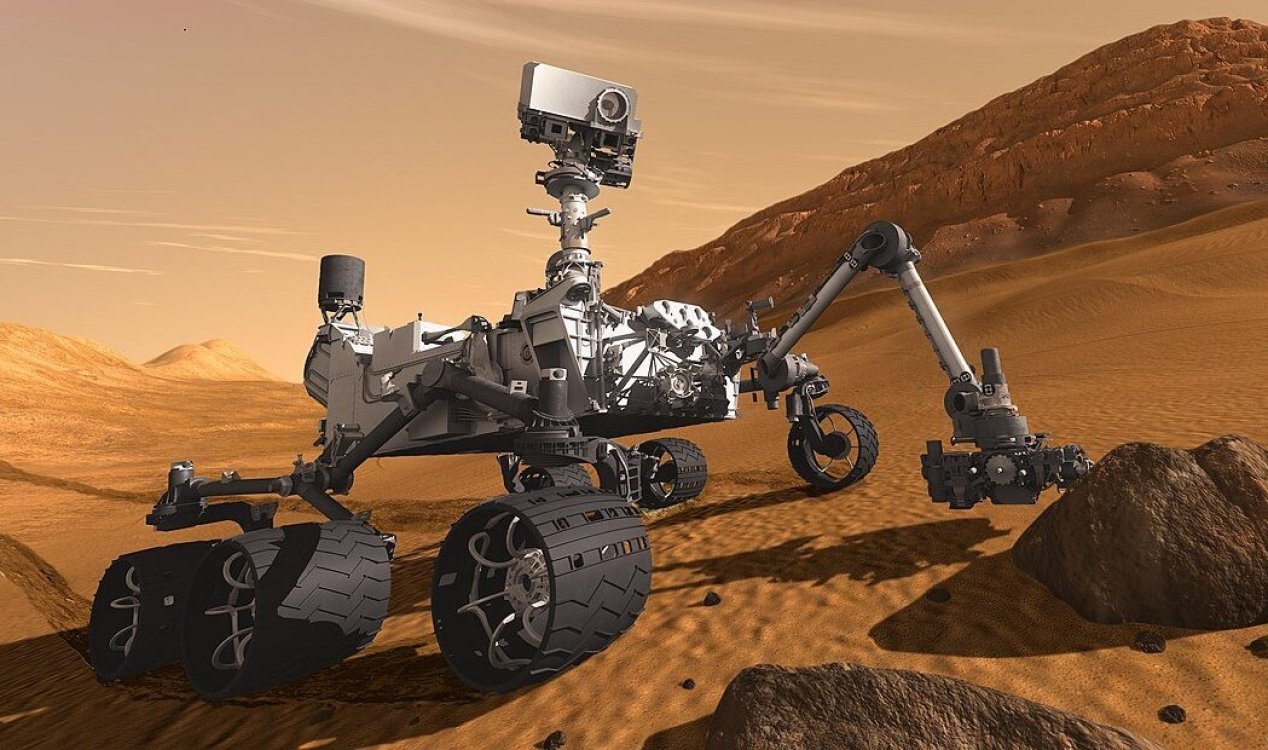
Image: Curiosity Rover
Credit: (PD) NASA/JPL-Caltech via Wikimedia Commons
Now, the Curiosity rover has discovered what appear to be organic molecules on Mars, some of which having never been found on the Red Planet before.
Despite the fact that it is not possible to determine if these molecules are actually traces of ancient Martian life, the find is particularly exciting because it shows that some of the building blocks of life were on Mars 3.5 billion years ago and that traces of them have been preserved all that time.
This means that if there really was life on the Red Planet in its distant past, traces of that could be preserved as well.
"We think we're looking at organic matter that's been preserved on Mars for 3.5 billion years," said mission scientist and University of Florida astrogeologist Prof Amy Williams.
"Is it life? We can't tell, based on this information."
"For a long time, we thought that all organic matter was going to be seriously degraded by that harsh radiation environment."
"It's really exciting to see [that] large complex material can survive in the subsurface environment."
Source: The Guardian
NASA's Curiosity rover discovers ancient 'organic matter' on Mars
By T.K. RandallApril 21, 2026
Image: Curiosity Rover
Credit: (PD) NASA/JPL-Caltech via Wikimedia Commons
The discovery points to the building blocks of life being preserved on the Red Planet for billions of years.
Although we don't hear about it as much these days, the hunt for evidence of life on Mars continues unabated, with both of NASA's exploratory rovers scouring the Martian surface for clues pointing to the existence of primitive organisms that might have lived there in the planet's distant past.Now, the Curiosity rover has discovered what appear to be organic molecules on Mars, some of which having never been found on the Red Planet before.
Despite the fact that it is not possible to determine if these molecules are actually traces of ancient Martian life, the find is particularly exciting because it shows that some of the building blocks of life were on Mars 3.5 billion years ago and that traces of them have been preserved all that time.
This means that if there really was life on the Red Planet in its distant past, traces of that could be preserved as well.
"Is it life? We can't tell, based on this information."
"For a long time, we thought that all organic matter was going to be seriously degraded by that harsh radiation environment."
"It's really exciting to see [that] large complex material can survive in the subsurface environment."
Source: The Guardian
Similar stories based on this topic:



The Unexplained Mysteries
Book of Weird News
AVAILABLE NOW
Take a walk on the weird side with this compilation of some of the weirdest stories ever to grace the pages of a newspaper.
Click here to learn more

Support us on Patreon
BONUS CONTENTFor less than the cost of a cup of coffee, you can gain access to a wide range of exclusive perks including our popular 'Lost Ghost Stories' series.
Click here to learn more

1 week
2 weeks
3 weeks
1 month


This week
This month
All time
 |
1. | Loch Ness Monster |
 |
2. | Electronic Voice Phenomenon |
|
3. | Pareidolia |
| - | 4. | Area 51 |
| - | 5. | Phoenix Lights |
| - | 6. | Orb |
| - | 7. | Bigfoot |
| - | 8. | Stanton Friedman |
| - | 9. | Ghost |
|
10. | Storm Area 51 |


Top | Home | Forum
News | Columns | Encyclopedia


UM 11.3 Unexplained-Mysteries.com (c) 2001-2026
Terms | Privacy Policy | Cookies | Contact
News | Columns | Encyclopedia
UM 11.3 Unexplained-Mysteries.com (c) 2001-2026
Terms | Privacy Policy | Cookies | Contact