





Space & Astronomy
August 22, 2025


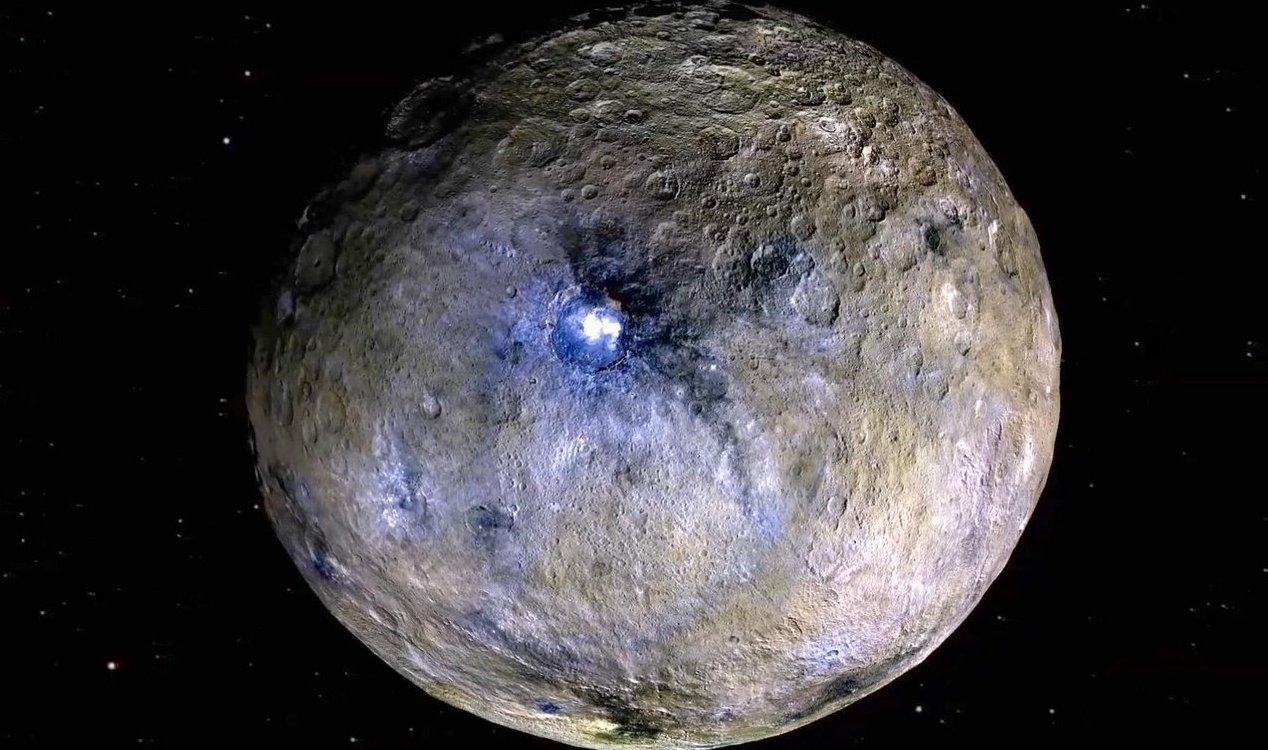
Image: Rendering of the Dwarf Planet Ceres
Credit: NASA/JPL-Caltech/UCLA/MPS/DLR/IDA / (PD)
Nonetheless, new NASA research has determined that this tiny world once offered conditions that would have been more than suitable for microorganisms to thrive.
Previously, NASA's Dawn mission - which ended in 2018 - discovered that several bright, reflective regions on Ceres' surface were made up of salt that had originated underground in huge reservoirs of brine (salty water).
Evidence of organic material in the form of carbon molecules was also found.
"The presence of water and carbon molecules are two critical pieces of the habitability puzzle on Ceres," NASA wrote.
"The new findings offer the third: a long-lasting source of chemical energy in Ceres' ancient past that could have made it possible for microorganisms to survive."
"This result does not mean that Ceres had life, but rather, that there likely was 'food' available should life have ever arisen on Ceres."
The new research involved building thermal and chemical models mimicking the conditions on Ceres.
"On Earth, when hot water from deep underground mixes with the ocean, the result is often a buffet for microbes - a feast of chemical energy," said lead study author Sam Courville.
"So it could have big implications if we could determine whether Ceres' ocean had an influx of hydrothermal fluid in the past."
Source: JPL
Nearby dwarf planet was once a prime candidate for life
By T.K. RandallAugust 22, 2025
Image: Rendering of the Dwarf Planet Ceres
Credit: NASA/JPL-Caltech/UCLA/MPS/DLR/IDA / (PD)
New research has highlighted the likelihood that Ceres would have once provided habitable conditions.
A small icy world situated between Mars and Jupiter, Ceres doesn't exactly stand out as the most promising candidate in the hunt for evidence of extraterrestrial life.Nonetheless, new NASA research has determined that this tiny world once offered conditions that would have been more than suitable for microorganisms to thrive.
Previously, NASA's Dawn mission - which ended in 2018 - discovered that several bright, reflective regions on Ceres' surface were made up of salt that had originated underground in huge reservoirs of brine (salty water).
Evidence of organic material in the form of carbon molecules was also found.
"The presence of water and carbon molecules are two critical pieces of the habitability puzzle on Ceres," NASA wrote.
"This result does not mean that Ceres had life, but rather, that there likely was 'food' available should life have ever arisen on Ceres."
The new research involved building thermal and chemical models mimicking the conditions on Ceres.
"On Earth, when hot water from deep underground mixes with the ocean, the result is often a buffet for microbes - a feast of chemical energy," said lead study author Sam Courville.
"So it could have big implications if we could determine whether Ceres' ocean had an influx of hydrothermal fluid in the past."
Source: JPL
Similar stories based on this topic:



The Unexplained Mysteries
Book of Weird News
AVAILABLE NOW
Take a walk on the weird side with this compilation of some of the weirdest stories ever to grace the pages of a newspaper.
Click here to learn more

Support us on Patreon
BONUS CONTENTFor less than the cost of a cup of coffee, you can gain access to a wide range of exclusive perks including our popular 'Lost Ghost Stories' series.
Click here to learn more

1 week
2 weeks
3 weeks
1 month


This week
This month
All time
 |
1. | Loch Ness Monster |
 |
2. | Electronic Voice Phenomenon |
|
3. | Pareidolia |
| - | 4. | Area 51 |
| - | 5. | Phoenix Lights |
| - | 6. | Orb |
| - | 7. | Bigfoot |
| - | 8. | Stanton Friedman |
| - | 9. | Ghost |
|
10. | Storm Area 51 |


Top | Home | Forum
News | Columns | Encyclopedia


UM 11.3 Unexplained-Mysteries.com (c) 2001-2026
Terms | Privacy Policy | Cookies | Contact
News | Columns | Encyclopedia
UM 11.3 Unexplained-Mysteries.com (c) 2001-2026
Terms | Privacy Policy | Cookies | Contact