





Space & Astronomy
March 14, 2024


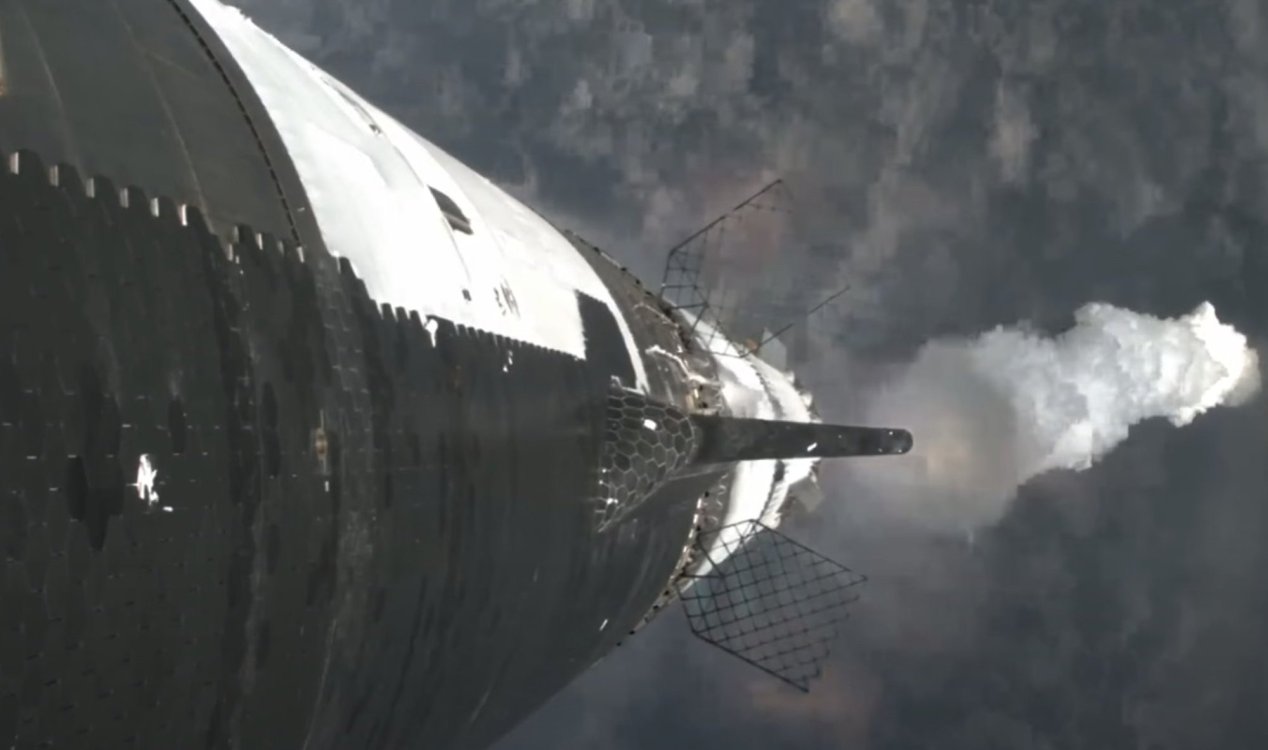
Image Credit: SpaceX
Then, a few months later, while the second test flight did see Starship manage to reach space for the first time and its two stages successfully separated around two-and-a-half minutes into the flight, the signal from the second stage was ultimately lost, suggesting that it had in fact self-destructed.
Now, for the first time this year, Starship has launched again and things are definitely looking up.
The third flight, which was live-streamed online, saw the next-generation space vehicle launch atop a Super Heavy booster from the SpaceX Starbase launchpad near Boca Chica Village, Texas.
Reaching a peak altitude of 234km, the spacecraft flew further and faster than ever before, although it did burn up during re-entry rather than make the planned splashdown in the Indian Ocean.
The booster, too, came to a violent end in the Gulf of Mexico after its engines didn't fully ignite.
Even so, the mission has been hailed as a success and a major step toward Elon Musk's goal of creating a viable interplanetary spacecraft capable of carrying large payloads to Mars.
"Starship reached orbital velocity!" he wrote.
"Congratulations SpaceX team! Starship will make life multiplanetary."
Source: Telegraph
Elon Musk's Starship soars into the heavens on successful third test flight
By T.K. RandallMarch 14, 2024
Image Credit: SpaceX
The enormous next-generation spacecraft launched atop a Super Heavy booster in Texas earlier today.
Back in April 2023, the maiden test flight of the SpaceX CEO's ambitious spacecraft Starship ended with a bang when the vehicle exploded a mere four minutes after launch.Then, a few months later, while the second test flight did see Starship manage to reach space for the first time and its two stages successfully separated around two-and-a-half minutes into the flight, the signal from the second stage was ultimately lost, suggesting that it had in fact self-destructed.
Now, for the first time this year, Starship has launched again and things are definitely looking up.
The third flight, which was live-streamed online, saw the next-generation space vehicle launch atop a Super Heavy booster from the SpaceX Starbase launchpad near Boca Chica Village, Texas.
The booster, too, came to a violent end in the Gulf of Mexico after its engines didn't fully ignite.
Even so, the mission has been hailed as a success and a major step toward Elon Musk's goal of creating a viable interplanetary spacecraft capable of carrying large payloads to Mars.
"Starship reached orbital velocity!" he wrote.
"Congratulations SpaceX team! Starship will make life multiplanetary."
Source: Telegraph
Similar stories based on this topic:



The Unexplained Mysteries
Book of Weird News
AVAILABLE NOW
Take a walk on the weird side with this compilation of some of the weirdest stories ever to grace the pages of a newspaper.
Click here to learn more

Support us on Patreon
BONUS CONTENTFor less than the cost of a cup of coffee, you can gain access to a wide range of exclusive perks including our popular 'Lost Ghost Stories' series.
Click here to learn more

1 week
2 weeks
3 weeks
1 month


This week
This month
All time
 |
1. | Pareidolia |
 |
2. | Loch Ness Monster |
|
3. | Orb |
|
4. | Area 51 |
|
5. | Bigfoot |
|
6. | Spirit Photography (Classic) |
|
7. | Unidentified Flying Object |
|
8. | Electronic Voice Phenomenon |
|
9. | Roswell Incident |
|
10. | Paranormal |


Top | Home | Forum
News | Columns | Encyclopedia


UM 11.3 Unexplained-Mysteries.com (c) 2001-2026
Terms | Privacy Policy | Cookies | Contact
News | Columns | Encyclopedia
UM 11.3 Unexplained-Mysteries.com (c) 2001-2026
Terms | Privacy Policy | Cookies | Contact