





Archaeology & History
May 21, 2026


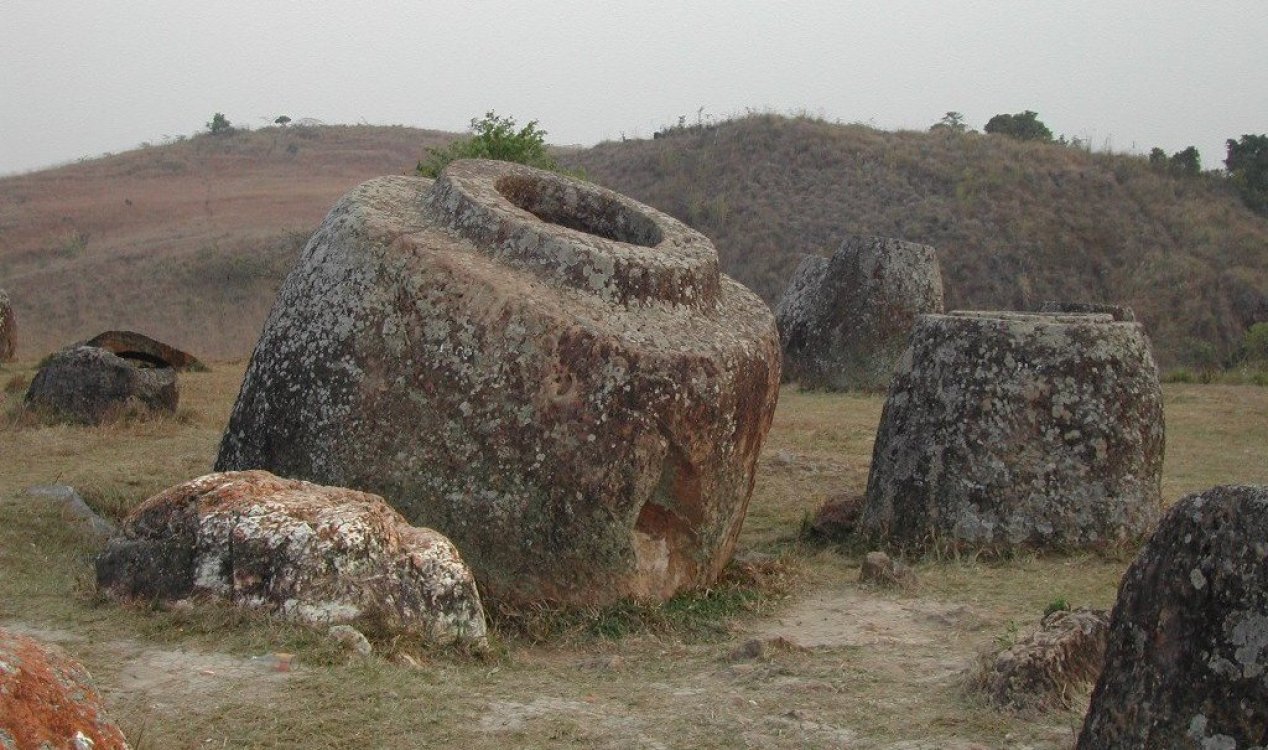
Image: Plain of Jars
Credit: Christopher Voitus / CC BY-SA 3.0 (adapted)
So many of them have been found in the region in fact that it has become known as the Plain of Jars.
The most widely accepted theory is that the jars were associated with prehistoric burial practices and were either used to temporarily hold the remains of the deceased or to act as a secondary gravesite.
As things stand, there is much we still don't understand about the way they were used and archaeologists are still not even clear which culture actually constructed them.
Now, though, a major new discovery had finally offered a clue as to their purpose.
The find was made after archaeologists unearthed a particularly large stone jar and discovered that it contained the remains of 37 individuals.
This wasn't all, however, as it was also determined that these individuals had been placed in the jar - not at the same time - but over a period of some 270 years.
"The number of individuals also suggests the jars were owned by family or extended family groups," said James Cook University's Nicholas Skopal.
"They likely served as places where ancestral rites were performed over generations."
Source: Science Alert
Major discovery yields new clue in mystery of Plain of Jars in Laos
By T.K. RandallMay 21, 2026
Image: Plain of Jars
Credit: Christopher Voitus / CC BY-SA 3.0 (adapted)
For years, scientists have attempted to explain the nature and purpose of the huge stone jars littering the landscape.
Found throughout the central plain of Xiangkhoang Plateau in Laos, these mysterious stone jars have remained something of an archaeological enigma since their discovery back in the 19th century.
So many of them have been found in the region in fact that it has become known as the Plain of Jars.
The most widely accepted theory is that the jars were associated with prehistoric burial practices and were either used to temporarily hold the remains of the deceased or to act as a secondary gravesite.
As things stand, there is much we still don't understand about the way they were used and archaeologists are still not even clear which culture actually constructed them.
The find was made after archaeologists unearthed a particularly large stone jar and discovered that it contained the remains of 37 individuals.
This wasn't all, however, as it was also determined that these individuals had been placed in the jar - not at the same time - but over a period of some 270 years.
"The number of individuals also suggests the jars were owned by family or extended family groups," said James Cook University's Nicholas Skopal.
"They likely served as places where ancestral rites were performed over generations."
Source: Science Alert
Similar stories based on this topic:



The Unexplained Mysteries
Book of Weird News
AVAILABLE NOW
Take a walk on the weird side with this compilation of some of the weirdest stories ever to grace the pages of a newspaper.
Click here to learn more

Support us on Patreon
BONUS CONTENTFor less than the cost of a cup of coffee, you can gain access to a wide range of exclusive perks including our popular 'Lost Ghost Stories' series.
Click here to learn more

1 week
2 weeks
3 weeks
1 month


This week
This month
All time
 |
1. | Electronic Voice Phenomenon |
|
2. | Pareidolia |
|
3. | Orb |
|
4. | Area 51 |
 |
5. | Loch Ness Monster |
|
6. | Yeti |
|
7. | Spirit Photography (Classic) |
|
8. | Ghost |
| - | 9. | Bigfoot |
|
10. | Storm Area 51 |


Top | Home | Forum
News | Columns | Encyclopedia


UM 11.3 Unexplained-Mysteries.com (c) 2001-2026
Terms | Privacy Policy | Cookies | Contact
News | Columns | Encyclopedia
UM 11.3 Unexplained-Mysteries.com (c) 2001-2026
Terms | Privacy Policy | Cookies | Contact