





Space & Astronomy
October 31, 2026


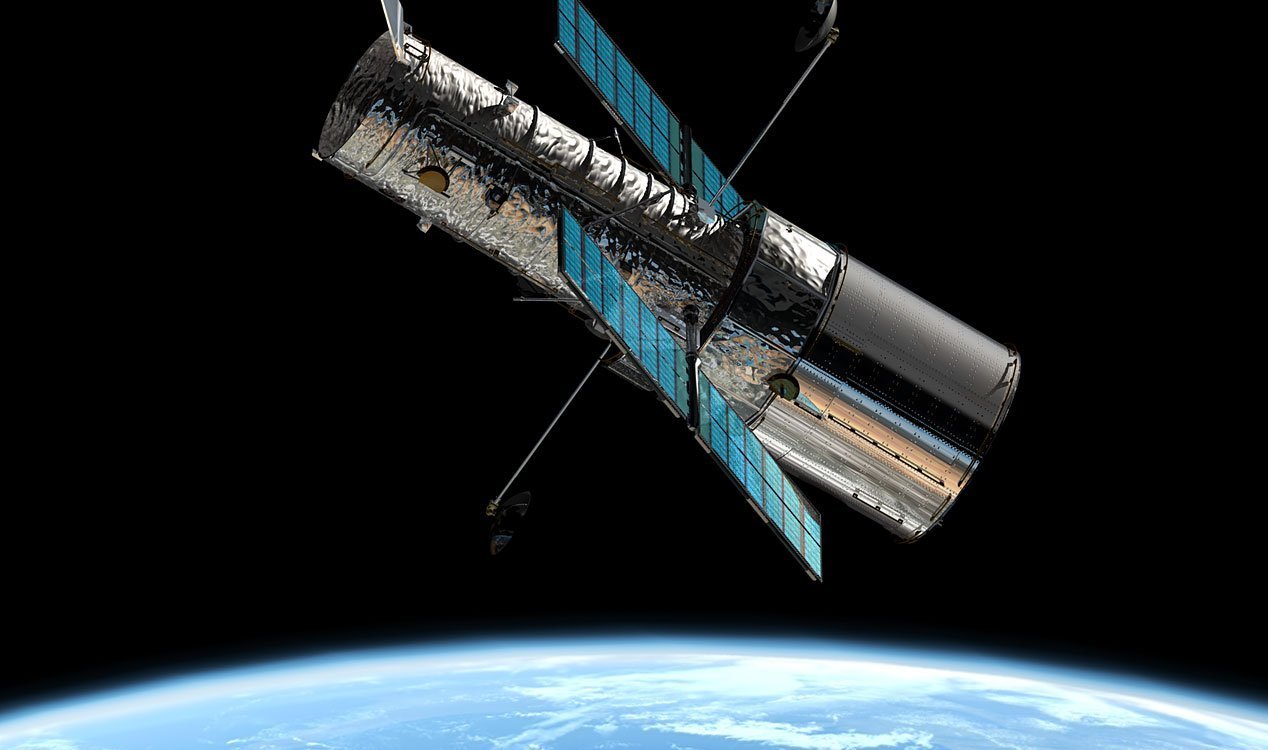
Image: Artist's Impression of the Hubble Space Telescope
Credit: Hubble ESA / CC BY 2.0 (adapted)
It's easy to forget that at one point it looked as though the mission was going to be a disaster.
When it was originally launched in 1990 aboard the Space Shuttle Discovery, the telescope was found to have a fault with its main mirror that stopped it from being able to obtain sharp images.
The unfortunate flaw resulted in Hubble being considered something of a white elephant, prompting scientists to work long and hard on a solution that culminated in a manned service mission to the telescope so that astronauts could install a system to correct the mirror's spherical aberration.
The fix proved a tremendous success and the telescope is still going strong today.
That said, with the space shuttle fleet now retired and the last service of Hubble being back in 2009, the telescope will eventually stop working and crash back down to Earth due to its slowly decaying orbit.
Now NASA has (and not the first time) put out a request for information regarding the possibility of launching a mission to repair, upgrade and extend the lifetime of the telescope.
"Hubble still has important science ahead of it, and we should be looking at every reasonable opportunity to keep it delivering for as long as possible," said NASA Administrator Jared Isaacman.
"If there are innovative and cost-effective ways to extend the life of an asset already on orbit, we owe it to the American taxpayer and the scientific community to explore them."
"Extending Hubble's life would mean more discoveries, more science, and more opportunities to expand our understanding of the universe."
Source: NASA.gov
NASA again mulls over plans to launch mission to service Hubble telescope
By T.K. RandallOctober 31, 2026
Image: Artist's Impression of the Hubble Space Telescope
Credit: Hubble ESA / CC BY 2.0 (adapted)
The iconic orbital observatory is in with a chance of getting a new lease of life in the not-too-distant future.
Well known for its breathtaking snaps of distant nebulae and other spectacular stellar phenomena, the iconic telescope has been our window on the universe for more than 33 years.
It's easy to forget that at one point it looked as though the mission was going to be a disaster.
When it was originally launched in 1990 aboard the Space Shuttle Discovery, the telescope was found to have a fault with its main mirror that stopped it from being able to obtain sharp images.
The unfortunate flaw resulted in Hubble being considered something of a white elephant, prompting scientists to work long and hard on a solution that culminated in a manned service mission to the telescope so that astronauts could install a system to correct the mirror's spherical aberration.
The fix proved a tremendous success and the telescope is still going strong today.
Now NASA has (and not the first time) put out a request for information regarding the possibility of launching a mission to repair, upgrade and extend the lifetime of the telescope.
"Hubble still has important science ahead of it, and we should be looking at every reasonable opportunity to keep it delivering for as long as possible," said NASA Administrator Jared Isaacman.
"If there are innovative and cost-effective ways to extend the life of an asset already on orbit, we owe it to the American taxpayer and the scientific community to explore them."
"Extending Hubble's life would mean more discoveries, more science, and more opportunities to expand our understanding of the universe."
Source: NASA.gov
Similar stories based on this topic:



The Unexplained Mysteries
Book of Weird News
AVAILABLE NOW
Take a walk on the weird side with this compilation of some of the weirdest stories ever to grace the pages of a newspaper.
Click here to learn more

Support us on Patreon
BONUS CONTENTFor less than the cost of a cup of coffee, you can gain access to a wide range of exclusive perks including our popular 'Lost Ghost Stories' series.
Click here to learn more

1 week
2 weeks
3 weeks
1 month


This week
This month
All time
 |
1. | Area 51 |
|
2. | Electronic Voice Phenomenon |
 |
3. | Pareidolia |
|
4. | Phoenix Lights |
|
5. | Yeti |
| - | 6. | Ghost |
|
7. | Bigfoot |
|
8. | Stanton Friedman |
|
9. | Loch Ness Monster |
|
10. | Spirit Photography (Classic) |


Top | Home | Forum
News | Columns | Encyclopedia


UM 11.3 Unexplained-Mysteries.com (c) 2001-2026
Terms | Privacy Policy | Cookies | Contact
News | Columns | Encyclopedia
UM 11.3 Unexplained-Mysteries.com (c) 2001-2026
Terms | Privacy Policy | Cookies | Contact