





Science & Technology
April 7, 2014


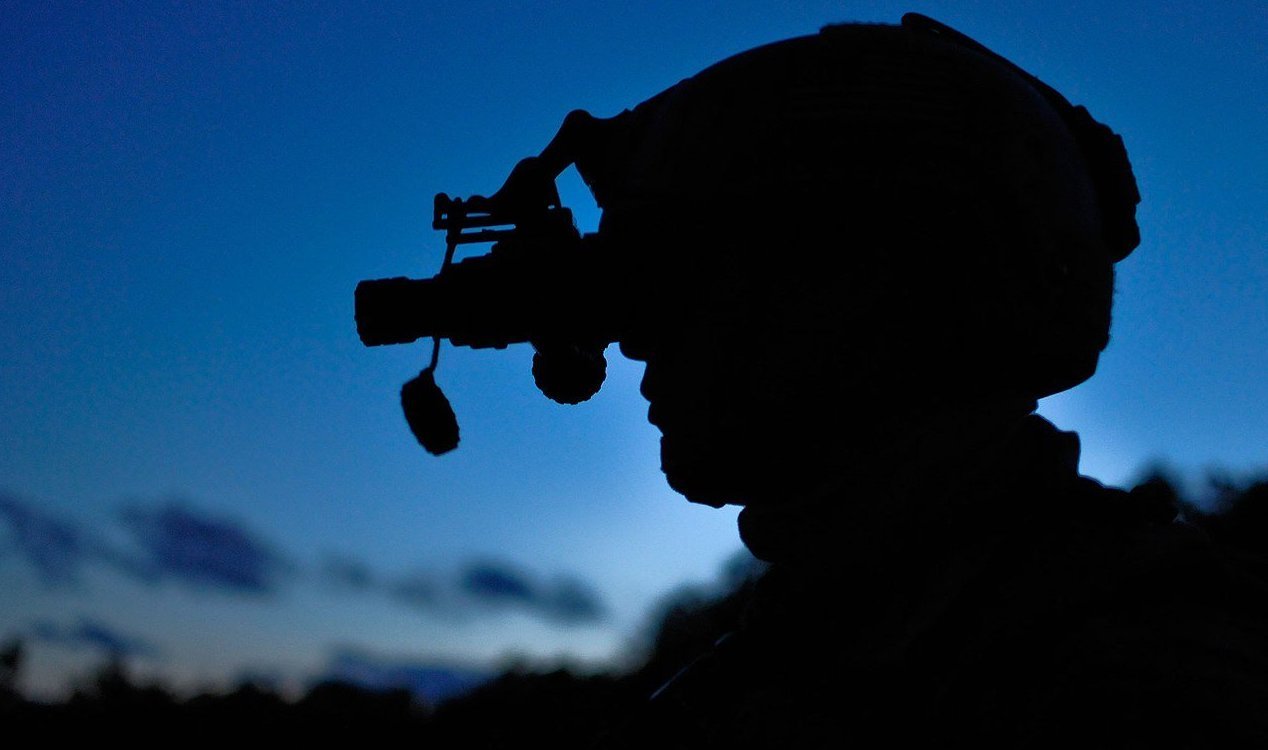
Image: Eyes in the Night
Credit: / (PD) U.S. Air Force
"The challenge for the current generation of graphene-based detectors is that their sensitivity is typically very poor," said Professor Zhaihui Zhong. "It's a hundred to a thousand times lower than what a commercial device would require."
The new and improved version of the detector uses two layers of graphene with an insulating barrier layer between them. By running a current through the bottom layer the device is able to realistically compete with the sensitivity of existing night-vision devices but on a much smaller scale.
"If we integrate it with a contact lens or other wearable electronics, it expands your vision," said Zhong. "It provides you another way of interacting with your environment."
Source: Sky News
Night-vision contact lenses developed
By T.K. RandallApril 7, 2014
Image: Eyes in the Night
Credit: / (PD) U.S. Air Force
Scientists have invented a working night-vision device that is small enough to fit inside a contact lens.
Previous attempts to produce working night-vision functionality on a tiny scale using traditional methods had proven ineffective because the technology could only absorb a small percentage of the light. To get around this problem, scientists at the University of Michigan went back to the drawing board and developed a whole new way to detect light."The challenge for the current generation of graphene-based detectors is that their sensitivity is typically very poor," said Professor Zhaihui Zhong. "It's a hundred to a thousand times lower than what a commercial device would require."
"If we integrate it with a contact lens or other wearable electronics, it expands your vision," said Zhong. "It provides you another way of interacting with your environment."
Source: Sky News



The Unexplained Mysteries
Book of Weird News
AVAILABLE NOW
Take a walk on the weird side with this compilation of some of the weirdest stories ever to grace the pages of a newspaper.
Click here to learn more

Support us on Patreon
BONUS CONTENTFor less than the cost of a cup of coffee, you can gain access to a wide range of exclusive perks including our popular 'Lost Ghost Stories' series.
Click here to learn more

1 week
2 weeks
3 weeks
1 month


This week
This month
All time
 |
1. | Roswell Incident |
 |
2. | Electronic Voice Phenomenon |
|
3. | Unidentified Flying Object |
|
4. | Phoenix Lights |
|
5. | Loch Ness Monster |
|
6. | Bigfoot |
| - | 7. | Pareidolia |
|
8. | Orb |
|
9. | Area 51 |
|
10. | Spirit Photography (Classic) |


Top | Home | Forum
News | Columns | Encyclopedia


UM 11.3 Unexplained-Mysteries.com (c) 2001-2026
Terms | Privacy Policy | Cookies | Contact
News | Columns | Encyclopedia
UM 11.3 Unexplained-Mysteries.com (c) 2001-2026
Terms | Privacy Policy | Cookies | Contact