





Palaeontology
November 22, 2013


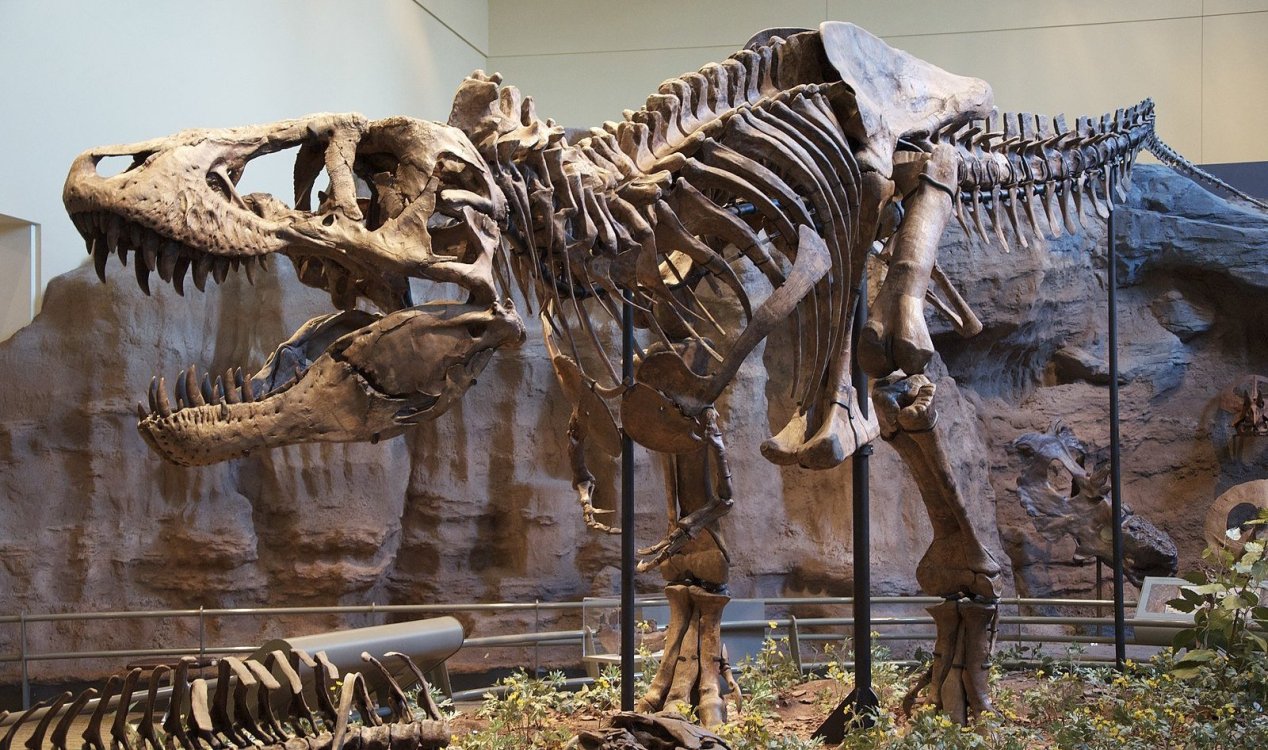
Image: Tyrannosaurus Rex Holotype
Credit: ScottRobertAnselmo / CC BY-SA 3.0 (adapted)
"Contemporary tyrannosaurs would have been no more than a nuisance to Siats, like jackals at a lion kill," said study leader Dr Lindsay Zanno. "It wasn't until carcharodontosaurs like this bowed out that the stage could be set for the evolution of T. rex."
Fossil bones of Siats were discovered in the Cedar Mountain Formation in Utah and appeared to belong to a juvenile measuring approximately 30ft in length. It is believed that the species would have mostly hunted slow moving herbivores and that it may have fought off rival predators to secure its kills.
"It has been 63 years since a predator of this size has been named from North America," said Dr Zanno. "You can't imagine how thrilled we were to see the bones of this behemoth poking out of the hillside."
Source: Telegraph
Who terrorizes the tyrannosaurs ?
By T.K. RandallNovember 22, 2013
Image: Tyrannosaurus Rex Holotype
Credit: ScottRobertAnselmo / CC BY-SA 3.0 (adapted)
A newly discovered dinosaur is believed to have been more than a match for the relatives of T. rex.
Known as Siats meekerorum, the 40ft long meat eater lived around 98 million years ago and would have been a formidable rival to any other predatory dinosaurs of the time. Living 30 million years before Tyrannosaurus rex, Siats is believed to have dominated its ancestors long before the tyrant lizard itself appeared on the scene."Contemporary tyrannosaurs would have been no more than a nuisance to Siats, like jackals at a lion kill," said study leader Dr Lindsay Zanno. "It wasn't until carcharodontosaurs like this bowed out that the stage could be set for the evolution of T. rex."
"It has been 63 years since a predator of this size has been named from North America," said Dr Zanno. "You can't imagine how thrilled we were to see the bones of this behemoth poking out of the hillside."
Source: Telegraph
Similar stories based on this topic:



The Unexplained Mysteries
Book of Weird News
AVAILABLE NOW
Take a walk on the weird side with this compilation of some of the weirdest stories ever to grace the pages of a newspaper.
Click here to learn more

Support us on Patreon
BONUS CONTENTFor less than the cost of a cup of coffee, you can gain access to a wide range of exclusive perks including our popular 'Lost Ghost Stories' series.
Click here to learn more

1 week
2 weeks
3 weeks
1 month


This week
This month
All time
| - | 1. | Pareidolia |
 |
2. | Loch Ness Monster |
|
3. | Ghost |
 |
4. | Electronic Voice Phenomenon |
|
5. | Yeti |
|
6. | Area 51 |
|
7. | Paranormal |
| - | 8. | Spirit Photography (Classic) |
|
9. | Orb |
| - | 10. | Storm Area 51 |


Top | Home | Forum
News | Columns | Encyclopedia


UM 11.3 Unexplained-Mysteries.com (c) 2001-2026
Terms | Privacy Policy | Cookies | Contact
News | Columns | Encyclopedia
UM 11.3 Unexplained-Mysteries.com (c) 2001-2026
Terms | Privacy Policy | Cookies | Contact