





Space & Astronomy
October 22, 2026


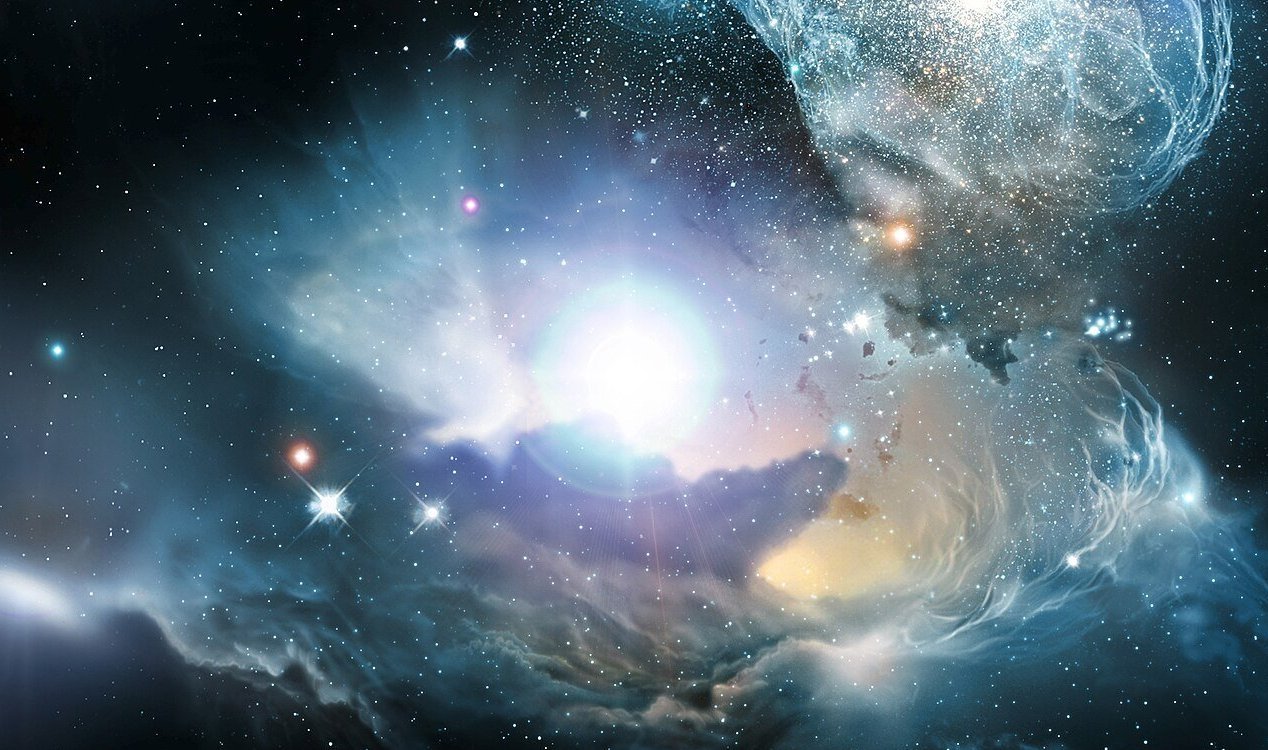
Image Credit: (PD) NASA/ESA/ESO/Wolfram Freudling et al via Wikimedia Commons
One of the problems scientists have grappled with for years is why the energy of the Big Bang was not converted into equal parts matter and anti-matter - a combination that would have self-annihilated.
Instead, matter (as oppose to anti-matter) dominates the universe by an overwhelming degree.
Now, researchers from the University of Southampton in the UK and the Indian Institute of Technology Kanpur believe that they may have the answer and it could all be down to just a single type of particle known as the 'decoupled' heavy neutrino.
"This decoupled heavy neutrino has long been dismissed as an irrelevant background detail in particle physics," said lead study author Dr Rishav Roshan.
"However, it decays incredibly slowly. As the cosmos cooled after the Big Bang, the particle lived long enough that it temporarily took over the energy density of the universe and triggered a matter-dominated period."
As it turns out, therefore, we may owe our entire existence to this oft-neglected particle.
"The decoupled neutrino shifted the temperature in the early universe at which fundamental particles - like electrons and other leptons - interacted with their anti-particles with the help of Standard Model Higgs boson," said Roshan.
"This temperature acts like a switch that shapes how the matter-antimatter imbalance was built up."
Source: Sky at Night Magazine
A single particle may explain why we exist at all, scientists claim
By T.K. RandallOctober 22, 2026
Image Credit: (PD) NASA/ESA/ESO/Wolfram Freudling et al via Wikimedia Commons
Why didn't the Big Bang produce equal amounts of matter and antimatter, which would subsequently have annihilated each other?
Why are we here ? Why is there something instead of nothing ? These questions lie not only at the very heart of the human condition, but also at the core of modern physics.One of the problems scientists have grappled with for years is why the energy of the Big Bang was not converted into equal parts matter and anti-matter - a combination that would have self-annihilated.
Instead, matter (as oppose to anti-matter) dominates the universe by an overwhelming degree.
Now, researchers from the University of Southampton in the UK and the Indian Institute of Technology Kanpur believe that they may have the answer and it could all be down to just a single type of particle known as the 'decoupled' heavy neutrino.
"However, it decays incredibly slowly. As the cosmos cooled after the Big Bang, the particle lived long enough that it temporarily took over the energy density of the universe and triggered a matter-dominated period."
As it turns out, therefore, we may owe our entire existence to this oft-neglected particle.
"The decoupled neutrino shifted the temperature in the early universe at which fundamental particles - like electrons and other leptons - interacted with their anti-particles with the help of Standard Model Higgs boson," said Roshan.
"This temperature acts like a switch that shapes how the matter-antimatter imbalance was built up."
Source: Sky at Night Magazine
Similar stories based on this topic:


The Unexplained Mysteries
Book of Weird News
AVAILABLE NOW
Take a walk on the weird side with this compilation of some of the weirdest stories ever to grace the pages of a newspaper.
Click here to learn more

Support us on Patreon
BONUS CONTENTFor less than the cost of a cup of coffee, you can gain access to a wide range of exclusive perks including our popular 'Lost Ghost Stories' series.
Click here to learn more

1 week
2 weeks
3 weeks
1 month


This week
This month
All time
 |
1. | Pareidolia |
 |
2. | Electronic Voice Phenomenon |
|
3. | Yeti |
|
4. | Paranormal |
|
5. | Orb |
|
6. | Loch Ness Monster |
|
7. | Area 51 |
|
8. | Spirit Photography (Classic) |
|
9. | Ghost |
|
10. | Storm Area 51 |


Top | Home | Forum
News | Columns | Encyclopedia


UM 11.3 Unexplained-Mysteries.com (c) 2001-2026
Terms | Privacy Policy | Cookies | Contact
News | Columns | Encyclopedia
UM 11.3 Unexplained-Mysteries.com (c) 2001-2026
Terms | Privacy Policy | Cookies | Contact