





Space & Astronomy
July 26, 2024


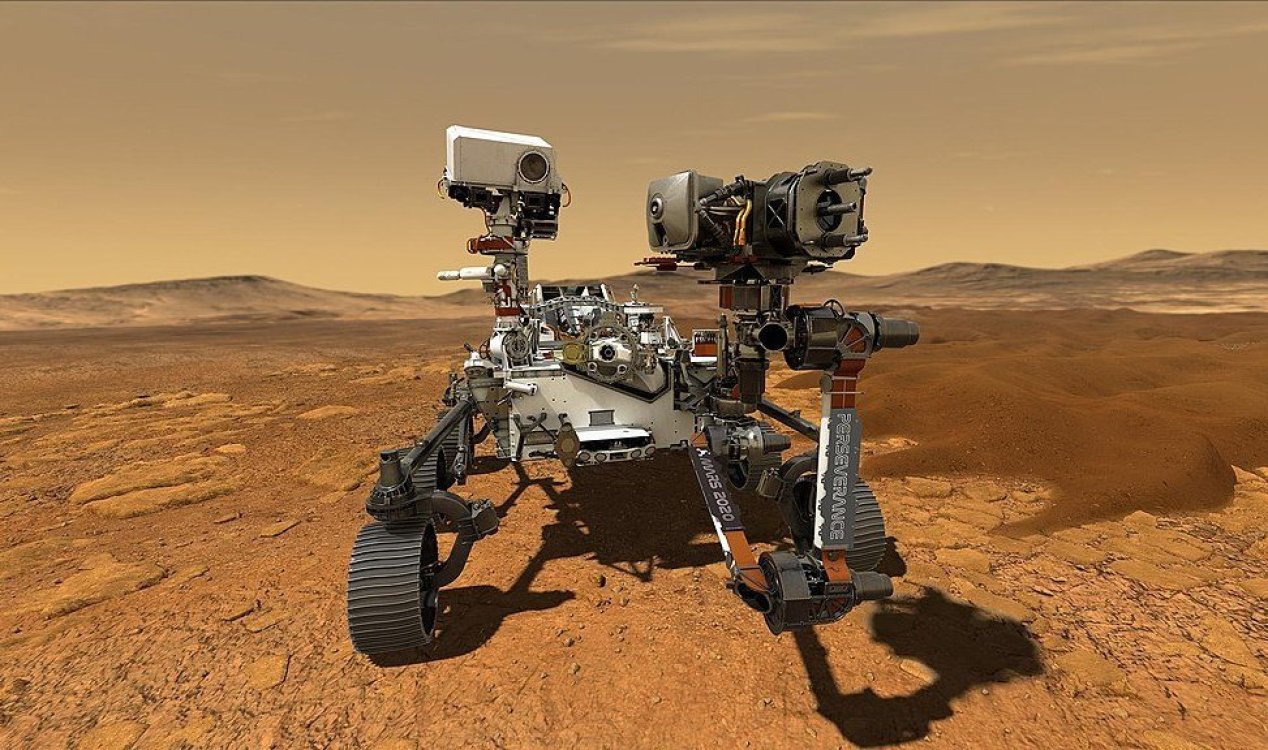
Image Credit: Courtesy NASA/JPL-Caltech
What makes it so significant is that it contains chemical signatures and structures that could have been formed by primitive alien life forms billions of years ago when Mars was much more hospitable.
"Cheyava Falls is the most puzzling, complex, and potentially important rock yet investigated by Perseverance," said NASA's Ken Farley.
"On the one hand, we have our first compelling detection of organic material, distinctive colorful spots indicative of chemical reactions that microbial life could use as an energy source, and clear evidence that water - necessary for life - once passed through the rock."
"On the other hand, we have been unable to determine exactly how the rock formed and to what extent nearby rocks may have heated Cheyava Falls and contributed to these features."
While it is still early days with regard to this discovery and it's important not to get too excited just yet, there is the very real potential that Cheyava Falls could be one of the most significant finds anywhere ever - a sign that life might have emerged on a world other than our own.
"These spots are a big surprise," said astrobiologist David Flannery of the Queensland University of Technology in Australia.
"On Earth, these types of features in rocks are often associated with the fossilized record of microbes living in the subsurface."
Source: NASA
NASA rover discovers promising evidence of ancient life on Mars
By T.K. RandallJuly 26, 2024
Image Credit: Courtesy NASA/JPL-Caltech
Perseverance has examined a rock that exhibits evidence of chemical reactions indicative of primitive life.
Situated in Jezero Crater, the curious arrowhead-shaped rock - nicknamed 'Cheyava Falls' - could be one of the most important discoveries made on Mars to date.What makes it so significant is that it contains chemical signatures and structures that could have been formed by primitive alien life forms billions of years ago when Mars was much more hospitable.
"Cheyava Falls is the most puzzling, complex, and potentially important rock yet investigated by Perseverance," said NASA's Ken Farley.
"On the one hand, we have our first compelling detection of organic material, distinctive colorful spots indicative of chemical reactions that microbial life could use as an energy source, and clear evidence that water - necessary for life - once passed through the rock."
While it is still early days with regard to this discovery and it's important not to get too excited just yet, there is the very real potential that Cheyava Falls could be one of the most significant finds anywhere ever - a sign that life might have emerged on a world other than our own.
"These spots are a big surprise," said astrobiologist David Flannery of the Queensland University of Technology in Australia.
"On Earth, these types of features in rocks are often associated with the fossilized record of microbes living in the subsurface."
Source: NASA
Similar stories based on this topic:



The Unexplained Mysteries
Book of Weird News
AVAILABLE NOW
Take a walk on the weird side with this compilation of some of the weirdest stories ever to grace the pages of a newspaper.
Click here to learn more

Support us on Patreon
BONUS CONTENTFor less than the cost of a cup of coffee, you can gain access to a wide range of exclusive perks including our popular 'Lost Ghost Stories' series.
Click here to learn more

1 week
2 weeks
3 weeks
1 month


This week
This month
All time
 |
1. | Pareidolia |
 |
2. | Electronic Voice Phenomenon |
|
3. | Yeti |
|
4. | Paranormal |
|
5. | Orb |
|
6. | Loch Ness Monster |
|
7. | Area 51 |
|
8. | Spirit Photography (Classic) |
|
9. | Ghost |
|
10. | Storm Area 51 |


Top | Home | Forum
News | Columns | Encyclopedia


UM 11.3 Unexplained-Mysteries.com (c) 2001-2026
Terms | Privacy Policy | Cookies | Contact
News | Columns | Encyclopedia
UM 11.3 Unexplained-Mysteries.com (c) 2001-2026
Terms | Privacy Policy | Cookies | Contact