





Nature & Environment
June 14, 2026


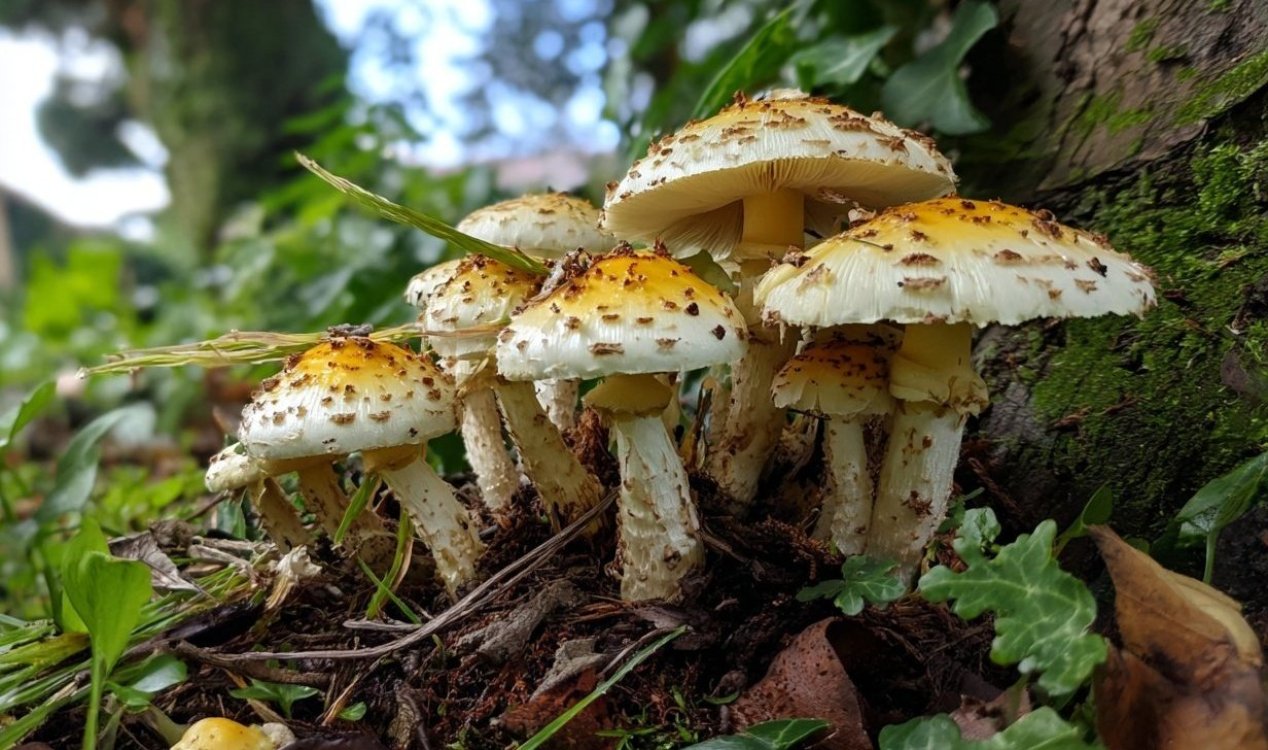
Image: AI-generated (Midjourney)
In a new study, researchers at the Society for the Protection of Underground Networks (Spun) used machine-learning models and 16,000 soil cores collected from countries across the world to produce an extensive map of these fungi networks.
What the map revealed was beyond what anyone expected - the networks are in fact so vast that they cover a distance of 100 quadrillion kilometers.
To put that into perspective, if you laid it all out in a line, it would be long enough to stretch the distance from the Earth to the Sun three-quarters of a billion times.
The study shines a spotlight on a critical, yet poorly understood part of the natural world - a vast, yet mostly invisible network that helps to maintain not only plants, but the climate as well.
Sadly, though, our own activities on the planet are damaging these crucial pathways.
"A lot of large-scale agriculture practices harm fungal networks," said study lead author Dr Justin Stewar.
"The most apparent way is with something like tilling, where you go into a soil and literally rip it up."
Should these networks disappear, the soil will lose its ability to distribute nutrients, while more chemicals will end up in the waterways (and in our drinking water).
"Ultimately, the aim of the research is to help scientists and decision-makers understand where fungal systems are thriving and where they are threatened," said study co-author Dr Toby Kiers.
Source: The Guardian
Global, underground fungi networks span 100 quadrillion kilometers
By T.K. RandallJune 14, 2026
Image: AI-generated (Midjourney)
Something lurks beneath our feet and its extreme scope is beyond anything that scientists have seen before.
Found beneath the ground, Arbuscular mycorrhizal fungi networks play a critical role in sustaining plant life and now, for the first time, scientists have revealed just how far they actually extend.In a new study, researchers at the Society for the Protection of Underground Networks (Spun) used machine-learning models and 16,000 soil cores collected from countries across the world to produce an extensive map of these fungi networks.
What the map revealed was beyond what anyone expected - the networks are in fact so vast that they cover a distance of 100 quadrillion kilometers.
To put that into perspective, if you laid it all out in a line, it would be long enough to stretch the distance from the Earth to the Sun three-quarters of a billion times.
The study shines a spotlight on a critical, yet poorly understood part of the natural world - a vast, yet mostly invisible network that helps to maintain not only plants, but the climate as well.
"A lot of large-scale agriculture practices harm fungal networks," said study lead author Dr Justin Stewar.
"The most apparent way is with something like tilling, where you go into a soil and literally rip it up."
Should these networks disappear, the soil will lose its ability to distribute nutrients, while more chemicals will end up in the waterways (and in our drinking water).
"Ultimately, the aim of the research is to help scientists and decision-makers understand where fungal systems are thriving and where they are threatened," said study co-author Dr Toby Kiers.
Source: The Guardian






The Unexplained Mysteries
Book of Weird News
AVAILABLE NOW
Take a walk on the weird side with this compilation of some of the weirdest stories ever to grace the pages of a newspaper.
Click here to learn more

Support us on Patreon
BONUS CONTENTFor less than the cost of a cup of coffee, you can gain access to a wide range of exclusive perks including our popular 'Lost Ghost Stories' series.
Click here to learn more

1 week
2 weeks
3 weeks
1 month


This week
This month
All time
 |
1. | Electronic Voice Phenomenon |
|
2. | Bigfoot |
 |
3. | Orb |
|
4. | Unidentified Flying Object |
|
5. | Extraterrestrial |
|
6. | Storm Area 51 |
| - | 7. | Phoenix Lights |
|
8. | Spirit Photography (Classic) |
|
9. | Area 51 |
|
10. | Yeti |


Top | Home | Forum
News | Columns | Encyclopedia


UM 11.2a Unexplained-Mysteries.com (c) 2001-2026
Terms | Privacy Policy | Cookies | Contact
News | Columns | Encyclopedia
UM 11.2a Unexplained-Mysteries.com (c) 2001-2026
Terms | Privacy Policy | Cookies | Contact