





Space & Astronomy
February 4, 2015


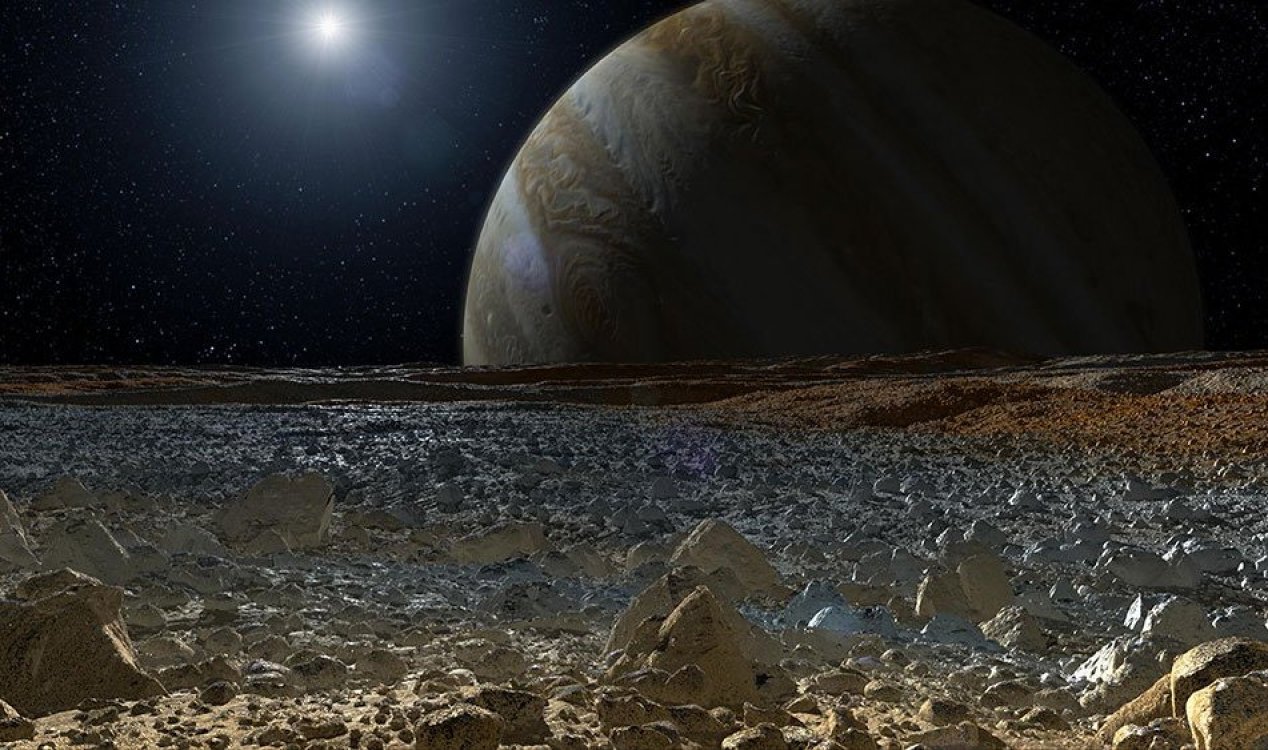
Image Credit: NASA/JPL-Caltech
The Jovian moon gained the attention of the scientific community after the Galileo orbiter first revealed its potential in the 1990s. More recently evidence has also been found to suggest that it could even be home to vast plumes of subsurface water that shoot through cracks in the ice and up in to space.
Now finally NASA has been given the green light to proceed with its long anticipated mission to revisit Europa thanks to additional funding that is to be assigned as part of its 2016 budget.
The mission, which is unlikely to take place until the mid 2020s, will see a spacecraft go in to orbit around Jupiter and make multiple flyby's of Europa to take photographs and record data.
"This is a big deal," said Robert Pappalardo of NASA's Jet Propulsion Lab. "We're moving toward the next phase, where you're a real mission. It's just thrilling after 15 years of pushing for it."
Source: New Scientist
NASA gets green light for mission to Europa
By T.K. RandallFebruary 4, 2015
Image Credit: NASA/JPL-Caltech
The space agency has secured enough funding to develop a mission to explore Jupiter's icy moon.
Thought to be home to a subterranean ocean of liquid water hidden beneath an icy crust, Europa remains one of the best places to look for evidence of alien life within our own solar system.The Jovian moon gained the attention of the scientific community after the Galileo orbiter first revealed its potential in the 1990s. More recently evidence has also been found to suggest that it could even be home to vast plumes of subsurface water that shoot through cracks in the ice and up in to space.
The mission, which is unlikely to take place until the mid 2020s, will see a spacecraft go in to orbit around Jupiter and make multiple flyby's of Europa to take photographs and record data.
"This is a big deal," said Robert Pappalardo of NASA's Jet Propulsion Lab. "We're moving toward the next phase, where you're a real mission. It's just thrilling after 15 years of pushing for it."
Source: New Scientist
Similar stories based on this topic:



The Unexplained Mysteries
Book of Weird News
AVAILABLE NOW
Take a walk on the weird side with this compilation of some of the weirdest stories ever to grace the pages of a newspaper.
Click here to learn more

Support us on Patreon
BONUS CONTENTFor less than the cost of a cup of coffee, you can gain access to a wide range of exclusive perks including our popular 'Lost Ghost Stories' series.
Click here to learn more

1 week
2 weeks
3 weeks
1 month


This week
This month
All time
 |
1. | Electronic Voice Phenomenon |
|
2. | Orb |
| - | 3. | Pareidolia |
 |
4. | Loch Ness Monster |
|
5. | Area 51 |
|
6. | Storm Area 51 |
| - | 7. | Yeti |
|
8. | Ghost |
|
9. | Paranormal |
| - | 10. | Extraterrestrial |


Top | Home | Forum
News | Columns | Encyclopedia


UM 11.3 Unexplained-Mysteries.com (c) 2001-2026
Terms | Privacy Policy | Cookies | Contact
News | Columns | Encyclopedia
UM 11.3 Unexplained-Mysteries.com (c) 2001-2026
Terms | Privacy Policy | Cookies | Contact