





Space & Astronomy
January 30, 2026


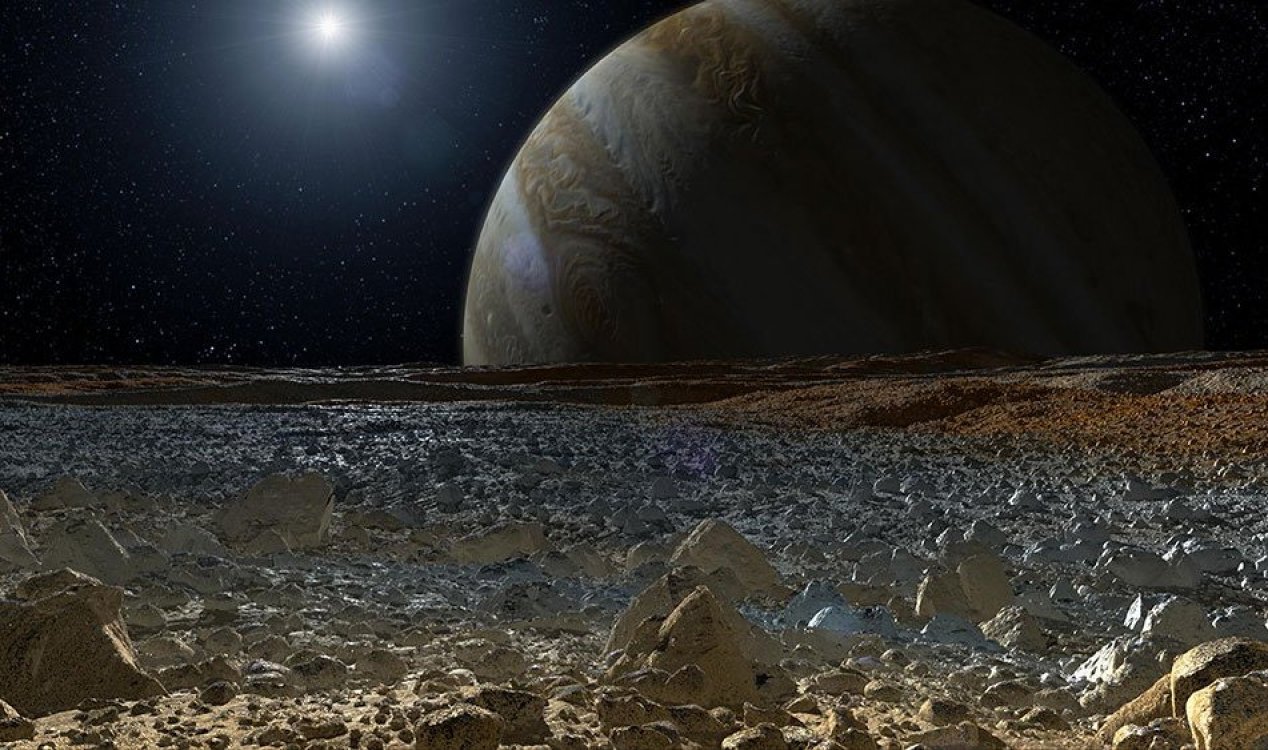
Image Credit: NASA/JPL-Caltech
Believed to be home to an icy shell covering a subsurface ocean of liquid water, this freezing moon could potentially harbor primitive organisms that thrive in its dark, frigid depths.
One of the questions scientists have long pondered is exactly how thick the ice covering Europa's ocean actually is. Could it be much thinner than expected - perhaps only 1 km - or could it in fact be far thicker, possibly even tens of kilometers?
Now, thanks to data recorded by NASA's Juno spacecraft during a flyby back in 2022, we have a much better idea of the actual thickness of Europa's icy crust.
According to NASA, the results from the flyby indicate that it is around 18 miles (29 km) thick.
"The 18-mile estimate relates to the cold, rigid, conductive outer layer of a pure water ice shell," said Juno project scientist Steve Levin.
"If an inner, slightly warmer convective layer also exists - which is possible - the total ice shell thickness would be even greater."
"If the ice shell contains a modest amount of dissolved salt, as suggested by some models, then our estimate of the shell thickness would be reduced by about 3 miles."
Source: NASA.gov
NASA's Juno probe has measured the thickness of Europa's icy crust
By T.K. RandallJanuary 30, 2026
Image Credit: NASA/JPL-Caltech
The icy Jovian moon has long been a place of interest for scientists due to its subterranean ocean of liquid water.
When it comes to finding places within our own solar system capable of supporting primitive alien life, there is perhaps no better candidate than Jupiter's moon Europa.
Believed to be home to an icy shell covering a subsurface ocean of liquid water, this freezing moon could potentially harbor primitive organisms that thrive in its dark, frigid depths.
One of the questions scientists have long pondered is exactly how thick the ice covering Europa's ocean actually is. Could it be much thinner than expected - perhaps only 1 km - or could it in fact be far thicker, possibly even tens of kilometers?
Now, thanks to data recorded by NASA's Juno spacecraft during a flyby back in 2022, we have a much better idea of the actual thickness of Europa's icy crust.
"The 18-mile estimate relates to the cold, rigid, conductive outer layer of a pure water ice shell," said Juno project scientist Steve Levin.
"If an inner, slightly warmer convective layer also exists - which is possible - the total ice shell thickness would be even greater."
"If the ice shell contains a modest amount of dissolved salt, as suggested by some models, then our estimate of the shell thickness would be reduced by about 3 miles."
Source: NASA.gov
Similar stories based on this topic:



The Unexplained Mysteries
Book of Weird News
AVAILABLE NOW
Take a walk on the weird side with this compilation of some of the weirdest stories ever to grace the pages of a newspaper.
Click here to learn more

Support us on Patreon
BONUS CONTENTFor less than the cost of a cup of coffee, you can gain access to a wide range of exclusive perks including our popular 'Lost Ghost Stories' series.
Click here to learn more

1 week
2 weeks
3 weeks
1 month


This week
This month
All time
 |
1. | Loch Ness Monster |
|
2. | Electronic Voice Phenomenon |
 |
3. | Pareidolia |
|
4. | Ghost |
|
5. | Orb |
|
6. | Area 51 |
|
7. | Yeti |
|
8. | Spirit Photography (Classic) |
|
9. | Bigfoot |
|
10. | Extraterrestrial |


Top | Home | Forum
News | Columns | Encyclopedia


UM 11.3 Unexplained-Mysteries.com (c) 2001-2026
Terms | Privacy Policy | Cookies | Contact
News | Columns | Encyclopedia
UM 11.3 Unexplained-Mysteries.com (c) 2001-2026
Terms | Privacy Policy | Cookies | Contact