





Space & Astronomy
October 26, 2015


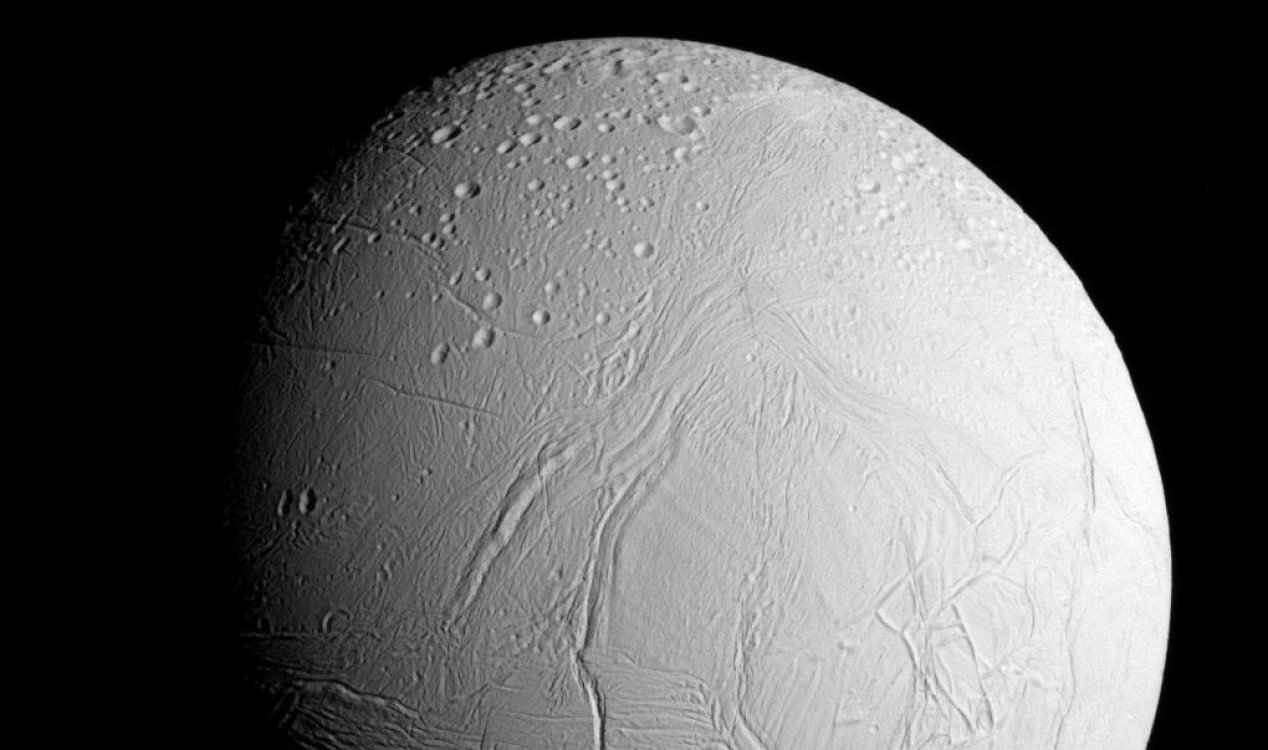
Image: Enceladus
Credit: (PD) NASA/JPL
One of its most unique and interesting features is its geysers which periodically spew water vapor, ice grains and unstable chemicals in to the atmosphere at speeds of up to 1,360mph.
Now in an effort to learn more about the composition of these materials, Cassini will be swooping down to within 30 miles of the moon's south pole on October 28th so that it can collect samples.
"This incredible plunge through the Enceladus plume is an amazing opportunity for NASA and its international partners on the Cassini mission to ask, 'Can any icy ocean world host the ingredients for life?'" said Cassini program scientist Dr. Curt Niebur.
Source: Tech Times
Could there be alien life on Enceladus ?
By T.K. RandallOctober 26, 2015
Image: Enceladus
Credit: (PD) NASA/JPL
NASA's Cassini spacecraft is set to embark on its closest and most daring flyby of the moon to date.
Thought to be home to a subterranean ocean of liquid water, Enceladus remains one of the most promising places to look for evidence of extraterrestrial life within our own solar system.One of its most unique and interesting features is its geysers which periodically spew water vapor, ice grains and unstable chemicals in to the atmosphere at speeds of up to 1,360mph.
"This incredible plunge through the Enceladus plume is an amazing opportunity for NASA and its international partners on the Cassini mission to ask, 'Can any icy ocean world host the ingredients for life?'" said Cassini program scientist Dr. Curt Niebur.
Source: Tech Times






The Unexplained Mysteries
Book of Weird News
AVAILABLE NOW
Take a walk on the weird side with this compilation of some of the weirdest stories ever to grace the pages of a newspaper.
Click here to learn more

Support us on Patreon
BONUS CONTENTFor less than the cost of a cup of coffee, you can gain access to a wide range of exclusive perks including our popular 'Lost Ghost Stories' series.
Click here to learn more

1 week
2 weeks
3 weeks
1 month


This week
This month
All time
 |
1. | Electronic Voice Phenomenon |
 |
2. | Orb |
|
3. | Extraterrestrial |
|
4. | Bigfoot |
|
5. | Unidentified Flying Object |
|
6. | Phoenix Lights |
|
7. | Spirit Photography (Classic) |
|
8. | Storm Area 51 |
|
9. | Area 51 |
|
10. | Yeti |


Top | Home | Forum
News | Columns | Encyclopedia


UM 11.2a Unexplained-Mysteries.com (c) 2001-2026
Terms | Privacy Policy | Cookies | Contact
News | Columns | Encyclopedia
UM 11.2a Unexplained-Mysteries.com (c) 2001-2026
Terms | Privacy Policy | Cookies | Contact