





Space & Astronomy
March 2, 2014


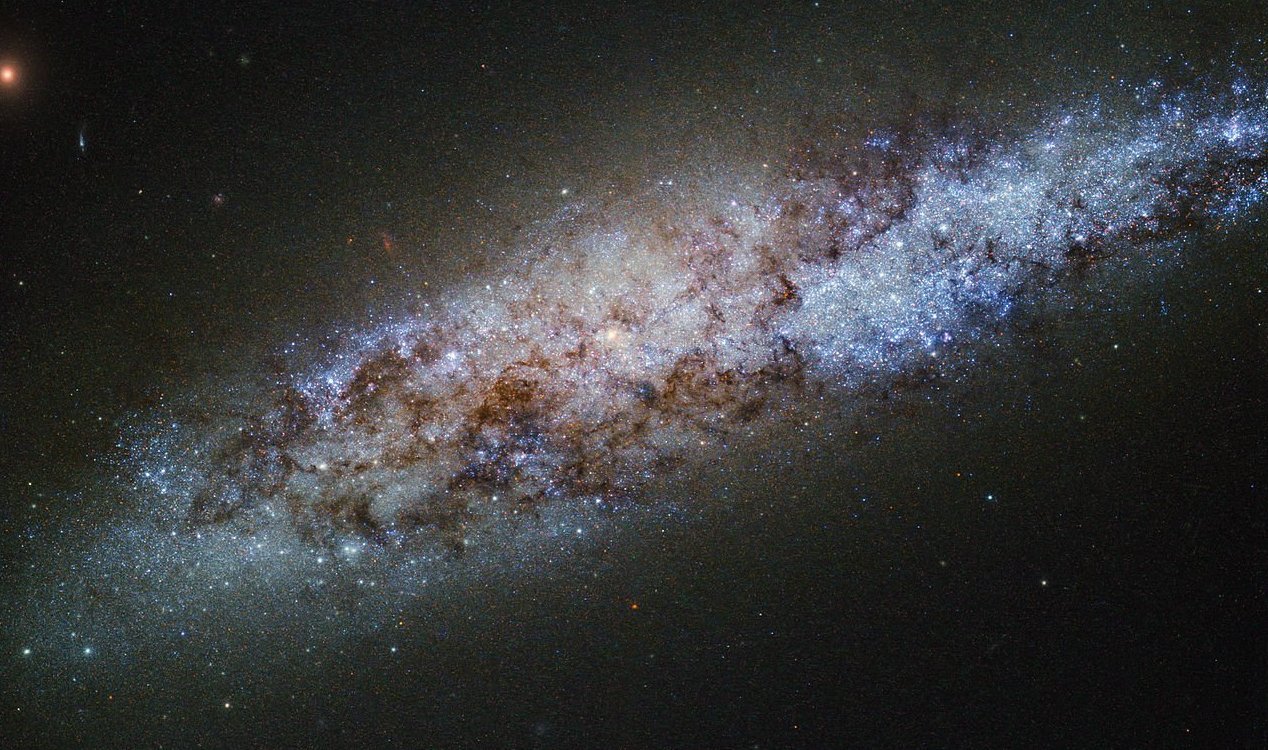
Image: The Scale of the Universe
Credit: ESA/Hubble/D. Calzetti et al. / CC BY 4.0 (adapted)
But is this the way things have always been ? In a recent astrobiology paper, Harvard astronomer Avi Loeb has put forward the idea that around 10 to 20 million years after the Big Bang the universe was warm enough thanks to the Cosmic Background Radiation that the entire cosmos would have been a viable habitable zone.
Dubbed 'the habitable epoch', this early period could have seen the universe teeming with primitive life forms.
"For a long time, we've had this preconception that life is here on Earth, but the universe is dead," said Loeb. "But maybe we should be thinking of this as a living universe. We may be relative latecomers to the game."
Source: Slate.com
Early 'habitable epoch' universe proposed
By T.K. RandallMarch 2, 2014
Image: The Scale of the Universe
Credit: ESA/Hubble/D. Calzetti et al. / CC BY 4.0 (adapted)
One Harvard astronomer believes that we may have fundamentally misunderstood our place in the universe.
As astronomers identify more and more worlds orbiting distant stars, the habitability of those worlds is becoming an increasingly hot topic. Most extrasolar planets are turning out to be either too near or too far from their parent star to support life with only a handful being located in the habitable zone where liquid water can exist.But is this the way things have always been ? In a recent astrobiology paper, Harvard astronomer Avi Loeb has put forward the idea that around 10 to 20 million years after the Big Bang the universe was warm enough thanks to the Cosmic Background Radiation that the entire cosmos would have been a viable habitable zone.
"For a long time, we've had this preconception that life is here on Earth, but the universe is dead," said Loeb. "But maybe we should be thinking of this as a living universe. We may be relative latecomers to the game."
Source: Slate.com
Similar stories based on this topic:


The Unexplained Mysteries
Book of Weird News
AVAILABLE NOW
Take a walk on the weird side with this compilation of some of the weirdest stories ever to grace the pages of a newspaper.
Click here to learn more

Support us on Patreon
BONUS CONTENTFor less than the cost of a cup of coffee, you can gain access to a wide range of exclusive perks including our popular 'Lost Ghost Stories' series.
Click here to learn more

1 week
2 weeks
3 weeks
1 month


This week
This month
All time
 |
1. | Pareidolia |
 |
2. | Electronic Voice Phenomenon |
|
3. | Yeti |
|
4. | Paranormal |
|
5. | Orb |
|
6. | Loch Ness Monster |
|
7. | Area 51 |
|
8. | Spirit Photography (Classic) |
|
9. | Ghost |
|
10. | Storm Area 51 |


Top | Home | Forum
News | Columns | Encyclopedia


UM 11.3 Unexplained-Mysteries.com (c) 2001-2026
Terms | Privacy Policy | Cookies | Contact
News | Columns | Encyclopedia
UM 11.3 Unexplained-Mysteries.com (c) 2001-2026
Terms | Privacy Policy | Cookies | Contact