





Space & Astronomy
August 18, 2014


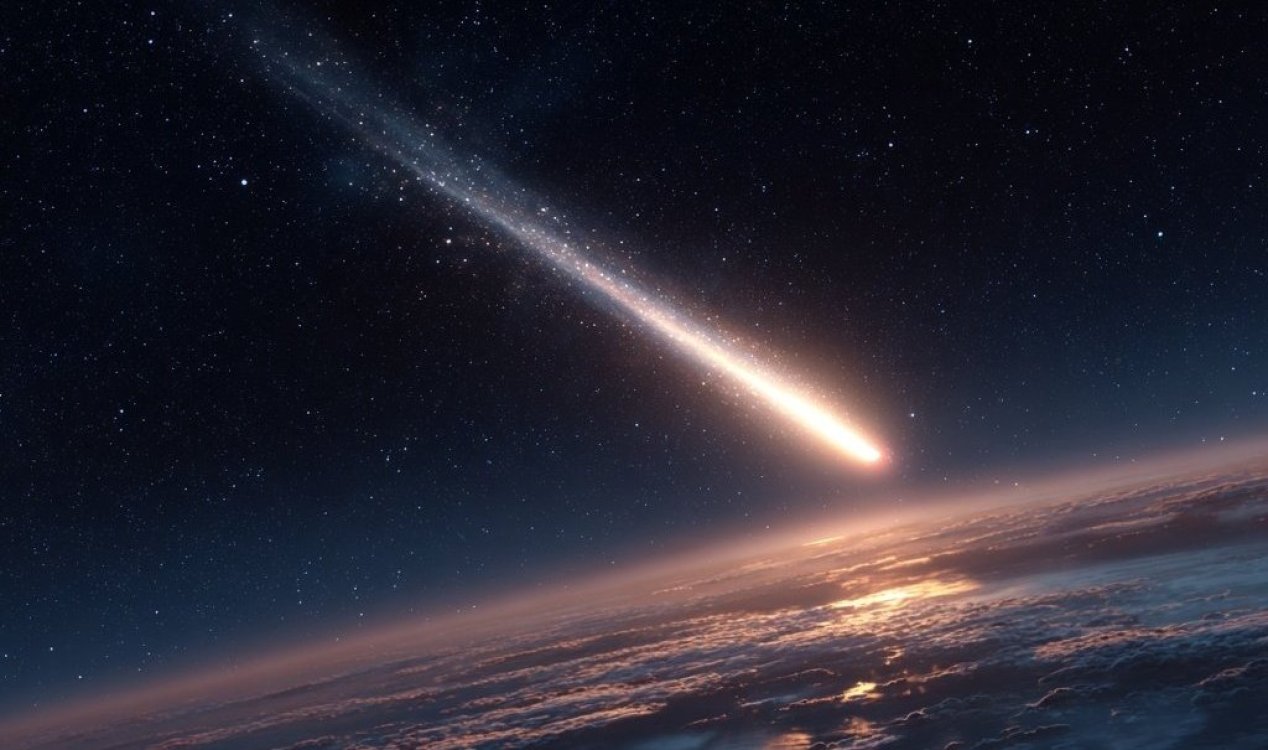
Image: AI-generated (Midjourney)
Everything went according to plan with the probe reaching the comet in 2004 and parachuting back down to Earth in 2006. Scientists have since been examining its payload in an effort to learn more about the formation of the solar system.
Stardust however also managed to capture something else that scientists have only recently been able to tease from its collectors - seven tiny particles that appear to have come from beyond our own solar system. It is believed that these were picked up when the probe was turned to face the region of space in to which particles from interstellar space were thought to be streaming.
The discovery of these tiny particles represents the very first time that scientists have had the opportunity to examine dust from outside our own solar system and will hopefully go on to yield important new clues about the nature and composition of our local cosmic neighborhood.
Source: National Geographic
Probe captures first instellar space dust
By T.K. RandallAugust 18, 2014
Image: AI-generated (Midjourney)
NASA's Stardust spacecraft is now believed to have picked up particles from outside the solar system
Launched back in 1999, the Stardust probe was designed to rendezvous with the comet Wild 2, pick up samples of dust and then return those to the Earth for study.Everything went according to plan with the probe reaching the comet in 2004 and parachuting back down to Earth in 2006. Scientists have since been examining its payload in an effort to learn more about the formation of the solar system.
The discovery of these tiny particles represents the very first time that scientists have had the opportunity to examine dust from outside our own solar system and will hopefully go on to yield important new clues about the nature and composition of our local cosmic neighborhood.
Source: National Geographic



The Unexplained Mysteries
Book of Weird News
AVAILABLE NOW
Take a walk on the weird side with this compilation of some of the weirdest stories ever to grace the pages of a newspaper.
Click here to learn more

Support us on Patreon
BONUS CONTENTFor less than the cost of a cup of coffee, you can gain access to a wide range of exclusive perks including our popular 'Lost Ghost Stories' series.
Click here to learn more

1 week
2 weeks
3 weeks
1 month


This week
This month
All time
 |
1. | Pareidolia |
 |
2. | Loch Ness Monster |
|
3. | Orb |
|
4. | Area 51 |
|
5. | Bigfoot |
|
6. | Spirit Photography (Classic) |
|
7. | Unidentified Flying Object |
|
8. | Electronic Voice Phenomenon |
|
9. | Roswell Incident |
|
10. | Paranormal |


Top | Home | Forum
News | Columns | Encyclopedia


UM 11.3 Unexplained-Mysteries.com (c) 2001-2026
Terms | Privacy Policy | Cookies | Contact
News | Columns | Encyclopedia
UM 11.3 Unexplained-Mysteries.com (c) 2001-2026
Terms | Privacy Policy | Cookies | Contact