





Space & Astronomy
December 19, 2018


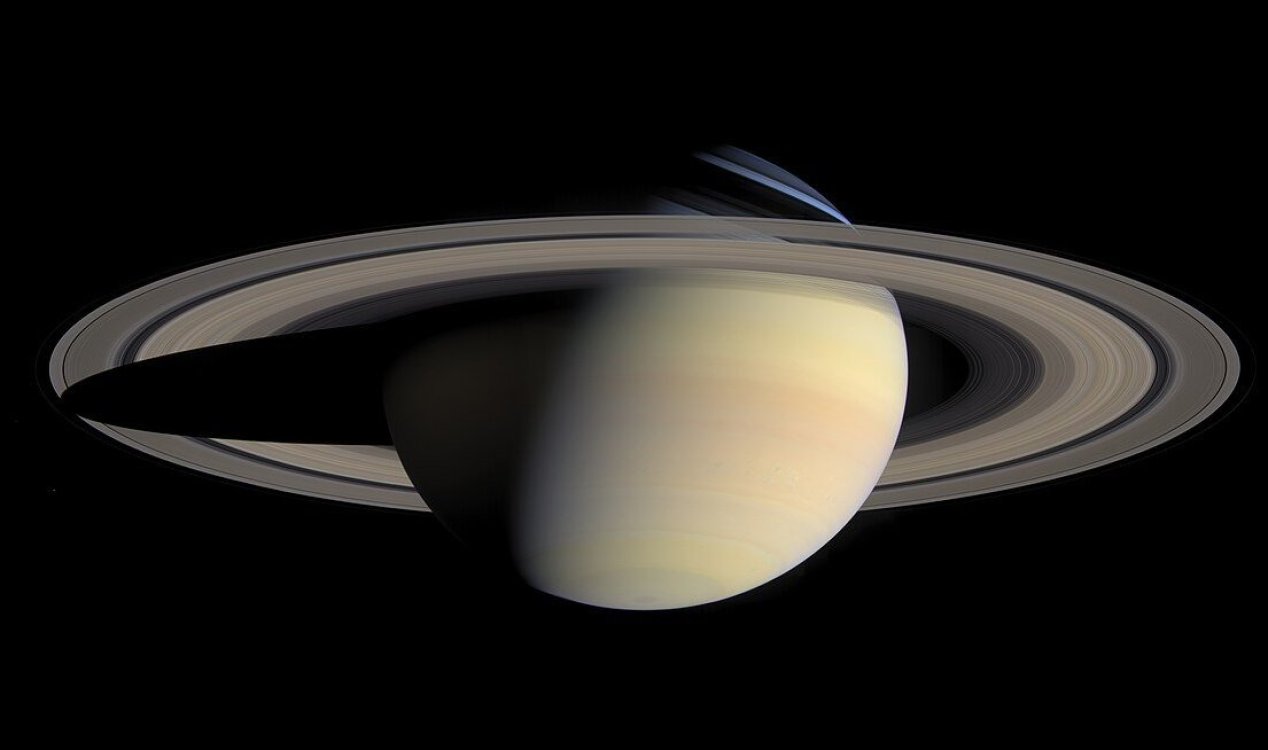
Image: Saturn from Cassini Orbiter (2004)
Credit: (PD) NASA/JPL/Space Science Institute
Originally thought to have formed 4.5 billion years ago during the earliest days of the solar system, the rings are now believed to be much more recent - perhaps only a hundred million years old - and were formed from the debris left over from a collision between Saturn and a small icy body such as a moon.
While it is difficult to imagine Saturn without its rings, a new study lead by NASA's James O'Donoghue has highlighted the likelihood that they could be gone entirely within a relatively short time frame.
The research describes a process through which the ice particles that make up the rings are being gradually pulled towards Saturn by the planet's gravity, producing what is known as ring rain.
Eventually - within another 300 million years at most - the rings will have disappeared entirely.
Source: EarthSky.org
Saturn's rings are gradually disappearing
By T.K. RandallDecember 19, 2018
Image: Saturn from Cassini Orbiter (2004)
Credit: (PD) NASA/JPL/Space Science Institute
A new study has revealed that Saturn's rings may be slowly falling on to the gas giant as 'ring rain'.
One of our solar system's most beautiful and cherished spectacles, the rings of Saturn are comprised of countless icy particles ranging in size from a few millimeters to several meters across.Originally thought to have formed 4.5 billion years ago during the earliest days of the solar system, the rings are now believed to be much more recent - perhaps only a hundred million years old - and were formed from the debris left over from a collision between Saturn and a small icy body such as a moon.
The research describes a process through which the ice particles that make up the rings are being gradually pulled towards Saturn by the planet's gravity, producing what is known as ring rain.
Eventually - within another 300 million years at most - the rings will have disappeared entirely.
Source: EarthSky.org
Similar stories based on this topic:



The Unexplained Mysteries
Book of Weird News
AVAILABLE NOW
Take a walk on the weird side with this compilation of some of the weirdest stories ever to grace the pages of a newspaper.
Click here to learn more

Support us on Patreon
BONUS CONTENTFor less than the cost of a cup of coffee, you can gain access to a wide range of exclusive perks including our popular 'Lost Ghost Stories' series.
Click here to learn more

1 week
2 weeks
3 weeks
1 month


This week
This month
All time
| - | 1. | Pareidolia |
 |
2. | Loch Ness Monster |
|
3. | Ghost |
 |
4. | Electronic Voice Phenomenon |
|
5. | Yeti |
|
6. | Area 51 |
|
7. | Paranormal |
| - | 8. | Spirit Photography (Classic) |
|
9. | Orb |
| - | 10. | Storm Area 51 |


Top | Home | Forum
News | Columns | Encyclopedia


UM 11.3 Unexplained-Mysteries.com (c) 2001-2026
Terms | Privacy Policy | Cookies | Contact
News | Columns | Encyclopedia
UM 11.3 Unexplained-Mysteries.com (c) 2001-2026
Terms | Privacy Policy | Cookies | Contact