





Space & Astronomy
January 26, 2019


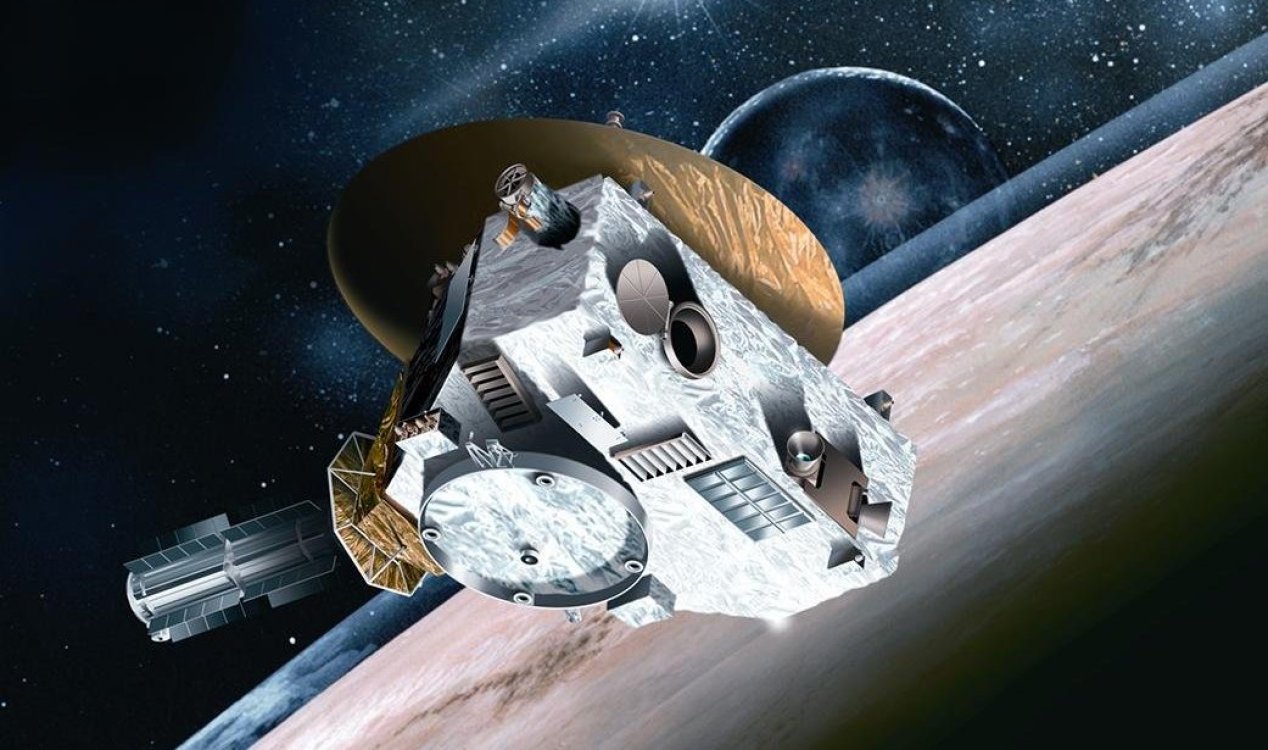
Image: Artist's Concept of New Horizons
Credit: (PD) NASA/Johns Hopkins University Applied Physics Laboratory/Southwest Research Institute
Until now, no spacecraft had ever visited this - or any other - object situated so far out in the solar system, making the mission's findings particularly enticing.
This latest image, which was taken by the probe's wide-angle Multicolor Visible Imaging Camera (MVIC), shows the two 'lobes' of Ultima Thule in more detail than ever before.
The object is unusual because it is made up of two separate objects that have joined together.
"This new image is starting to reveal differences in the geologic character of the two lobes of Ultima Thule, and is presenting us with new mysteries as well," said Principal Investigator Alan Stern.
"Over the next month there will be better color and better resolution images that we hope will help unravel the many mysteries of Ultima Thule."
Source: jhuapl.edu
Clearest image yet of Ultima Thule revealed
By T.K. RandallJanuary 26, 2019
Image: Artist's Concept of New Horizons
Credit: (PD) NASA/Johns Hopkins University Applied Physics Laboratory/Southwest Research Institute
The data gathered by New Horizons earlier this month is starting to unravel the mysteries of this enigmatic object.
With a mass approximately 10,000 times that of the comet visited by ESA's Rosetta spacecraft, MU69 (or Ultima Thule) is around 30 miles in diameter and orbits the Sun once every 295 years.Until now, no spacecraft had ever visited this - or any other - object situated so far out in the solar system, making the mission's findings particularly enticing.
This latest image, which was taken by the probe's wide-angle Multicolor Visible Imaging Camera (MVIC), shows the two 'lobes' of Ultima Thule in more detail than ever before.
"This new image is starting to reveal differences in the geologic character of the two lobes of Ultima Thule, and is presenting us with new mysteries as well," said Principal Investigator Alan Stern.
"Over the next month there will be better color and better resolution images that we hope will help unravel the many mysteries of Ultima Thule."
Source: jhuapl.edu
Similar stories based on this topic:



The Unexplained Mysteries
Book of Weird News
AVAILABLE NOW
Take a walk on the weird side with this compilation of some of the weirdest stories ever to grace the pages of a newspaper.
Click here to learn more

Support us on Patreon
BONUS CONTENTFor less than the cost of a cup of coffee, you can gain access to a wide range of exclusive perks including our popular 'Lost Ghost Stories' series.
Click here to learn more

1 week
2 weeks
3 weeks
1 month


This week
This month
All time
 |
1. | Loch Ness Monster |
|
2. | Electronic Voice Phenomenon |
 |
3. | Pareidolia |
|
4. | Ghost |
|
5. | Orb |
|
6. | Area 51 |
|
7. | Yeti |
|
8. | Spirit Photography (Classic) |
|
9. | Bigfoot |
|
10. | Extraterrestrial |


Top | Home | Forum
News | Columns | Encyclopedia


UM 11.3 Unexplained-Mysteries.com (c) 2001-2026
Terms | Privacy Policy | Cookies | Contact
News | Columns | Encyclopedia
UM 11.3 Unexplained-Mysteries.com (c) 2001-2026
Terms | Privacy Policy | Cookies | Contact