





Space & Astronomy
January 9, 2024


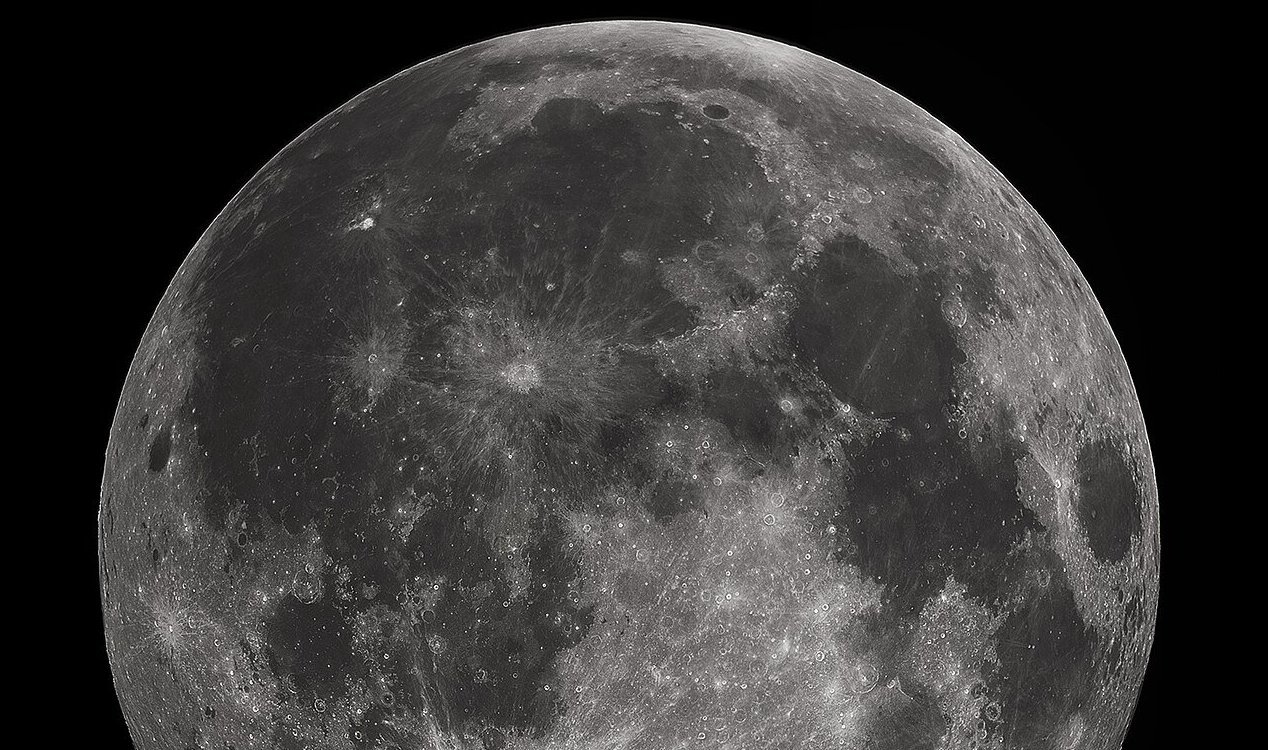
Image: Full Moon
Credit: Gregory H. Revera / CC BY-SA 3.0 (adapted)
Its extensive payload includes two rovers (one from the Mexican Space Agency and another from Carnegie Mellon University), a host of scientific instruments and even the DNA of US President John F Kennedy.
It wasn't long after the launch, however, that it became apparent that something was wrong as the spacecraft struggled to correctly align its solar panels towards the Sun.
The cause, it turned out, was a major propulsion system leak.
As things stand, Peregrine's fuel is likely to run out within just two days and it will no longer be possible for it to attempt a landing on the lunar surface.
"An ongoing propellant leak is causing the spacecraft's Attitude Control System (ACS) thrusters to operate well beyond their expected service life cycles to keep the lander from an uncontrollable tumble," Astrobiotic wrote in a statement on Twitter.
"If the thrusters can continue to operate, we believe the spacecraft could continue in a stable sun-pointing state for approximately 40 hours, based on current fuel consumption."
"At this time, the goal is to get Peregrine as close to lunar distance as we can before it loses the ability to maintain its sun-pointing position and subsequently loses power."
Source: BBC News
Peregrine lander's bid to land on the Moon scuppered by fuel leak
By T.K. RandallJanuary 9, 2024
Image: Full Moon
Credit: Gregory H. Revera / CC BY-SA 3.0 (adapted)
Astrobotic's ambitious lunar lander Peregrine looks set to fail its mission after unexpected technical problems.
The spacecraft, which is the first US-built lunar lander to launch since the Apollo program and also the first commercial spacecraft ever to attempt a soft-landing on the Moon, lifted off from Cape Canaveral, Florida on Monday with the goal of eventually touching down on the Moon's northern hemisphere late next month.Its extensive payload includes two rovers (one from the Mexican Space Agency and another from Carnegie Mellon University), a host of scientific instruments and even the DNA of US President John F Kennedy.
It wasn't long after the launch, however, that it became apparent that something was wrong as the spacecraft struggled to correctly align its solar panels towards the Sun.
The cause, it turned out, was a major propulsion system leak.
"An ongoing propellant leak is causing the spacecraft's Attitude Control System (ACS) thrusters to operate well beyond their expected service life cycles to keep the lander from an uncontrollable tumble," Astrobiotic wrote in a statement on Twitter.
"If the thrusters can continue to operate, we believe the spacecraft could continue in a stable sun-pointing state for approximately 40 hours, based on current fuel consumption."
"At this time, the goal is to get Peregrine as close to lunar distance as we can before it loses the ability to maintain its sun-pointing position and subsequently loses power."
Source: BBC News
Similar stories based on this topic:



The Unexplained Mysteries
Book of Weird News
AVAILABLE NOW
Take a walk on the weird side with this compilation of some of the weirdest stories ever to grace the pages of a newspaper.
Click here to learn more

Support us on Patreon
BONUS CONTENTFor less than the cost of a cup of coffee, you can gain access to a wide range of exclusive perks including our popular 'Lost Ghost Stories' series.
Click here to learn more

1 week
2 weeks
3 weeks
1 month


This week
This month
All time
 |
1. | Loch Ness Monster |
|
2. | Electronic Voice Phenomenon |
 |
3. | Pareidolia |
|
4. | Ghost |
|
5. | Orb |
|
6. | Area 51 |
|
7. | Yeti |
|
8. | Spirit Photography (Classic) |
|
9. | Bigfoot |
|
10. | Extraterrestrial |


Top | Home | Forum
News | Columns | Encyclopedia


UM 11.3 Unexplained-Mysteries.com (c) 2001-2026
Terms | Privacy Policy | Cookies | Contact
News | Columns | Encyclopedia
UM 11.3 Unexplained-Mysteries.com (c) 2001-2026
Terms | Privacy Policy | Cookies | Contact