





Palaeontology
July 27, 2025


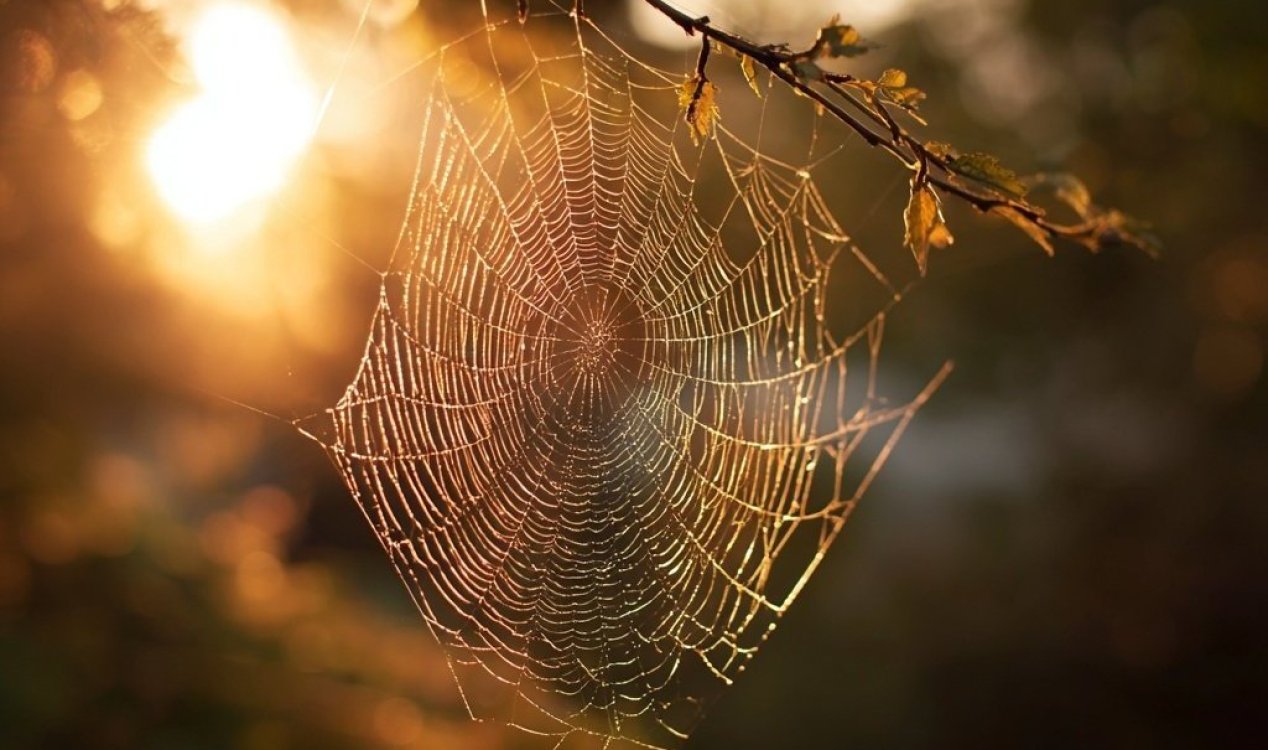
Image: AI-generated (Midjourney)
Hundreds of millions of years ago, however, the ancestor of today's arachnids lived in a very different environment - deep down in the Earth's oceans.
The fossilized remains of such a creature - named Mollisonia symmetrica - were recently analyzed as part of a new study by researchers at the University of Arizona.
Dating back 500 million years, the remains - and in particular the creature's fossilized brain - have revealed that these animals thrived in the sea long before venturing onto land.
Once thought to be an ancestor of horseshoe crabs, this long-extinct Cambrian-period species is now thought to have been far more closely related to spiders.
In particular, the organization of its brain was uniquely spider-like.
It wasn't just spiders that evolved from Mollisonia symmetrica either, as they were most likely a common ancestor of scorpions as well.
"It is still vigorously debated where and when arachnids first appeared, and what kind of chelicerates were their ancestors, and whether these were marine or semi-aquatic like horseshoe crabs," said lead author Prof Nick Strausfeld.
Source: Independent
New fossil discovery hints at the surprising origin of spiders
By T.K. RandallJuly 27, 2025
Image: AI-generated (Midjourney)
Researchers at the University of Arizona have revealed that spiders didn't originate where you might expect.
With their eight legs and intricate web-building abilities, modern spiders are among the most recognizable - and arguably most unsettling - creatures to be found in nearly every corner of the world.Hundreds of millions of years ago, however, the ancestor of today's arachnids lived in a very different environment - deep down in the Earth's oceans.
The fossilized remains of such a creature - named Mollisonia symmetrica - were recently analyzed as part of a new study by researchers at the University of Arizona.
Dating back 500 million years, the remains - and in particular the creature's fossilized brain - have revealed that these animals thrived in the sea long before venturing onto land.
In particular, the organization of its brain was uniquely spider-like.
It wasn't just spiders that evolved from Mollisonia symmetrica either, as they were most likely a common ancestor of scorpions as well.
"It is still vigorously debated where and when arachnids first appeared, and what kind of chelicerates were their ancestors, and whether these were marine or semi-aquatic like horseshoe crabs," said lead author Prof Nick Strausfeld.
Source: Independent
Similar stories based on this topic:



The Unexplained Mysteries
Book of Weird News
AVAILABLE NOW
Take a walk on the weird side with this compilation of some of the weirdest stories ever to grace the pages of a newspaper.
Click here to learn more

Support us on Patreon
BONUS CONTENTFor less than the cost of a cup of coffee, you can gain access to a wide range of exclusive perks including our popular 'Lost Ghost Stories' series.
Click here to learn more

1 week
2 weeks
3 weeks
1 month


This week
This month
All time
 |
1. | Pareidolia |
 |
2. | Loch Ness Monster |
|
3. | Area 51 |
|
4. | Bigfoot |
|
5. | Orb |
|
6. | Unidentified Flying Object |
| - | 7. | Spirit Photography (Classic) |
|
8. | Paranormal |
|
9. | Roswell Incident |
|
10. | Electronic Voice Phenomenon |


Top | Home | Forum
News | Columns | Encyclopedia


UM 11.3 Unexplained-Mysteries.com (c) 2001-2026
Terms | Privacy Policy | Cookies | Contact
News | Columns | Encyclopedia
UM 11.3 Unexplained-Mysteries.com (c) 2001-2026
Terms | Privacy Policy | Cookies | Contact