





Science & Technology
October 13, 2025


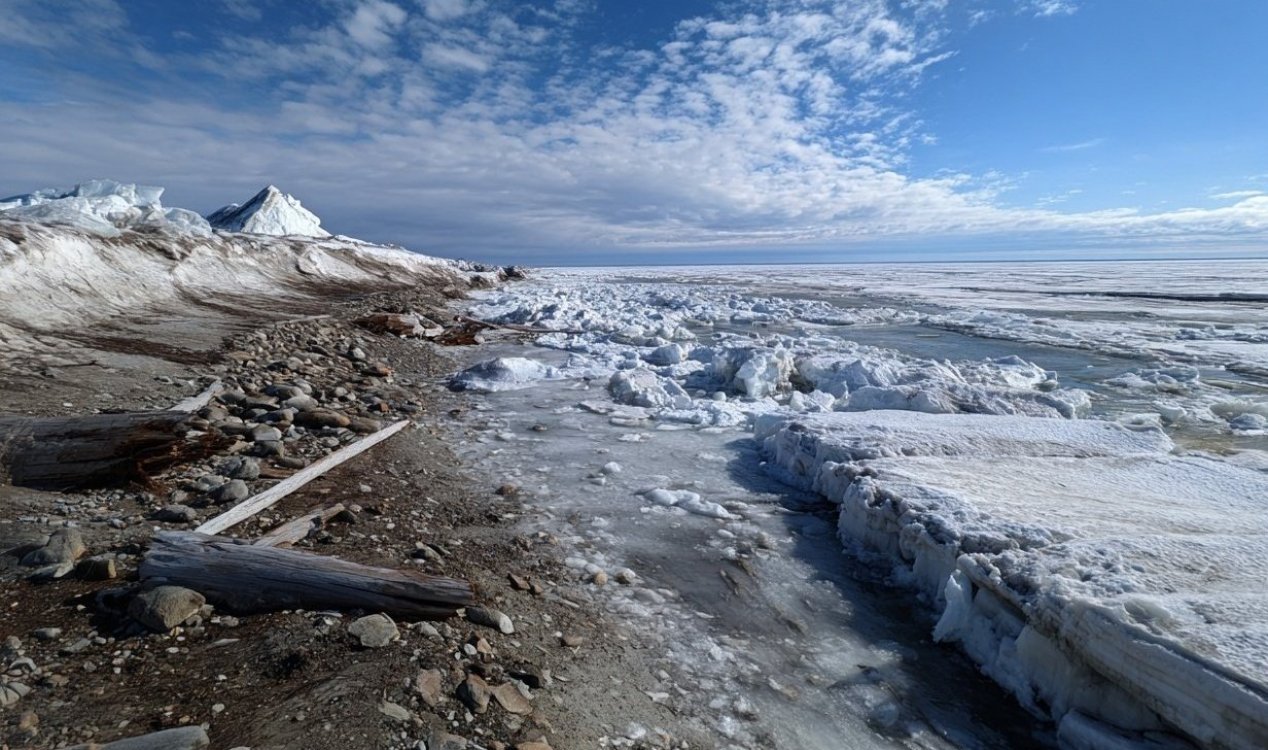
Image: AI-generated (Midjourney)
While thawing them out can help scientists learn more about the Earth's distant past, it has also raised concerns in recent years of long-dormant viruses being unleashed on an unsuspecting world.
Recently, researchers at the University of Colorado Boulder, who thawed out 40,000-year-old organisms extracted from the walls of the Permafrost Tunnel Research Facility in Alaska, noted that these were not only still alive, but had woken up and formed new colonies within just a few months.
"These are not dead samples by any means," said study lead author Tristan Caro.
"They're still very much capable of hosting robust life that can break down organic matter and release it as carbon dioxide."
Organisms being revived in this way is one thing, but the purpose of the research is to study the effects of the permafrost thawing out on its own due to rising global temperatures.
As time goes on, there won't be any choice but to sit and let these organisms thaw out - a process that could pose problems of its own, including the release of more carbon into the atmosphere.
While a scenario similar to that seen in the X-Files episode "Ice" (which sees a worm-like creature infect humans after being thawed from the permafrost) is highly unlikely, the risk of some sort of harmful prehistoric pathogen emerging from the ice is definitely not zero.
Source: Discover Wildlife
Scientists thaw out 40,000-year-old organisms trapped in Arctic ice
By T.K. RandallOctober 13, 2025
Image: AI-generated (Midjourney)
These ancient life forms can help to teach us about the past, but is thawing them out really a good idea ?
The Arctic permafrost acts as a cold storage - preserving evidence of our planet's history in a deep freeze that, in some cases, can even keep organisms alive over tens of thousands of years.While thawing them out can help scientists learn more about the Earth's distant past, it has also raised concerns in recent years of long-dormant viruses being unleashed on an unsuspecting world.
Recently, researchers at the University of Colorado Boulder, who thawed out 40,000-year-old organisms extracted from the walls of the Permafrost Tunnel Research Facility in Alaska, noted that these were not only still alive, but had woken up and formed new colonies within just a few months.
"These are not dead samples by any means," said study lead author Tristan Caro.
Organisms being revived in this way is one thing, but the purpose of the research is to study the effects of the permafrost thawing out on its own due to rising global temperatures.
As time goes on, there won't be any choice but to sit and let these organisms thaw out - a process that could pose problems of its own, including the release of more carbon into the atmosphere.
While a scenario similar to that seen in the X-Files episode "Ice" (which sees a worm-like creature infect humans after being thawed from the permafrost) is highly unlikely, the risk of some sort of harmful prehistoric pathogen emerging from the ice is definitely not zero.
Source: Discover Wildlife
Similar stories based on this topic:



The Unexplained Mysteries
Book of Weird News
AVAILABLE NOW
Take a walk on the weird side with this compilation of some of the weirdest stories ever to grace the pages of a newspaper.
Click here to learn more

Support us on Patreon
BONUS CONTENTFor less than the cost of a cup of coffee, you can gain access to a wide range of exclusive perks including our popular 'Lost Ghost Stories' series.
Click here to learn more

1 week
2 weeks
3 weeks
1 month


This week
This month
All time
 |
1. | Pareidolia |
 |
2. | Electronic Voice Phenomenon |
|
3. | Yeti |
|
4. | Paranormal |
|
5. | Loch Ness Monster |
| - | 6. | Orb |
|
7. | Area 51 |
|
8. | Spirit Photography (Classic) |
|
9. | Ghost |
|
10. | Storm Area 51 |


Top | Home | Forum
News | Columns | Encyclopedia


UM 11.3 Unexplained-Mysteries.com (c) 2001-2026
Terms | Privacy Policy | Cookies | Contact
News | Columns | Encyclopedia
UM 11.3 Unexplained-Mysteries.com (c) 2001-2026
Terms | Privacy Policy | Cookies | Contact