





Archaeology & History
July 12, 2026


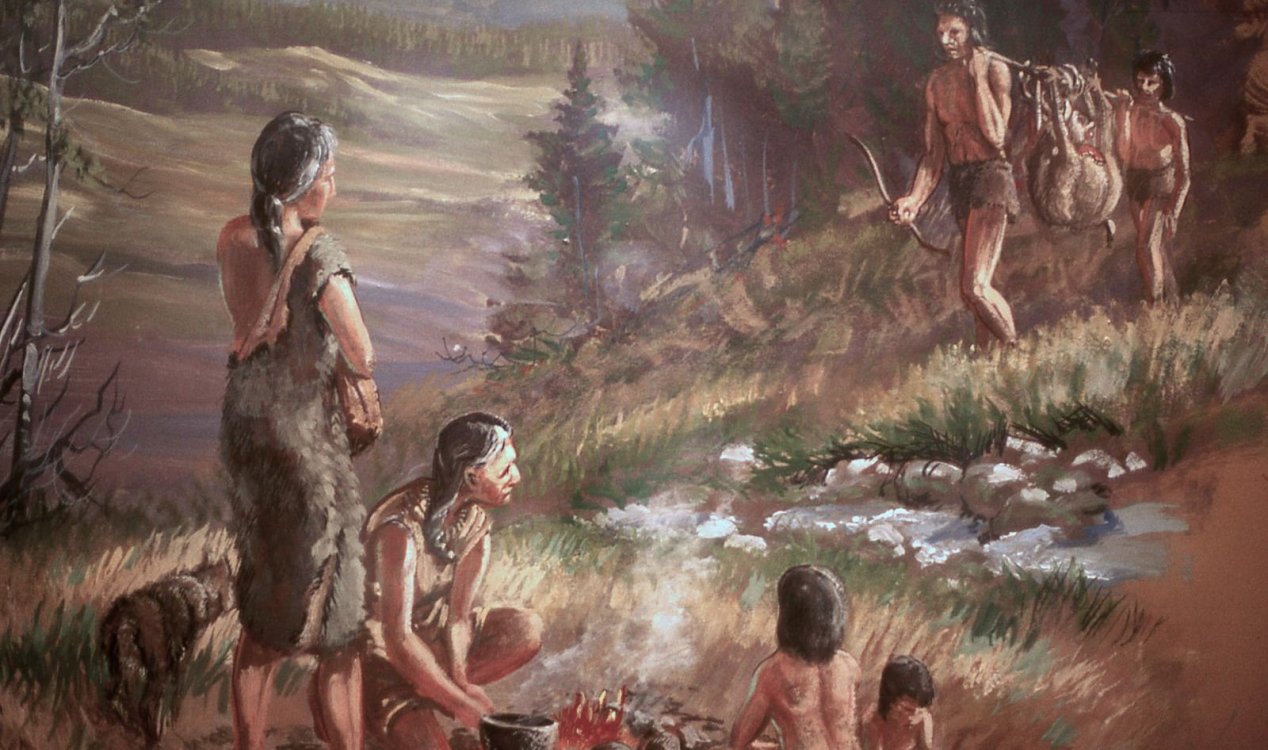
Image: Early Human History
Credit: (PD) U.S. National Park Service
Now, though, a fascinating discovery made at an archaeological site in Oregon may serve to rewrite the history books and force a rethink about exactly when the earliest humans arrived there.
Named Rimrock Draw, the site - which was thought to have once been an ancient rock shelter - is now believed to date back a staggering 18,250 years.
University of Oregon researchers working at the site unearthed two stone tools made from orange agate as well as extinct camel and bison teeth.
By Radiocarbon dating the enamel from the teeth, it was possible to determine how old they were.
"This early date aligns well with the oral histories of the tribal nations in the region, many of whom have stories about witnessing geological events like the Missoula floods, a series of events that changed everything for the tribes between 18,000 and 15,000 years ago," said Oregon State University anthropologist Prof David Lewis.
"As well, tribes have oral histories of encountering giant animals, monsters on the land, and Rimrock Draw rock shelter's evidence suggests that we did interact with the megafauna, and they may have become characters in our histories of the time before memory."
Source: Mail Online
New evidence of early humans found in Oregon dates back 18,250 years
By T.K. RandallJuly 12, 2026
Image: Early Human History
Credit: (PD) U.S. National Park Service
The find, which is several times older than the Egyptian pyramids, could rewrite the story of America's first human inhabitants.
The story of humans in the Americas was long thought to have began when the first inhabitants reached the continent from Asia somewhere around 13,000 years ago.Now, though, a fascinating discovery made at an archaeological site in Oregon may serve to rewrite the history books and force a rethink about exactly when the earliest humans arrived there.
Named Rimrock Draw, the site - which was thought to have once been an ancient rock shelter - is now believed to date back a staggering 18,250 years.
By Radiocarbon dating the enamel from the teeth, it was possible to determine how old they were.
"This early date aligns well with the oral histories of the tribal nations in the region, many of whom have stories about witnessing geological events like the Missoula floods, a series of events that changed everything for the tribes between 18,000 and 15,000 years ago," said Oregon State University anthropologist Prof David Lewis.
"As well, tribes have oral histories of encountering giant animals, monsters on the land, and Rimrock Draw rock shelter's evidence suggests that we did interact with the megafauna, and they may have become characters in our histories of the time before memory."
Source: Mail Online
Similar stories based on this topic:



The Unexplained Mysteries
Book of Weird News
AVAILABLE NOW
Take a walk on the weird side with this compilation of some of the weirdest stories ever to grace the pages of a newspaper.
Click here to learn more

Support us on Patreon
BONUS CONTENTFor less than the cost of a cup of coffee, you can gain access to a wide range of exclusive perks including our popular 'Lost Ghost Stories' series.
Click here to learn more

1 week
2 weeks
3 weeks
1 month


This week
This month
All time
| - | 1. | Electronic Voice Phenomenon |
 |
2. | Spirit Photography (Classic) |
| - | 3. | Pareidolia |
|
4. | Roswell Incident |
|
5. | Yeti |
|
6. | Area 51 |
 |
7. | Loch Ness Monster |
|
8. | Orb |
|
9. | Paranormal |
|
10. | Bigfoot |


Top | Home | Forum
News | Columns | Encyclopedia


UM 11.3 Unexplained-Mysteries.com (c) 2001-2026
Terms | Privacy Policy | Cookies | Contact
News | Columns | Encyclopedia
UM 11.3 Unexplained-Mysteries.com (c) 2001-2026
Terms | Privacy Policy | Cookies | Contact