





Archaeology & History
October 23, 2025


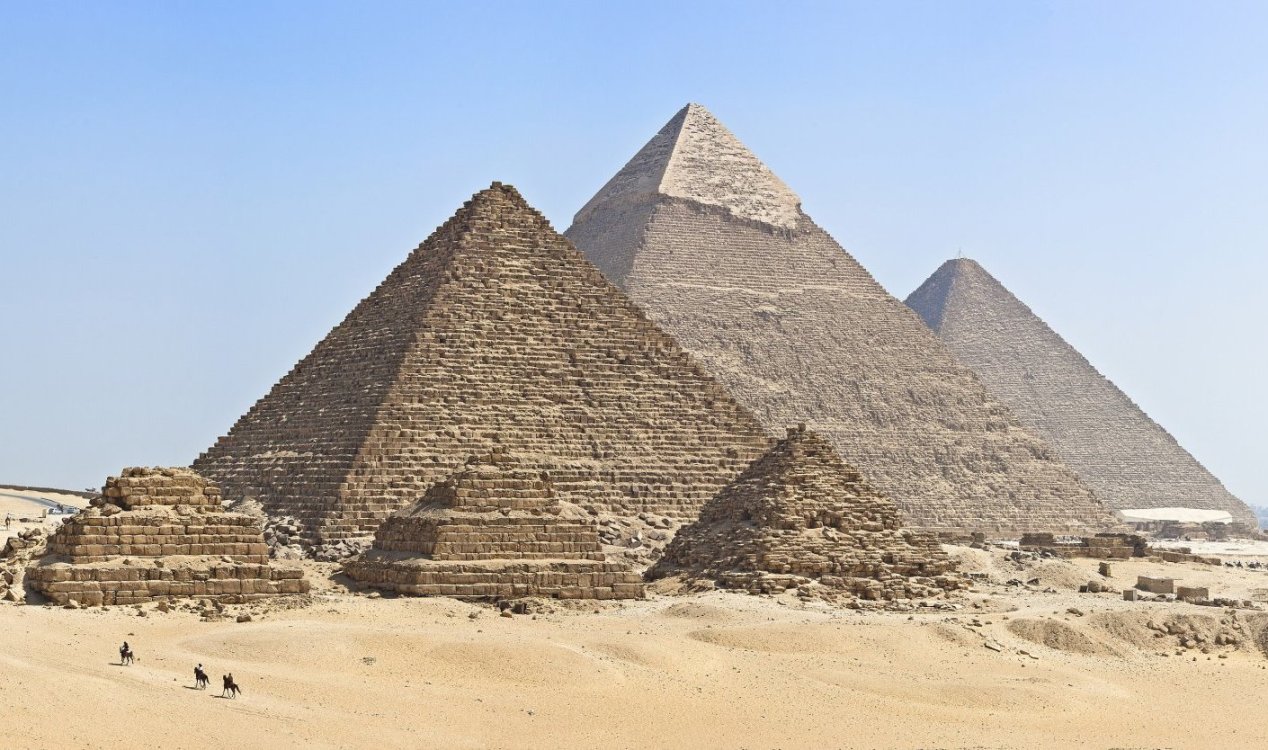
Image: Pyramids of Giza
Credit: KennyOMG / CC BY-SA 4.0 (adapted)
First excavated by archaeologist Alessandro Barsanti in the early 1900s, this curious feature has been the subject of debate and speculation for over a century, with the prevailing theory being that it was the early foundations of a new pyramid, though no associated structure exists on the surface.
Others, meanwhile, believe that it may have been a ceremonial chamber that was never finished.
An inscription on one of the walls found during the excavation translates to "star" and "life force".
This had lead to speculation that the pit may have also had something to do with astronomy.
Perhaps the strangest thing of all about it, however, is the fact that the Egyptian military took control of the site in the 1960s and blocked all further tourism and archaeological excavation.
This means that Barsanti's original photographs of it remain the only visual record in existence.
Exactly why the site was sealed off and what the Egyptian military has been using it for all these years continues to remain a complete mystery.
Did the powers that be find something down there that they wanted to keep a secret ?
We may never know for sure.
Source: Mail Online
Over 100 years on, Egypt's 'Area 51' still remains a mystery
By T.K. RandallOctober 23, 2025
Image: Pyramids of Giza
Credit: KennyOMG / CC BY-SA 4.0 (adapted)
A large 100ft-deep T-shaped pit carved into the limestone has been puzzling archaeologists for over a century.
Situated just three miles from the Pyramids of Giza, the site - known officially as Zawyet El Aryan (but also unofficially as Egypt's Area 51) - is home to a huge T-Shaped pit lined with granite blocks.First excavated by archaeologist Alessandro Barsanti in the early 1900s, this curious feature has been the subject of debate and speculation for over a century, with the prevailing theory being that it was the early foundations of a new pyramid, though no associated structure exists on the surface.
Others, meanwhile, believe that it may have been a ceremonial chamber that was never finished.
An inscription on one of the walls found during the excavation translates to "star" and "life force".
This had lead to speculation that the pit may have also had something to do with astronomy.
This means that Barsanti's original photographs of it remain the only visual record in existence.
Exactly why the site was sealed off and what the Egyptian military has been using it for all these years continues to remain a complete mystery.
Did the powers that be find something down there that they wanted to keep a secret ?
We may never know for sure.
Source: Mail Online
Similar stories based on this topic:



The Unexplained Mysteries
Book of Weird News
AVAILABLE NOW
Take a walk on the weird side with this compilation of some of the weirdest stories ever to grace the pages of a newspaper.
Click here to learn more

Support us on Patreon
BONUS CONTENTFor less than the cost of a cup of coffee, you can gain access to a wide range of exclusive perks including our popular 'Lost Ghost Stories' series.
Click here to learn more

1 week
2 weeks
3 weeks
1 month


This week
This month
All time
 |
1. | Loch Ness Monster |
 |
2. | Electronic Voice Phenomenon |
|
3. | Pareidolia |
| - | 4. | Area 51 |
| - | 5. | Phoenix Lights |
| - | 6. | Orb |
| - | 7. | Bigfoot |
| - | 8. | Stanton Friedman |
| - | 9. | Ghost |
|
10. | Storm Area 51 |


Top | Home | Forum
News | Columns | Encyclopedia


UM 11.3 Unexplained-Mysteries.com (c) 2001-2026
Terms | Privacy Policy | Cookies | Contact
News | Columns | Encyclopedia
UM 11.3 Unexplained-Mysteries.com (c) 2001-2026
Terms | Privacy Policy | Cookies | Contact