





Space & Astronomy
October 23, 2025


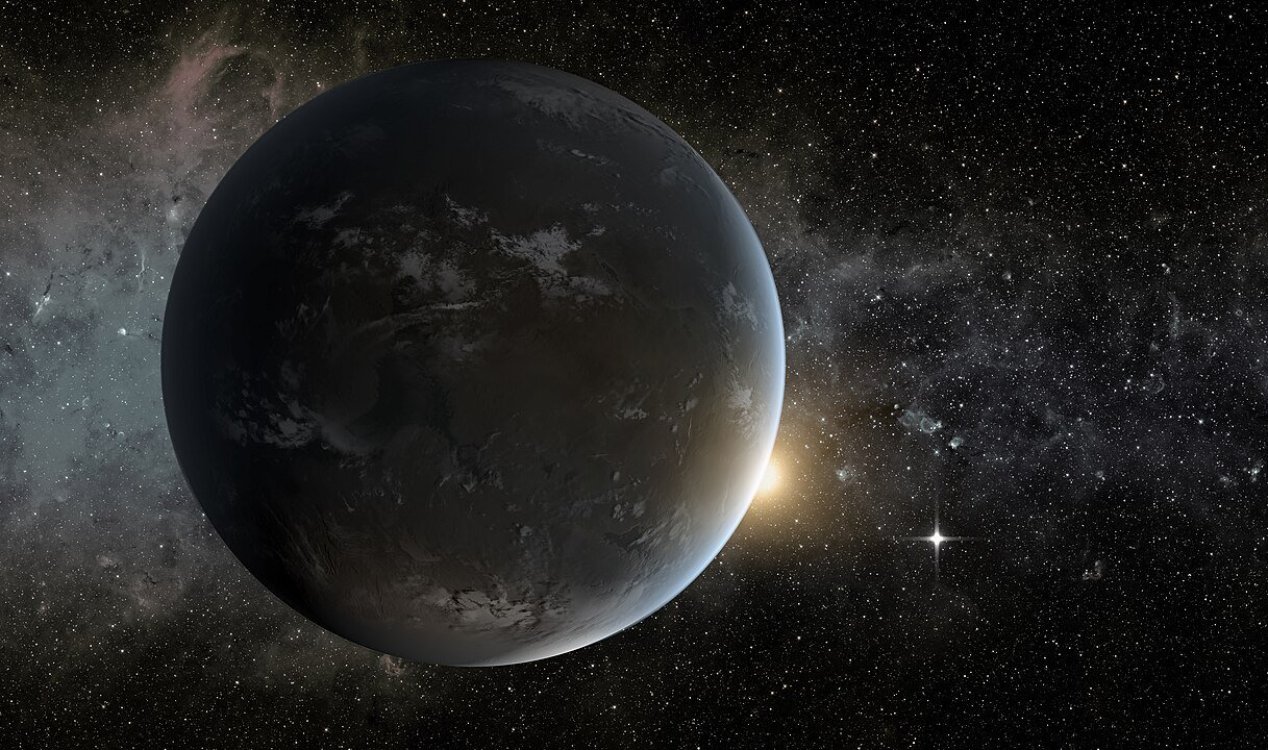
Image: Extrasolar Planet
Credit: (PD) NASA Ames/JPL-Caltech
It took astronomical observations spanning a period of over 20 years to actually detect it.
The most exciting thing about the find is that GJ 251c is situated in its star's Goldilocks zone - the region in which the temperature is 'just right' for liquid water to exist on a planet's surface.
Unfortunately, though, it is simply too far away to determine whether or not it has an atmosphere and we don't currently have a telescope capable of analyzing it even if it does have one.
"While we can't yet confirm the presence of an atmosphere or life on GJ 251c, the planet represents a promising target for future exploration," said Penn State University's Prof Suvrath Mahadevan.
The next telescope that will be capable of analyzing the planet's atmosphere - the Habitable Worlds Observatory - sadly won't even launch until the 2040s.
Until then, all we can do is speculate.
Source: Space.com
Astronomers discover nearby, potentially habitable 'Super-Earth'
By T.K. RandallOctober 23, 2025
Image: Extrasolar Planet
Credit: (PD) NASA Ames/JPL-Caltech
Situated just 18.2 light-years away, this newfound extrasolar world is in orbit around a red dwarf star.
Dubbed GJ 251c, the planet is rocky and terrestrial but has a mass four times greater than that of our own world, meaning that it belongs to a class of planet known as a Super-Earth.It took astronomical observations spanning a period of over 20 years to actually detect it.
The most exciting thing about the find is that GJ 251c is situated in its star's Goldilocks zone - the region in which the temperature is 'just right' for liquid water to exist on a planet's surface.
"While we can't yet confirm the presence of an atmosphere or life on GJ 251c, the planet represents a promising target for future exploration," said Penn State University's Prof Suvrath Mahadevan.
The next telescope that will be capable of analyzing the planet's atmosphere - the Habitable Worlds Observatory - sadly won't even launch until the 2040s.
Until then, all we can do is speculate.
Source: Space.com
Similar stories based on this topic:



The Unexplained Mysteries
Book of Weird News
AVAILABLE NOW
Take a walk on the weird side with this compilation of some of the weirdest stories ever to grace the pages of a newspaper.
Click here to learn more

Support us on Patreon
BONUS CONTENTFor less than the cost of a cup of coffee, you can gain access to a wide range of exclusive perks including our popular 'Lost Ghost Stories' series.
Click here to learn more

1 week
2 weeks
3 weeks
1 month


This week
This month
All time
 |
1. | Pareidolia |
 |
2. | Loch Ness Monster |
|
3. | Orb |
|
4. | Area 51 |
|
5. | Bigfoot |
|
6. | Spirit Photography (Classic) |
|
7. | Unidentified Flying Object |
|
8. | Electronic Voice Phenomenon |
|
9. | Roswell Incident |
|
10. | Paranormal |


Top | Home | Forum
News | Columns | Encyclopedia


UM 11.3 Unexplained-Mysteries.com (c) 2001-2026
Terms | Privacy Policy | Cookies | Contact
News | Columns | Encyclopedia
UM 11.3 Unexplained-Mysteries.com (c) 2001-2026
Terms | Privacy Policy | Cookies | Contact