





Extraterrestrial
June 6, 2026


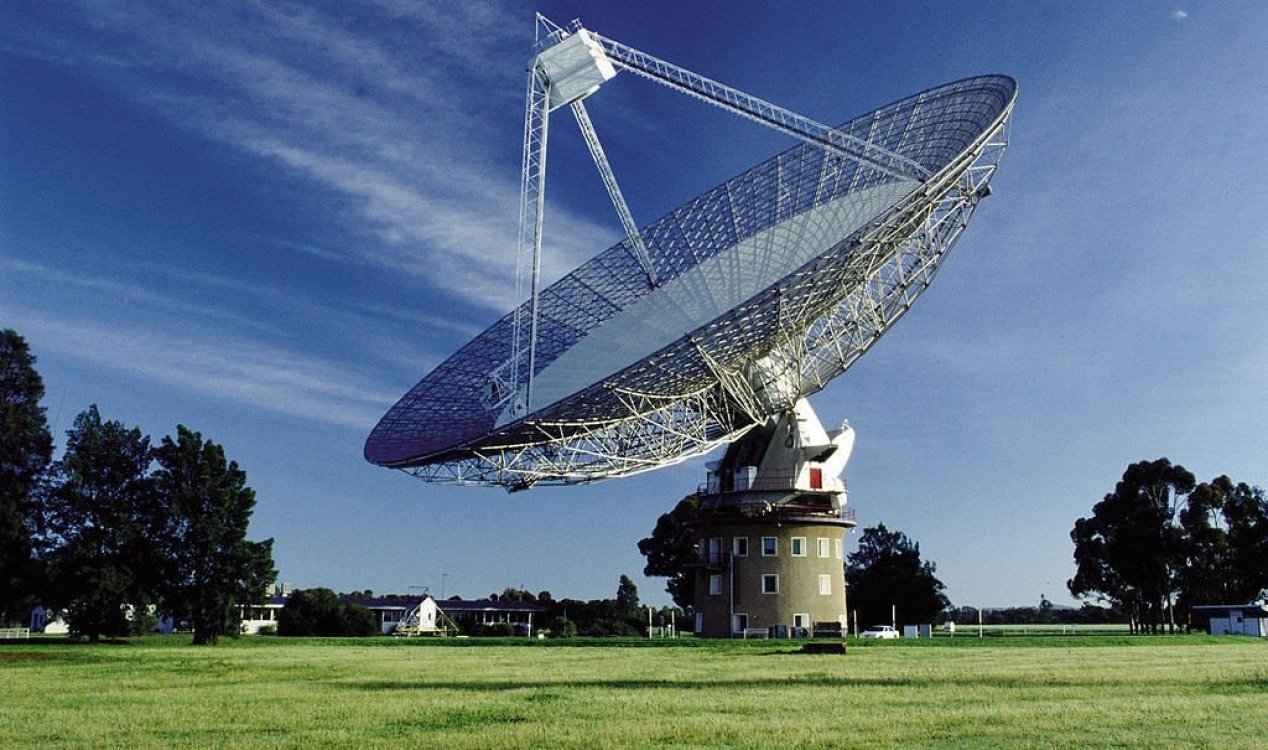
Image: The 64-M Parkes Radio Telescope
Credit: Stewart Duff, CSIRO / CC BY 3.0 (adapted)
Now in a renewed bid to avoid such a scenario, experts have issued updated guidelines concerning the disclosure of an alien signal discovery to the general public.
Most notably, the changes reflect the need to properly confirm a discovery before announcing it so that rumours do not take hold on social media over something that may turn out to be nothing.
Communication should also be prompt, accurate and, perhaps most importantly, honest.
Other things to take into account include the safety and privacy of the scientists themselves and the storing of sensitive data pertaining to a potential detection event.
"I think we hope to avoid researchers 'crying alien' prematurely, and yet to let the public know we want to be as transparent and open as we can be," said Prof Michael Garrett, director of the Jodrell Bank Center for Astrophysics and a prominent figure in the search for alien life.
"I don't know if it's this year, next year, or the next decade, or the next century, or whatever."
"But eventually, someone's going to find something... and so these guidelines are really for that person or that group of scientists that suddenly find themselves confronted with this huge discovery and wondering: well, what does this mean and what are the implications?"
Source: The Guardian
Alien signal detection guidelines updated over fear of mass panic
By T.K. RandallJune 6, 2026
Image: The 64-M Parkes Radio Telescope
Credit: Stewart Duff, CSIRO / CC BY 3.0 (adapted)
If astronomers actually did pick up an extraterrestrial signal, how exactly should they break the news to everyone else ?
For decades, SETI has been scouring the cosmos for signals that might have been sent by an intelligent extraterrestrial civilisation, but if astronomers ever actually did find what they've been looking for, a new issue arises: how do they inform the rest of the world without causing widespread panic, confusion and disruption ?Now in a renewed bid to avoid such a scenario, experts have issued updated guidelines concerning the disclosure of an alien signal discovery to the general public.
Most notably, the changes reflect the need to properly confirm a discovery before announcing it so that rumours do not take hold on social media over something that may turn out to be nothing.
Communication should also be prompt, accurate and, perhaps most importantly, honest.
"I think we hope to avoid researchers 'crying alien' prematurely, and yet to let the public know we want to be as transparent and open as we can be," said Prof Michael Garrett, director of the Jodrell Bank Center for Astrophysics and a prominent figure in the search for alien life.
"I don't know if it's this year, next year, or the next decade, or the next century, or whatever."
"But eventually, someone's going to find something... and so these guidelines are really for that person or that group of scientists that suddenly find themselves confronted with this huge discovery and wondering: well, what does this mean and what are the implications?"
Source: The Guardian
Similar stories based on this topic:



The Unexplained Mysteries
Book of Weird News
AVAILABLE NOW
Take a walk on the weird side with this compilation of some of the weirdest stories ever to grace the pages of a newspaper.
Click here to learn more

Support us on Patreon
BONUS CONTENTFor less than the cost of a cup of coffee, you can gain access to a wide range of exclusive perks including our popular 'Lost Ghost Stories' series.
Click here to learn more

1 week
2 weeks
3 weeks
1 month


This week
This month
All time
 |
1. | Loch Ness Monster |
 |
2. | Electronic Voice Phenomenon |
|
3. | Area 51 |
|
4. | Bigfoot |
| - | 5. | Phoenix Lights |
|
6. | Pareidolia |
|
7. | Orb |
|
8. | Ghost |
|
9. | Stanton Friedman |
|
10. | Storm Area 51 |


Top | Home | Forum
News | Columns | Encyclopedia


UM 11.3 Unexplained-Mysteries.com (c) 2001-2026
Terms | Privacy Policy | Cookies | Contact
News | Columns | Encyclopedia
UM 11.3 Unexplained-Mysteries.com (c) 2001-2026
Terms | Privacy Policy | Cookies | Contact