





Space & Astronomy
February 25, 2026


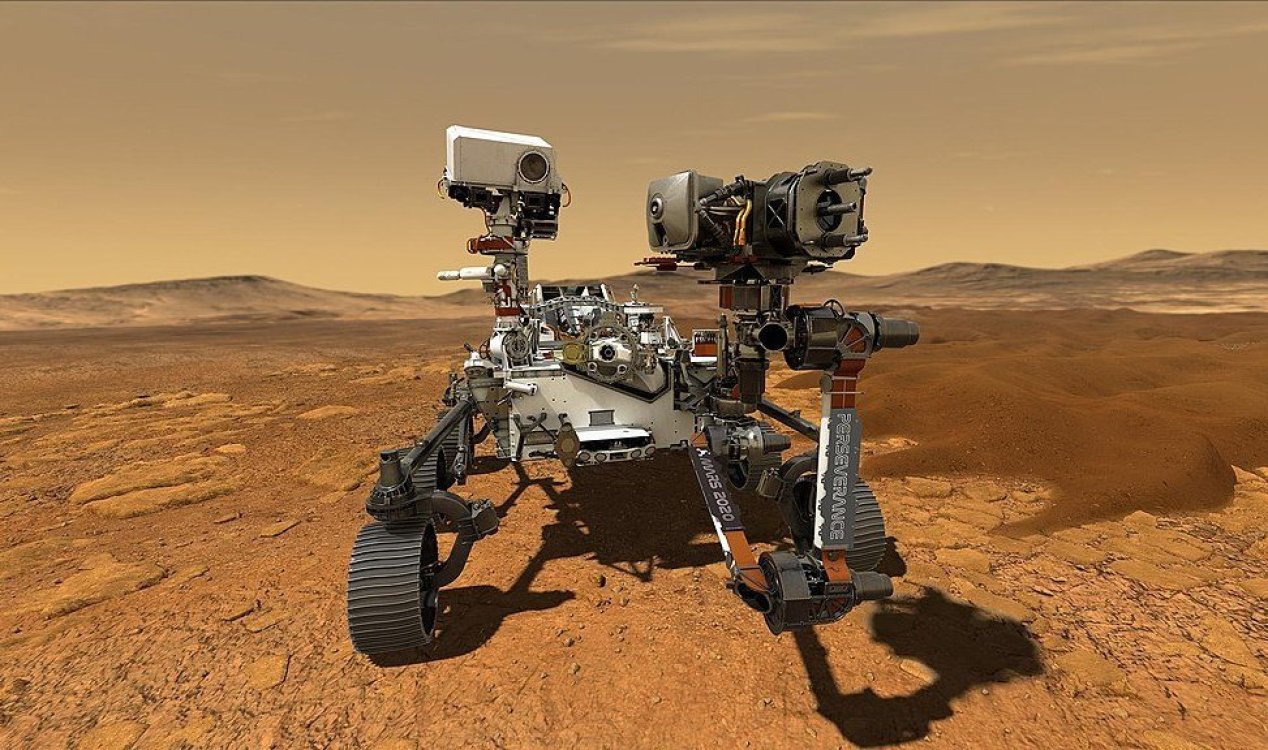
Image Credit: Courtesy NASA/JPL-Caltech
While to date they haven't found anything conclusive, there are definite signs that Mars may have once been habitable and may have provided a safe haven for primitive organisms.
Now, according to a new study by researchers from NASA Goddard Space Flight Center and Penn State University, the rovers may have been looking in the wrong place.
By recreating Mars-like conditions in the laboratory, the team discovered that ancient microbes can potentially survive for tens of millions of years trapped in ice while being bombarded with cosmic radiation.
This means that frozen water deposits, as oppose to soil and rock, might be the better place to look.
"Fifty million years is far greater than the expected age for some current surface ice deposits on Mars, which are often less than two million years old, meaning any organic life present within the ice would be preserved," said study co-author Christopher House.
"That means if there are bacteria near the surface of Mars, future missions can find it."
Source: Science Daily
Ancient Martian organisms may be trapped in ice, study finds
By T.K. RandallFebruary 25, 2026
Image Credit: Courtesy NASA/JPL-Caltech
Evidence of ancient life on Mars might be found in a place where NASA's rovers have yet to explore.
For many years now, exploratory rovers such as Perseverance and Curiosity have been trundling around on the Martian surface investigating samples of soil and rock for signs of microbial life.While to date they haven't found anything conclusive, there are definite signs that Mars may have once been habitable and may have provided a safe haven for primitive organisms.
Now, according to a new study by researchers from NASA Goddard Space Flight Center and Penn State University, the rovers may have been looking in the wrong place.
This means that frozen water deposits, as oppose to soil and rock, might be the better place to look.
"Fifty million years is far greater than the expected age for some current surface ice deposits on Mars, which are often less than two million years old, meaning any organic life present within the ice would be preserved," said study co-author Christopher House.
"That means if there are bacteria near the surface of Mars, future missions can find it."
Source: Science Daily
Similar stories based on this topic:



The Unexplained Mysteries
Book of Weird News
AVAILABLE NOW
Take a walk on the weird side with this compilation of some of the weirdest stories ever to grace the pages of a newspaper.
Click here to learn more

Support us on Patreon
BONUS CONTENTFor less than the cost of a cup of coffee, you can gain access to a wide range of exclusive perks including our popular 'Lost Ghost Stories' series.
Click here to learn more

1 week
2 weeks
3 weeks
1 month


This week
This month
All time
 |
1. | Loch Ness Monster |
 |
2. | Electronic Voice Phenomenon |
|
3. | Pareidolia |
| - | 4. | Area 51 |
| - | 5. | Phoenix Lights |
| - | 6. | Orb |
| - | 7. | Bigfoot |
| - | 8. | Stanton Friedman |
| - | 9. | Ghost |
|
10. | Storm Area 51 |


Top | Home | Forum
News | Columns | Encyclopedia


UM 11.3 Unexplained-Mysteries.com (c) 2001-2026
Terms | Privacy Policy | Cookies | Contact
News | Columns | Encyclopedia
UM 11.3 Unexplained-Mysteries.com (c) 2001-2026
Terms | Privacy Policy | Cookies | Contact