





Nature & Environment
May 29, 2026


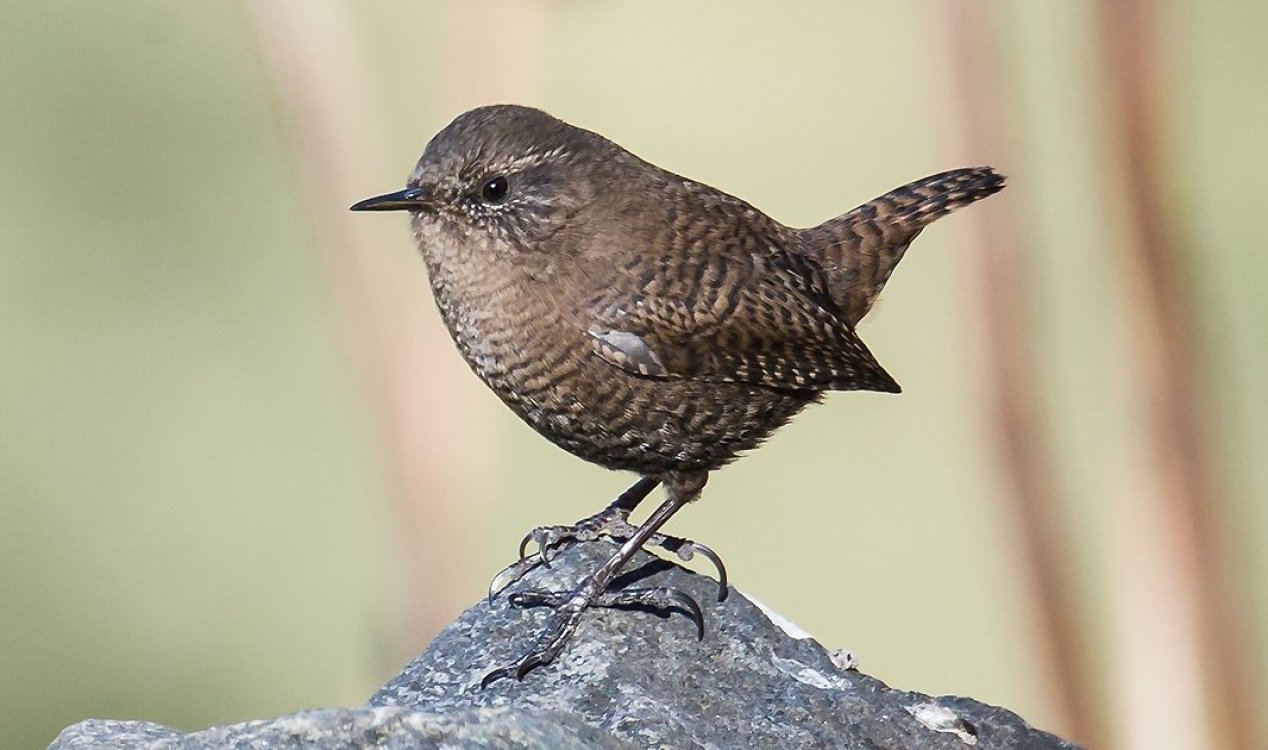
Image: Eurasian Wren
Credit: Koshy Koshy / CC BY 2.0 (adapted)
This was observed recently by scientists from the University of Birmingham who investigated wrens - small birds found on Shetland, Fair Isle, the Outer Hebrides and St Kilda in Scotland.
Each island had its own unique subspecies of wren, evolving independently, with several showing clear signs of island gigantism - some growing to nearly twice the size of their mainland counterparts.
"We found that all four Scottish wren subspecies are genetically distinct from the wrens of mainland Britain, with the wrens of Shetland and St Kilda being especially distinct in both appearance and song," said study lead author Dr. Michal Jezierski.
"Their genetic distinctiveness is so high that it is likely they are on their way to becoming new species."
One of the most famous examples of island gigantism can be found on the Galapagos Islands where some of the native tortoise species have grown to enormous sizes.
Similar examples of large island species can be found all across the world.
It is thought that the lack of predators and reduced competition may be major contributing factors.
Source: Phys.org
Massive Scottish wrens demonstrate island gigantism in action
By T.K. RandallMay 29, 2026
Image: Eurasian Wren
Credit: Koshy Koshy / CC BY 2.0 (adapted)
Scientists have identified species of wren that have almost doubled in size due to a unique evolutionary phenomenon.
When a small animal species becomes isolated on an island, it can sometimes undergo a phenomenon known as island gigantism, gradually evolving to a much larger size over time.This was observed recently by scientists from the University of Birmingham who investigated wrens - small birds found on Shetland, Fair Isle, the Outer Hebrides and St Kilda in Scotland.
Each island had its own unique subspecies of wren, evolving independently, with several showing clear signs of island gigantism - some growing to nearly twice the size of their mainland counterparts.
"We found that all four Scottish wren subspecies are genetically distinct from the wrens of mainland Britain, with the wrens of Shetland and St Kilda being especially distinct in both appearance and song," said study lead author Dr. Michal Jezierski.
One of the most famous examples of island gigantism can be found on the Galapagos Islands where some of the native tortoise species have grown to enormous sizes.
Similar examples of large island species can be found all across the world.
It is thought that the lack of predators and reduced competition may be major contributing factors.
Source: Phys.org
Similar stories based on this topic:



The Unexplained Mysteries
Book of Weird News
AVAILABLE NOW
Take a walk on the weird side with this compilation of some of the weirdest stories ever to grace the pages of a newspaper.
Click here to learn more

Support us on Patreon
BONUS CONTENTFor less than the cost of a cup of coffee, you can gain access to a wide range of exclusive perks including our popular 'Lost Ghost Stories' series.
Click here to learn more

1 week
2 weeks
3 weeks
1 month


This week
This month
All time
 |
1. | Pareidolia |
 |
2. | Loch Ness Monster |
|
3. | Area 51 |
| - | 4. | Orb |
|
5. | Spirit Photography (Classic) |
|
6. | Bigfoot |
|
7. | Unidentified Flying Object |
|
8. | Electronic Voice Phenomenon |
|
9. | Roswell Incident |
|
10. | Paranormal |


Top | Home | Forum
News | Columns | Encyclopedia


UM 11.3 Unexplained-Mysteries.com (c) 2001-2026
Terms | Privacy Policy | Cookies | Contact
News | Columns | Encyclopedia
UM 11.3 Unexplained-Mysteries.com (c) 2001-2026
Terms | Privacy Policy | Cookies | Contact