





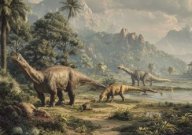
Were dinosaurs warm or cold-blooded ?
Jun 2, 2015A new study has suggested that the prehistoric reptiles were more likely to be warm-blooded like mammals.

New human ancestor discovered in Ethiopia
May 30, 2015Anthropologists have unearthed the fossil remains of a human ancestor dating back 3.2 million years.
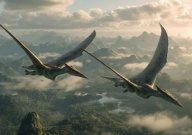
Dinosaurs laid brightly colored eggs
May 29, 2015Scientists have found new evidence to suggest that some dinosaur eggs were a bright blue-green color.

Dogs have lived with humans for 30,000 years
May 22, 2015New evidence suggests that dogs may have been man's best friend for far longer than previously thought.
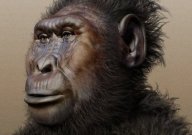
3.3 million-year-old stone tools discovered
May 21, 2015Prehistoric stone tools predating the human genus have been unearthed in a dried-up riverbed in Kenya.
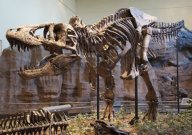
Palaeontologists to dissect a dinosaur on TV
May 18, 2015A new documentary will see a team of experts build and then autopsy a life-size Tyrannosaurus replica.
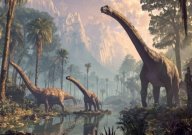
New dinosaur had a keen sense of smell
May 12, 2015A doctoral student has identified a new species of meat-eating dinosaur with an extremely effective nose.
Human skin found on 2-million-year-old fossil
May 10, 2015Anthropologists believe that they have identified the oldest samples of human skin ever discovered.

Otzi the Iceman yields world's oldest blood
May 6, 2015Scientists have succeeded in identifying red blood cells inside a man frozen in ice for over 5,000 years.
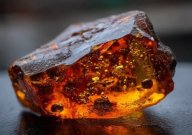
Prehistoric insect found trapped in amber
May 3, 2015A 100 million-year-old predatory cockroach has been found perfectly preserved in a piece of amber.
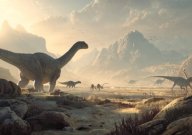
Unique 'Batman' dinosaur discovered in China
Apr 30, 2015A sparrow-sized flying dinosaur with wings resembling those of a bat has been unearthed by scientists.
T. rex's vegetarian cousin unearthed in Chile
Apr 28, 2015Fossil remains of a turkey-sized relative to the meat-eating behemoth were found by a 7-year-old boy.
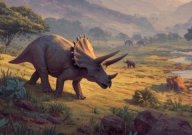
43 dinosaur eggs unearthed in China
Apr 22, 2015Several dozen fossilized eggs were discovered by builders carrying out repairs at the side of a road.

New species of terror bird discovered
Apr 11, 2015Palaeontologists have successfully unearthed the most complete skeleton of a terror bird ever found.
Evidence of dinosaur cannibalism discovered
Apr 10, 2015The skull of a Daspletosaurus shows evidence that it was partly eaten by a member of its own species.
Brontosaurus reinstated as a unique genus
Apr 7, 2015Having been relegated to a subgenus of Apatosaurus, the iconic Brontosaurus is now making a comeback.

Why are we the only primates with a chin ?
Apr 6, 2015New research suggests that the human chin may have resulted from our ability to cook and soften food.
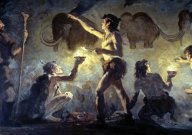
Early humans exhibited a range of sizes
Mar 30, 2015Our distant ancestors came in a variety of different shapes and sizes, just like modern humans do today.
New species of giant dinosaur discovered
Mar 29, 2015The gargantuan reptile was related to the Titanosaurs and roamed the Earth around 100 million years ago.
'Genetic Adam' lived 239,000 years ago
Mar 27, 2015A genome study has pinpointed when mankind's most recent common male ancestor would have lived.



News | Columns | Encyclopedia


UM 11.3 Unexplained-Mysteries.com (c) 2001-2026
Terms | Privacy Policy | Cookies | Contact