





Science & Technology
March 5, 2014


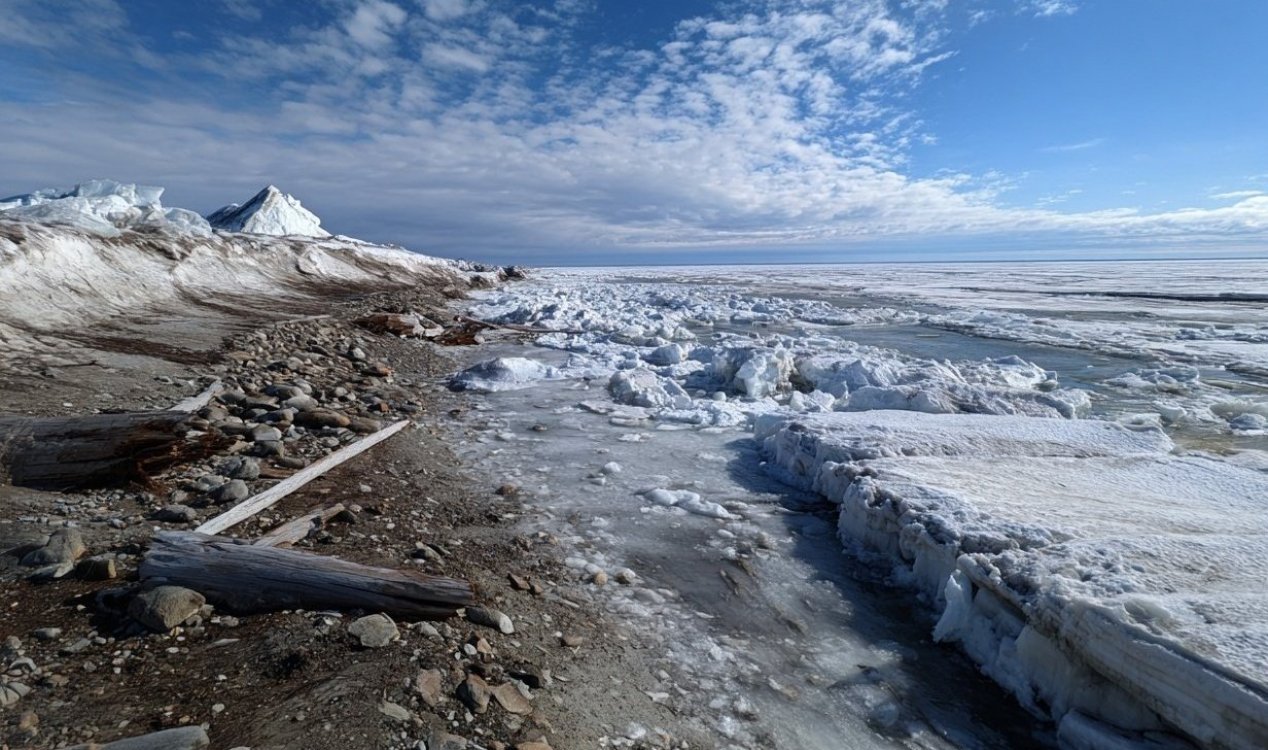
Image: AI-generated (Midjourney)
While the newly revived virus is not believed to be harmful to anything other than single-celled organisms, concerns have been raised over whether other more deadly variants might one day be released as the planet warms up.
Of particular concern is the possibility that viruses that once plagued the Neanderthals might be capable of infecting humans now that our immune systems have lost lost the ability to deal with them.
"It is true that viruses will be archived in permafrost and glacial ice, but the probability that viral pathogens of humans are abundant enough, and would circulate extensively enough to affect human health, stretches scientific rationality to the breaking point," said marine virologist Curtis Suttle.
"I would be much more concerned about the hundreds of millions of people that will be displaced by rising sea levels than the risk of being exposed to pathogens from melting permafrost."
Source: Yahoo! News
Ancient virus resurrected from permafrost
By T.K. RandallMarch 5, 2014
Image: AI-generated (Midjourney)
A mysterious virus dating back 30,000 years has been discovered frozen in the Siberian permafrost.
Like something from the plot of an X-Files episode, scientists have been able to bring back to life a prehistoric virus that has managed to survive tens of thousands of years frozen in the ground.While the newly revived virus is not believed to be harmful to anything other than single-celled organisms, concerns have been raised over whether other more deadly variants might one day be released as the planet warms up.
"It is true that viruses will be archived in permafrost and glacial ice, but the probability that viral pathogens of humans are abundant enough, and would circulate extensively enough to affect human health, stretches scientific rationality to the breaking point," said marine virologist Curtis Suttle.
"I would be much more concerned about the hundreds of millions of people that will be displaced by rising sea levels than the risk of being exposed to pathogens from melting permafrost."
Source: Yahoo! News
Similar stories based on this topic:



The Unexplained Mysteries
Book of Weird News
AVAILABLE NOW
Take a walk on the weird side with this compilation of some of the weirdest stories ever to grace the pages of a newspaper.
Click here to learn more

Support us on Patreon
BONUS CONTENTFor less than the cost of a cup of coffee, you can gain access to a wide range of exclusive perks including our popular 'Lost Ghost Stories' series.
Click here to learn more

1 week
2 weeks
3 weeks
1 month


This week
This month
All time
 |
1. | Loch Ness Monster |
|
2. | Electronic Voice Phenomenon |
 |
3. | Pareidolia |
|
4. | Ghost |
|
5. | Orb |
|
6. | Area 51 |
|
7. | Yeti |
|
8. | Spirit Photography (Classic) |
|
9. | Bigfoot |
|
10. | Extraterrestrial |


Top | Home | Forum
News | Columns | Encyclopedia


UM 11.3 Unexplained-Mysteries.com (c) 2001-2026
Terms | Privacy Policy | Cookies | Contact
News | Columns | Encyclopedia
UM 11.3 Unexplained-Mysteries.com (c) 2001-2026
Terms | Privacy Policy | Cookies | Contact