





Archaeology & History
June 29, 2014


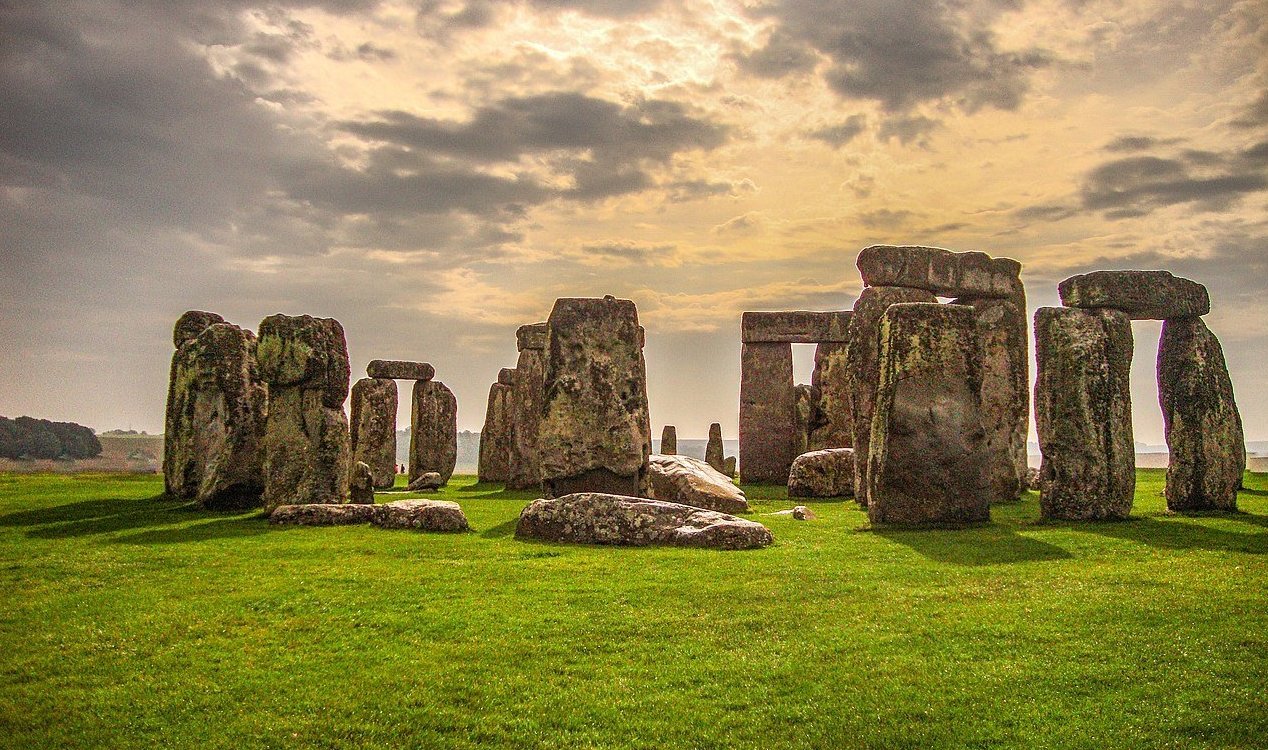
Image: Stonehenge, Wiltshire
Credit: Udit Kapoor / CC BY-SA 4.0 (adapted)
The feat of its original builders moving its huge stone slabs in to place without access to modern equipment has long been deemed as remarkable, yet Professor Ronard Hutton of Bristol University maintains that the whole thing was actually a bit of a botch job.
"When they put up one of those great sandstone blocks in the outer circle, it slipped when it was being put in its hole, fell over and broke in half," he said. "They put one broken bit on top of the other broken bit, jammed a lintel on top and hoped they'd stay together. They didn't, they fell over quite soon after."
Prof Hutton has described the iconic monument, which dates back to between 2000BC - 3000BC, as a "unique and possibly failed experiment".
"Because of shoddy or high-pressure, efficiency-gaining, new Stone Age engineering, we have lost the great engineering feat of Stonehenge," he said.
Source: Independent
Was Stonehenge built by cowboy builders ?
By T.K. RandallJune 29, 2014
Image: Stonehenge, Wiltshire
Credit: Udit Kapoor / CC BY-SA 4.0 (adapted)
A leading historian has claimed that the iconic monument was 'as much a triumph as a disaster'.
One of the world's most famous Neolithic monuments, Stonehenge has been a site of great importance and intrigue for thousands of years.The feat of its original builders moving its huge stone slabs in to place without access to modern equipment has long been deemed as remarkable, yet Professor Ronard Hutton of Bristol University maintains that the whole thing was actually a bit of a botch job.
Prof Hutton has described the iconic monument, which dates back to between 2000BC - 3000BC, as a "unique and possibly failed experiment".
"Because of shoddy or high-pressure, efficiency-gaining, new Stone Age engineering, we have lost the great engineering feat of Stonehenge," he said.
Source: Independent
Similar stories based on this topic:



The Unexplained Mysteries
Book of Weird News
AVAILABLE NOW
Take a walk on the weird side with this compilation of some of the weirdest stories ever to grace the pages of a newspaper.
Click here to learn more

Support us on Patreon
BONUS CONTENTFor less than the cost of a cup of coffee, you can gain access to a wide range of exclusive perks including our popular 'Lost Ghost Stories' series.
Click here to learn more

1 week
2 weeks
3 weeks
1 month


This week
This month
All time
| - | 1. | Pareidolia |
 |
2. | Loch Ness Monster |
|
3. | Ghost |
 |
4. | Electronic Voice Phenomenon |
|
5. | Yeti |
|
6. | Area 51 |
|
7. | Paranormal |
| - | 8. | Spirit Photography (Classic) |
|
9. | Orb |
| - | 10. | Storm Area 51 |


Top | Home | Forum
News | Columns | Encyclopedia


UM 11.3 Unexplained-Mysteries.com (c) 2001-2026
Terms | Privacy Policy | Cookies | Contact
News | Columns | Encyclopedia
UM 11.3 Unexplained-Mysteries.com (c) 2001-2026
Terms | Privacy Policy | Cookies | Contact