





Palaeontology
October 18, 2014


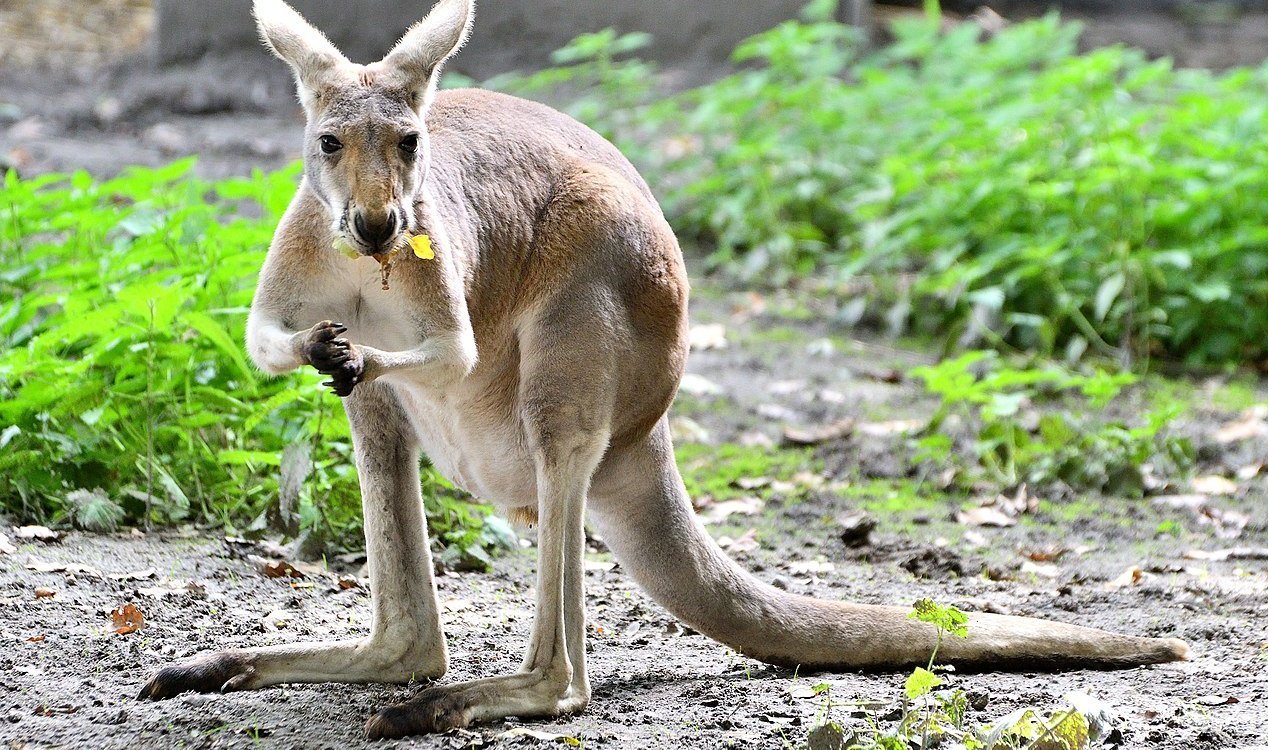
Image: Kangaroo at the Hoenderdaell Animal Park in Anna Paulowna
Credit: René Cortin / CC BY-SA 4.0 (adapted)
The sthenurine kangaroo, which went extinct around 30,000 years ago, was unlike any kangaroo alive today. A giant marsupial standing two meters tall and weighing 240kg, this huge animal was unable to hop at all and instead walked along on two legs in an upright position like modern kangaroos do when they box.
"When I first saw a specimen at the Australian Museum, it appeared to have an arthritic back and you very rarely see that in wild animals," said Professor Christine Janis. " I thought: ‘How could it have that when it was hopping?' That made me think these guys are not like modern kangaroos at all."
"Facially, they would have looked like a beefed-up rabbit, walking on tiptoe. If you think of how kangaroos stand when they box, that's how they may have walked about."
Source: The Guardian
Prehistoric kangaroo walked like a human
By T.K. RandallOctober 18, 2014
Image: Kangaroo at the Hoenderdaell Animal Park in Anna Paulowna
Credit: René Cortin / CC BY-SA 4.0 (adapted)
The extinct sthenurine kangaroo weighed a quarter of a ton and looked a bit like a giant bipedal rabbit.
Today's kangaroos are a common site across Australia, but over the last few million years the country has been home to several divergent species of kangaroo that were anything but familiar.The sthenurine kangaroo, which went extinct around 30,000 years ago, was unlike any kangaroo alive today. A giant marsupial standing two meters tall and weighing 240kg, this huge animal was unable to hop at all and instead walked along on two legs in an upright position like modern kangaroos do when they box.
"Facially, they would have looked like a beefed-up rabbit, walking on tiptoe. If you think of how kangaroos stand when they box, that's how they may have walked about."
Source: The Guardian
Similar stories based on this topic:



The Unexplained Mysteries
Book of Weird News
AVAILABLE NOW
Take a walk on the weird side with this compilation of some of the weirdest stories ever to grace the pages of a newspaper.
Click here to learn more

Support us on Patreon
BONUS CONTENTFor less than the cost of a cup of coffee, you can gain access to a wide range of exclusive perks including our popular 'Lost Ghost Stories' series.
Click here to learn more

1 week
2 weeks
3 weeks
1 month


This week
This month
All time
| - | 1. | Pareidolia |
 |
2. | Loch Ness Monster |
|
3. | Ghost |
 |
4. | Electronic Voice Phenomenon |
|
5. | Yeti |
|
6. | Area 51 |
|
7. | Paranormal |
| - | 8. | Spirit Photography (Classic) |
|
9. | Orb |
| - | 10. | Storm Area 51 |


Top | Home | Forum
News | Columns | Encyclopedia


UM 11.3 Unexplained-Mysteries.com (c) 2001-2026
Terms | Privacy Policy | Cookies | Contact
News | Columns | Encyclopedia
UM 11.3 Unexplained-Mysteries.com (c) 2001-2026
Terms | Privacy Policy | Cookies | Contact