





Space & Astronomy
June 30, 2015


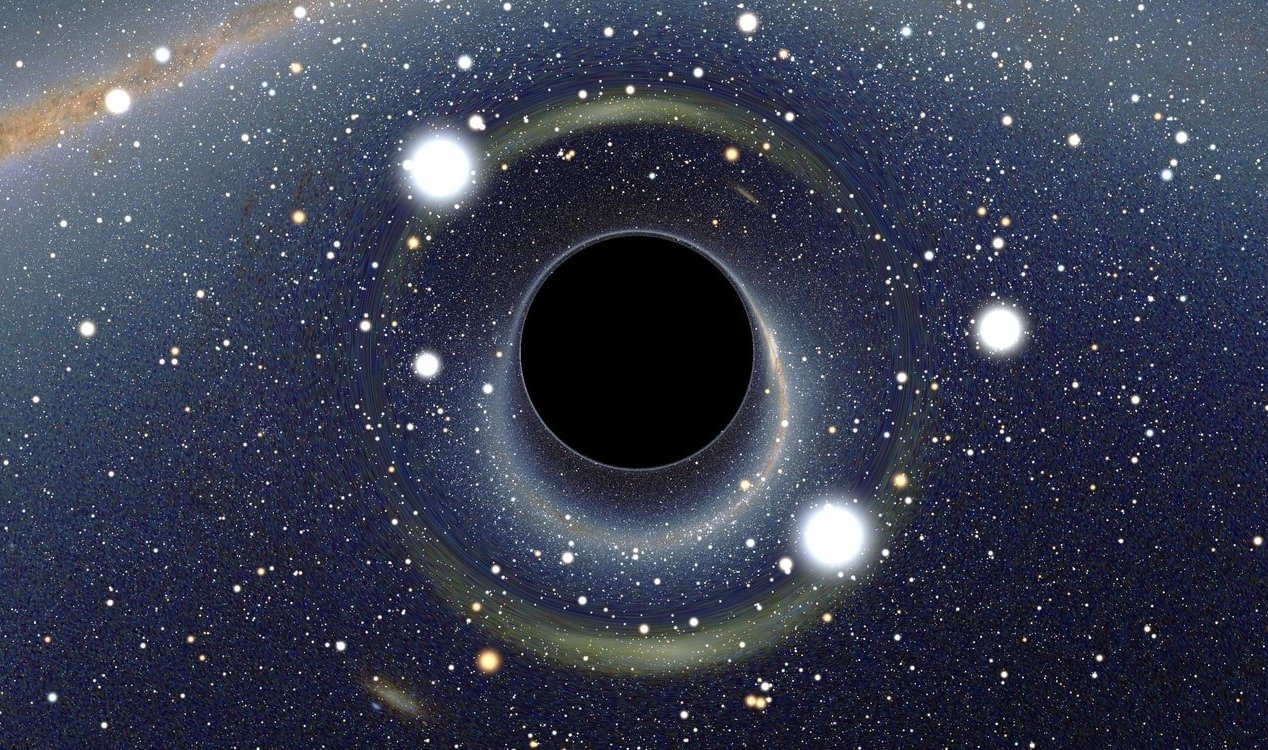
Image: Black Hole - Large Magellanic Cloud
Credit: Alain r / CC BY-SA 2.5 (adapted)
Quantum physics dictates that the 'information' of an object that falls in to a black hole cannot be destroyed or lost so where does it go ? What does it become ?
One recently proposed answer to this conundrum lies in measuring the information that is sucked in to a black hole, not in the conventional three dimensions we are used to but in two dimensions, thus effectively turning the object in to a hologram.
Would this mean that a person could survive such a trip ? Probably not, but then what would an existence in two dimensions even be like ? Surviving such a transition seems unfathomable.
To conclude, here's astrophysicist Dr Neil deGrasse Tyson providing a light-hearted look at what happens to your body as you descend in to a black hole - a process known as 'spaghettification'.
Source: Huffington Post
A black hole could turn you in to a hologram
By T.K. RandallJune 30, 2015
Image: Black Hole - Large Magellanic Cloud
Credit: Alain r / CC BY-SA 2.5 (adapted)
Scientists have come up with a novel new way to account for what happens inside a black hole.
With a gravitational pull so great that not even light can escape, black holes remain inherently mysterious and scientists have long struggled to make sense of what goes on inside them.Quantum physics dictates that the 'information' of an object that falls in to a black hole cannot be destroyed or lost so where does it go ? What does it become ?
Would this mean that a person could survive such a trip ? Probably not, but then what would an existence in two dimensions even be like ? Surviving such a transition seems unfathomable.
To conclude, here's astrophysicist Dr Neil deGrasse Tyson providing a light-hearted look at what happens to your body as you descend in to a black hole - a process known as 'spaghettification'.
Source: Huffington Post
Similar stories based on this topic:



The Unexplained Mysteries
Book of Weird News
AVAILABLE NOW
Take a walk on the weird side with this compilation of some of the weirdest stories ever to grace the pages of a newspaper.
Click here to learn more

Support us on Patreon
BONUS CONTENTFor less than the cost of a cup of coffee, you can gain access to a wide range of exclusive perks including our popular 'Lost Ghost Stories' series.
Click here to learn more

1 week
2 weeks
3 weeks
1 month


This week
This month
All time
 |
1. | Pareidolia |
 |
2. | Electronic Voice Phenomenon |
|
3. | Yeti |
|
4. | Paranormal |
|
5. | Loch Ness Monster |
| - | 6. | Orb |
|
7. | Area 51 |
|
8. | Spirit Photography (Classic) |
|
9. | Ghost |
|
10. | Storm Area 51 |


Top | Home | Forum
News | Columns | Encyclopedia


UM 11.3 Unexplained-Mysteries.com (c) 2001-2026
Terms | Privacy Policy | Cookies | Contact
News | Columns | Encyclopedia
UM 11.3 Unexplained-Mysteries.com (c) 2001-2026
Terms | Privacy Policy | Cookies | Contact