





Science & Technology
July 14, 2015


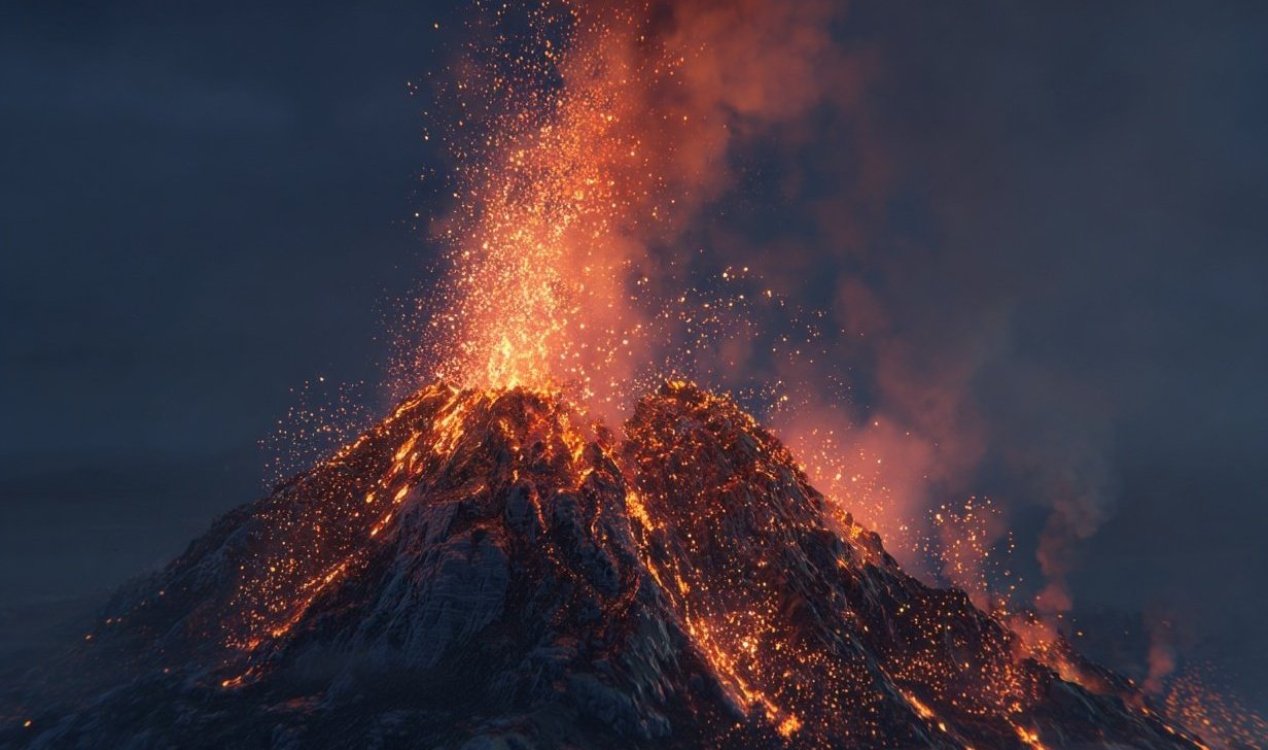
Image: AI-generated (Midjourney)
"There on the screen were these four incredible volcanoes looking like something off the front cover of a geology textbook... if you could drain the ocean it would be magnificent to see for a few seconds, it's a remarkable structure," said Professor Iain Suthers.
Measuring 20km long and 6km wide, the volcanoes are located around 5km below the surface and were thought to have formed when the surrounding land collapsed to form a crater.
"They tell us part of the story of how New Zealand and Australia separated around 40-80 million years ago," said Professor Richard Arculus of the Australian National University. "They'll now help scientists target future exploration of the sea floor to unlock the secrets of the Earth's crust."
The largest of the volcanoes is 1.5km across and measures a whopping 700m in height.
Source: ABC.net.au
Ancient volcano cluster found near Sydney
By T.K. RandallJuly 14, 2015
Image: AI-generated (Midjourney)
Four extinct volcanoes dating back 50 million years have been found on the ocean floor in Australia.
Discovered entirely by accident during a search for fish and lobster breeding grounds, the volcano cluster is located 250km off the coast of Sydney and has been hailed as a major find by scientists."There on the screen were these four incredible volcanoes looking like something off the front cover of a geology textbook... if you could drain the ocean it would be magnificent to see for a few seconds, it's a remarkable structure," said Professor Iain Suthers.
"They tell us part of the story of how New Zealand and Australia separated around 40-80 million years ago," said Professor Richard Arculus of the Australian National University. "They'll now help scientists target future exploration of the sea floor to unlock the secrets of the Earth's crust."
The largest of the volcanoes is 1.5km across and measures a whopping 700m in height.
Source: ABC.net.au
Similar stories based on this topic:



The Unexplained Mysteries
Book of Weird News
AVAILABLE NOW
Take a walk on the weird side with this compilation of some of the weirdest stories ever to grace the pages of a newspaper.
Click here to learn more

Support us on Patreon
BONUS CONTENTFor less than the cost of a cup of coffee, you can gain access to a wide range of exclusive perks including our popular 'Lost Ghost Stories' series.
Click here to learn more

1 week
2 weeks
3 weeks
1 month


This week
This month
All time
 |
1. | Loch Ness Monster |
 |
2. | Electronic Voice Phenomenon |
|
3. | Bigfoot |
| - | 4. | Area 51 |
|
5. | Pareidolia |
| - | 6. | Orb |
|
7. | Phoenix Lights |
|
8. | Ghost |
|
9. | Stanton Friedman |
|
10. | Storm Area 51 |


Top | Home | Forum
News | Columns | Encyclopedia


UM 11.3 Unexplained-Mysteries.com (c) 2001-2026
Terms | Privacy Policy | Cookies | Contact
News | Columns | Encyclopedia
UM 11.3 Unexplained-Mysteries.com (c) 2001-2026
Terms | Privacy Policy | Cookies | Contact