





Space & Astronomy
November 14, 2018


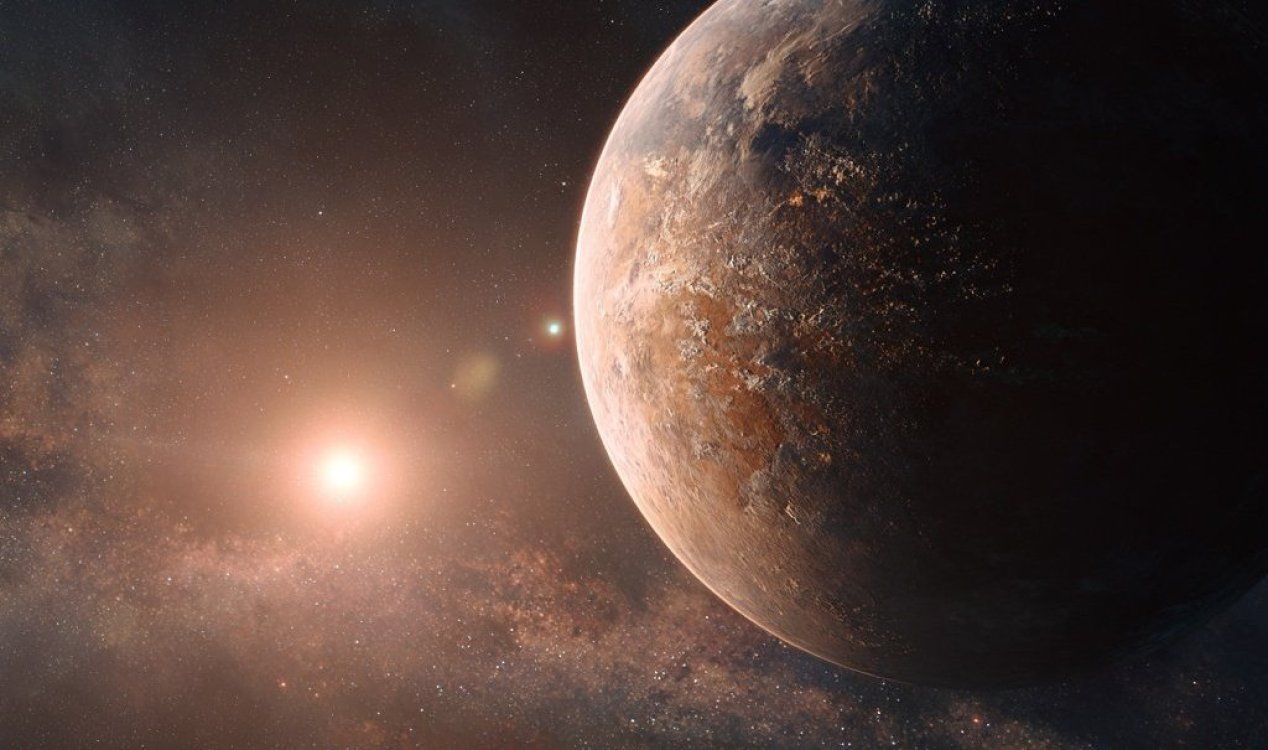
Image: AI-generated (Midjourney)
The discovery is particularly important because planets around neighboring stars will be prime candidates for direct observation by the next generation of telescopes.
"We think that this is what we call a Super-Earth - that would be possibly a mostly rocky planet with a massive atmosphere," said Dr Anglada Escude from London's Queen Mary University.
"It's probably very rich in volatiles like water, hydrogen, carbon dioxide - things like this."
Based on the distance alone, scientists estimate that the surface temperature could be as little as -150C, however it is possible that the planet's atmosphere could help to warm things up.
"On the surface, the temperature could be much higher," said Dr Escude.
"There can be surprises, so we have to keep an open mind when trying to characterise this planet."
Source: BBC News
Second-closest extrasolar planet discovered
By T.K. RandallNovember 14, 2018
Image: AI-generated (Midjourney)
Astronomers have revealed the discovery of a 'super-Earth' around a star that is a mere six light years away.
Believed to be approximately three times the mass of our own planet, this icy extrasolar world orbits Barnard's star at around the same distance as Mercury orbits the Sun in our own solar system.The discovery is particularly important because planets around neighboring stars will be prime candidates for direct observation by the next generation of telescopes.
"We think that this is what we call a Super-Earth - that would be possibly a mostly rocky planet with a massive atmosphere," said Dr Anglada Escude from London's Queen Mary University.
Based on the distance alone, scientists estimate that the surface temperature could be as little as -150C, however it is possible that the planet's atmosphere could help to warm things up.
"On the surface, the temperature could be much higher," said Dr Escude.
"There can be surprises, so we have to keep an open mind when trying to characterise this planet."
Source: BBC News
Similar stories based on this topic:



The Unexplained Mysteries
Book of Weird News
AVAILABLE NOW
Take a walk on the weird side with this compilation of some of the weirdest stories ever to grace the pages of a newspaper.
Click here to learn more

Support us on Patreon
BONUS CONTENTFor less than the cost of a cup of coffee, you can gain access to a wide range of exclusive perks including our popular 'Lost Ghost Stories' series.
Click here to learn more

1 week
2 weeks
3 weeks
1 month


This week
This month
All time
| - | 1. | Pareidolia |
| - | 2. | Electronic Voice Phenomenon |
 |
3. | Loch Ness Monster |
|
4. | Ghost |
 |
5. | Yeti |
|
6. | Area 51 |
|
7. | Paranormal |
| - | 8. | Spirit Photography (Classic) |
|
9. | Orb |
| - | 10. | Storm Area 51 |


Top | Home | Forum
News | Columns | Encyclopedia


UM 11.3 Unexplained-Mysteries.com (c) 2001-2026
Terms | Privacy Policy | Cookies | Contact
News | Columns | Encyclopedia
UM 11.3 Unexplained-Mysteries.com (c) 2001-2026
Terms | Privacy Policy | Cookies | Contact