





Nature & Environment
June 21, 2021


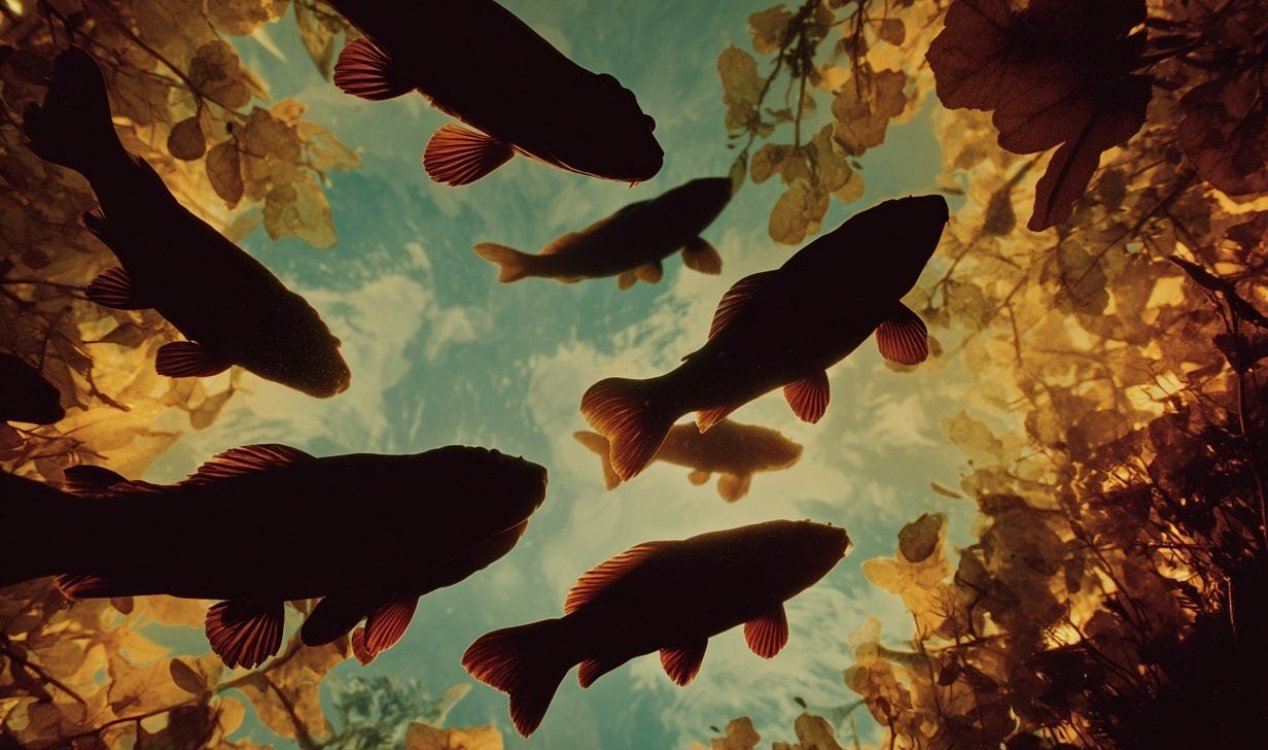
Image: AI-generated (Midjourney)
Its remarkable similarity to fossil specimens from that era led scientists to declare it a 'living fossil' - a moniker given to creatures that have remained practically unchanged since prehistoric times.
Now a team of researchers from France has determined that the coelacanth also happens to live for a very long time - upwards of 100 years.
To determine this, they discovered that marks on the scales of the fish can indicate its age in much the same way as tree rings can indicate the age of a tree.
Their research also revealed that the coelacanth is particularly vulnerable because it grows slowly, reproduces only in late middle age and can be pregnant for up to five years.
"Our results thus suggest that it may be even more threatened than expected due to its peculiar life history," said Dr Kelig Mahe of the North Sea Fisheries Research Unit.
"Consequently, these new pieces of information on coelacanths' biology and life history are essential to the conservation and management of this species."
Source: BBC News
Huge 'living fossil' fish can live for 100 years
By T.K. RandallJune 21, 2021
Image: AI-generated (Midjourney)
A fish once thought to have died out in prehistoric times is continuing to throw up surprises for scientists.
Large, elusive and found deep in the oceans where they had until relatively recently remained hidden away from human civilization, the coelacanth was first discovered in 1938 at a time when fossil evidence seemed to suggest that it had been extinct for 66 million years.Its remarkable similarity to fossil specimens from that era led scientists to declare it a 'living fossil' - a moniker given to creatures that have remained practically unchanged since prehistoric times.
Now a team of researchers from France has determined that the coelacanth also happens to live for a very long time - upwards of 100 years.
Their research also revealed that the coelacanth is particularly vulnerable because it grows slowly, reproduces only in late middle age and can be pregnant for up to five years.
"Our results thus suggest that it may be even more threatened than expected due to its peculiar life history," said Dr Kelig Mahe of the North Sea Fisheries Research Unit.
"Consequently, these new pieces of information on coelacanths' biology and life history are essential to the conservation and management of this species."
Source: BBC News



The Unexplained Mysteries
Book of Weird News
AVAILABLE NOW
Take a walk on the weird side with this compilation of some of the weirdest stories ever to grace the pages of a newspaper.
Click here to learn more

Support us on Patreon
BONUS CONTENTFor less than the cost of a cup of coffee, you can gain access to a wide range of exclusive perks including our popular 'Lost Ghost Stories' series.
Click here to learn more

1 week
2 weeks
3 weeks
1 month


This week
This month
All time
 |
1. | Loch Ness Monster |
|
2. | Electronic Voice Phenomenon |
 |
3. | Pareidolia |
|
4. | Ghost |
|
5. | Orb |
|
6. | Area 51 |
|
7. | Yeti |
|
8. | Spirit Photography (Classic) |
|
9. | Bigfoot |
|
10. | Extraterrestrial |


Top | Home | Forum
News | Columns | Encyclopedia


UM 11.3 Unexplained-Mysteries.com (c) 2001-2026
Terms | Privacy Policy | Cookies | Contact
News | Columns | Encyclopedia
UM 11.3 Unexplained-Mysteries.com (c) 2001-2026
Terms | Privacy Policy | Cookies | Contact