





Space & Astronomy
February 10, 2026


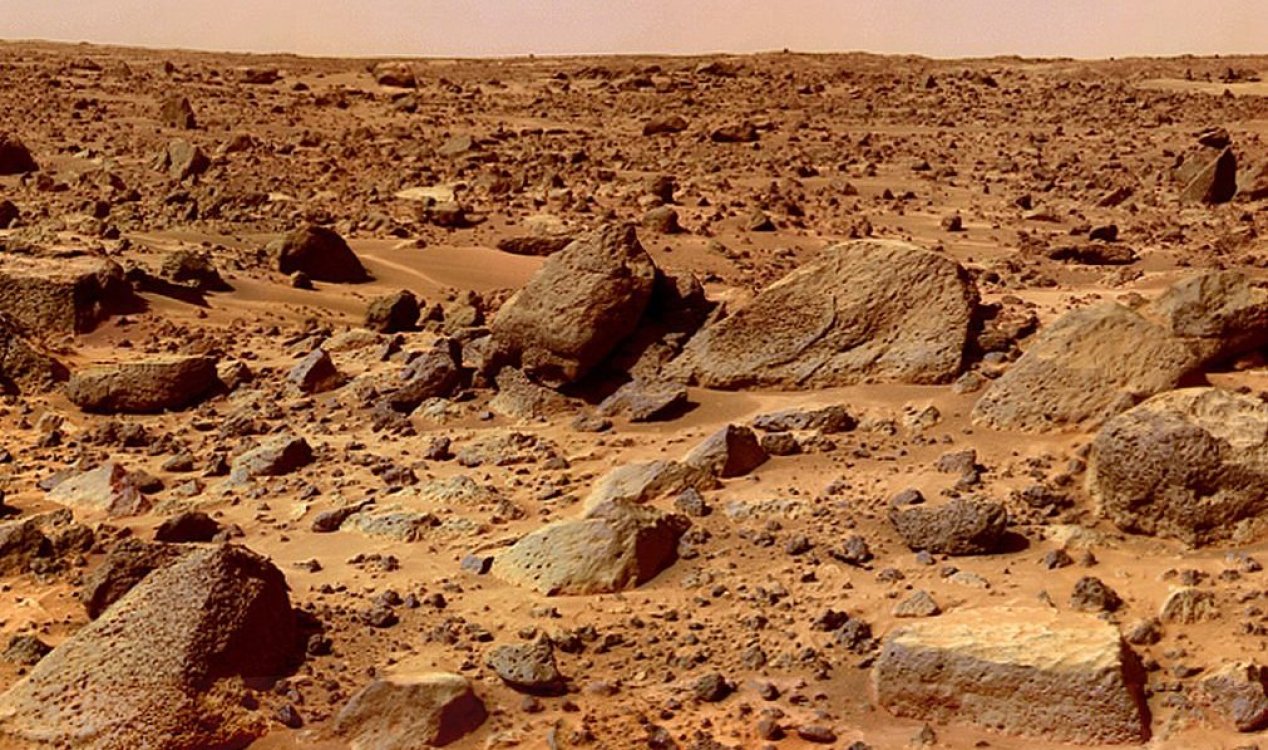
Image Credit: NASA / JPL
Last year, NASA's Curiosity rover discovered something particularly intriguing in mudstone at a location on the planet's surface known as Yellowknife Bay.
Inside the sample it found long-chain alkanes - a potential indicator of biological life, but also something that could have been produced through geological processes.
Now, though, a new study has highlighted the fact that while the presence of these molecules would not normally be enough to indicate biological life, the sheer number of them present in the sample actually seems to rule out any currently known non-biological explanations.
"Such a high concentration of large organic molecules in Martian sedimentary rocks cannot be readily explained by the accretion of organics from carbon-rich interplanetary dust particles and meteorites, nor by the deposition of hypothetical haze-derived organics from an ancient Martian atmosphere," the study authors wrote.
On Earth, long-chain alkanes in such an abundance are only known to be produced through biological processes.
So either the Mars samples were produced by life as well, or there was a geological process responsible that scientists currently do not understand.
Either way, it's an intriguing find.
Source: IFL Science
Mars organics point at presence of possible biological processes
By T.K. RandallFebruary 10, 2026
Image Credit: NASA / JPL
According to new research, organics found on Mars cannot be explained by any known geological process.
The search for life on Mars - and in particular for life that might have once arisen there billions of years ago - remains one of the most tantalizing ventures in all of astrobiology.Last year, NASA's Curiosity rover discovered something particularly intriguing in mudstone at a location on the planet's surface known as Yellowknife Bay.
Inside the sample it found long-chain alkanes - a potential indicator of biological life, but also something that could have been produced through geological processes.
Now, though, a new study has highlighted the fact that while the presence of these molecules would not normally be enough to indicate biological life, the sheer number of them present in the sample actually seems to rule out any currently known non-biological explanations.
On Earth, long-chain alkanes in such an abundance are only known to be produced through biological processes.
So either the Mars samples were produced by life as well, or there was a geological process responsible that scientists currently do not understand.
Either way, it's an intriguing find.
Source: IFL Science
Similar stories based on this topic:



The Unexplained Mysteries
Book of Weird News
AVAILABLE NOW
Take a walk on the weird side with this compilation of some of the weirdest stories ever to grace the pages of a newspaper.
Click here to learn more

Support us on Patreon
BONUS CONTENTFor less than the cost of a cup of coffee, you can gain access to a wide range of exclusive perks including our popular 'Lost Ghost Stories' series.
Click here to learn more

1 week
2 weeks
3 weeks
1 month


This week
This month
All time
 |
1. | Electronic Voice Phenomenon |
|
2. | Pareidolia |
|
3. | Orb |
|
4. | Area 51 |
|
5. | Spirit Photography (Classic) |
 |
6. | Loch Ness Monster |
| - | 7. | Yeti |
|
8. | Ghost |
| - | 9. | Bigfoot |
|
10. | Storm Area 51 |


Top | Home | Forum
News | Columns | Encyclopedia


UM 11.3 Unexplained-Mysteries.com (c) 2001-2026
Terms | Privacy Policy | Cookies | Contact
News | Columns | Encyclopedia
UM 11.3 Unexplained-Mysteries.com (c) 2001-2026
Terms | Privacy Policy | Cookies | Contact