





Space & Astronomy
March 30, 2026


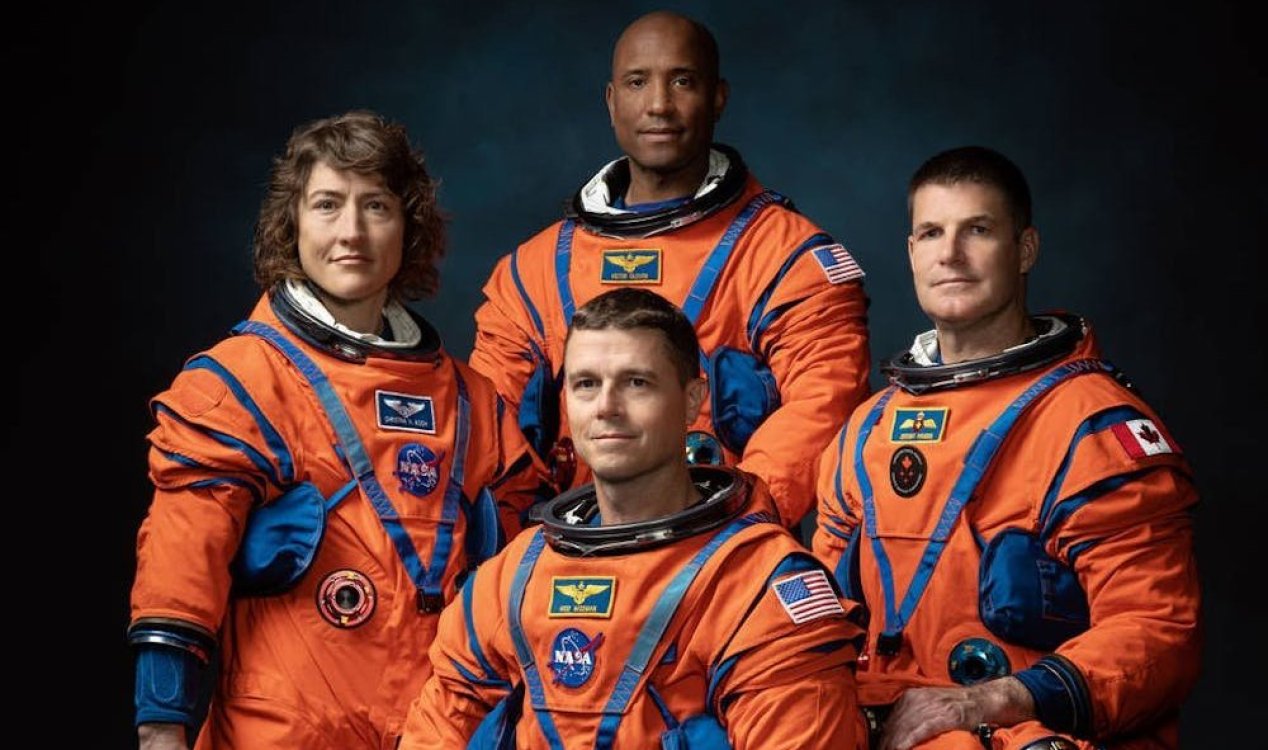
Image: Artemis 2 Crew Portrait
Credit: Josh Valcarcel / (PD) NASA
At around 6.24pm ET on Wednesday, Artemis II is expected to launch on what will be the first manned mission to the Moon since the Apollo era ended over 50 years ago.
The astronauts going on the mission will be NASA's Reid Wiseman, Victor Glover and Christina Koch, as well as Jeremy Hansen of the Canadian Space Agency.
While they won't be landing on the lunar surface, they will spend several days orbiting the Moon before returning to Earth - something nobody has done in almost three generations.
Despite various technical setbacks and delays, it is looking like the April 1st launch date will hold up, with forecasts currently predicting an 80% chance of favorable weather conditions.
If all goes well, the mission will be followed within the next few years by Artemis III (an unmanned technical demonstration) and Artemis IV (the first actual manned lunar landing).
All eyes will be on Cape Canaveral on Wednesday as the astronauts get ready for their trip.
Here's hoping that everything goes to plan.
Source: The Guardian
NASA makes final preparations for April 1st manned Moon mission
By T.K. RandallMarch 30, 2026
Image: Artemis 2 Crew Portrait
Credit: Josh Valcarcel / (PD) NASA
It is looking extremely likely that we are about to witness the first manned Moon mission since 1972.
As the enormous silhouette of NASA's Space Launch System sits stark against the rising Sun, there is great excitement in the air and a sense that something extraordinary is about to happen.At around 6.24pm ET on Wednesday, Artemis II is expected to launch on what will be the first manned mission to the Moon since the Apollo era ended over 50 years ago.
The astronauts going on the mission will be NASA's Reid Wiseman, Victor Glover and Christina Koch, as well as Jeremy Hansen of the Canadian Space Agency.
While they won't be landing on the lunar surface, they will spend several days orbiting the Moon before returning to Earth - something nobody has done in almost three generations.
If all goes well, the mission will be followed within the next few years by Artemis III (an unmanned technical demonstration) and Artemis IV (the first actual manned lunar landing).
All eyes will be on Cape Canaveral on Wednesday as the astronauts get ready for their trip.
Here's hoping that everything goes to plan.
Source: The Guardian
Similar stories based on this topic:



The Unexplained Mysteries
Book of Weird News
AVAILABLE NOW
Take a walk on the weird side with this compilation of some of the weirdest stories ever to grace the pages of a newspaper.
Click here to learn more

Support us on Patreon
BONUS CONTENTFor less than the cost of a cup of coffee, you can gain access to a wide range of exclusive perks including our popular 'Lost Ghost Stories' series.
Click here to learn more

1 week
2 weeks
3 weeks
1 month


This week
This month
All time
 |
1. | Pareidolia |
 |
2. | Electronic Voice Phenomenon |
|
3. | Yeti |
|
4. | Paranormal |
|
5. | Orb |
|
6. | Loch Ness Monster |
|
7. | Area 51 |
|
8. | Spirit Photography (Classic) |
|
9. | Ghost |
|
10. | Storm Area 51 |


Top | Home | Forum
News | Columns | Encyclopedia


UM 11.3 Unexplained-Mysteries.com (c) 2001-2026
Terms | Privacy Policy | Cookies | Contact
News | Columns | Encyclopedia
UM 11.3 Unexplained-Mysteries.com (c) 2001-2026
Terms | Privacy Policy | Cookies | Contact